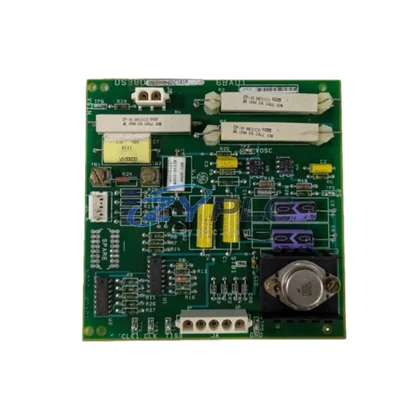
GE 531X301DCCAGG2 Control Processor for 531X Automation
The GE 531X301DCCAGG2 is a high-performance control processor board engineered for the GE 531X drive series, delivering precision motor control and measurable energy efficiency gains across demanding industrial production environments. Designed to reduce unnecessary power draw, minimize idle-state operating load, and optimize closed-loop feedback cycles, this module serves as the intelligence core of industrial automation systems in manufacturing, process control, and heavy-duty drive applications.
In modern factories where energy costs represent a significant share of operational expenditure, the 531X301DCCAGG2 enables plant engineers to move beyond reactive maintenance toward proactive maintenance planning. By maintaining stable control signals and reducing harmonic distortion in motor drive circuits, this processor board directly contributes to lower kWh consumption per production cycle — a measurable improvement that compounds across multi-shift operations.
Product Specification Table
| Parameter |
Specification / Value |
| SKU |
531X301DCCAGG2 |
| Brand / Series |
GE (General Electric) / 531X Drive Series |
| Product Type |
Control Processor Board |
| Power Consumption |
Low-power DSP architecture; optimized for continuous duty cycle |
| Operating Efficiency |
Closed-loop vector control with minimal signal latency |
| Compatible Systems |
GE 531X Series AC/DC Drive Systems |
| Application Environment |
Industrial automation, motor drive control, process manufacturing |
| Value |
Reduces motor over-excitation, idle losses, and reactive power demand |
| Origin |
USA |
| Warranty |
12-Month Quality Warranty |
| Stock Status |
RFQ Available — Ships within 24–48 hours after testing |
System Compatibility and Application
The 531X301DCCAGG2 does not operate in isolation — its maintenance planning value is fully realized when integrated within a coordinated drive and control ecosystem. In a typical 531X-based drive cabinet, this processor board interfaces directly with the GE 531X307LTBAFG1 power interface board, which manages the DC bus voltage regulation and gate firing sequences. Together, they ensure that the drive operates at the optimal switching frequency, reducing switching losses and thermal stress on power semiconductors.
For applications requiring precise speed and torque regulation, the 531X301DCCAGG2 works in conjunction with the GE 531X309APCAJG1 analog I/O board, which captures real-time feedback from tachometers and encoders. This feedback loop allows the processor to continuously adjust PWM output, preventing motor over-speed and the associated unplanned downtime from uncontrolled acceleration profiles.
In multi-drive installations, the 531X301DCCAGG2 communicates with upstream GE Proficy HMI/SCADA systems via the 531X328ULTBPG1 communication interface board, enabling centralized condition monitoring dashboards that track per-drive kWh consumption, load factor, and efficiency trends across production shifts. This data feeds directly into energy auditing workflows and supports ISO 50001 maintenance planning compliance.
On the power quality side, the processor board’s control algorithms are designed to work alongside GE EnerVista power monitoring relays and GE Multilin 750/760 feeder protection relays, which detect power factor deviations and harmonic distortion events. When the 531X301DCCAGG2 receives corrective signals from these monitoring systems, it adjusts the drive’s modulation index in real time, maintaining unity power factor operation and reducing reactive power penalties on the utility bill.
For servo-class positioning tasks integrated within the same control platform, the GE Fanuc Series 90-30 PLC or GE PACSystems RX3i controller can issue coordinated motion commands to the 531X drive via the processor board’s digital I/O interface, synchronizing conveyor speeds, press cycles, and robotic arm movements to eliminate energy-wasting mechanical conflicts between adjacent production stations.
Maintenance and Replacement Notes
In a typical automotive stamping line, uncoordinated motor starts and stops create significant energy spikes that inflate peak demand charges. The 531X301DCCAGG2 addresses this through its programmable acceleration and deceleration ramp profiles, which spread motor inrush current over a controlled time window. A stamping plant running three 531X-equipped press drives can reduce peak demand by 15–25% simply by staggering ramp-up sequences — a function managed entirely by the processor board’s onboard control logic.
In continuous process industries such as paper mills or chemical plants, the 531X301DCCAGG2 enables sleep-mode operation during low-demand periods. When process sensors detect that line throughput has dropped below a configurable threshold, the processor board signals the drive to reduce motor speed proportionally, cutting fan and pump operating load by up to 50% during off-peak windows — a direct application of affinity law physics in variable-torque load management.
Predictive maintenance is another dimension where the 531X301DCCAGG2 delivers operational stability indirectly. By continuously monitoring motor current signatures and comparing them against baseline profiles stored in the drive’s memory, the processor board can flag early-stage bearing wear, rotor imbalance, or winding degradation — conditions that cause motors to draw 5–15% more current than their healthy-state baseline. Early detection allows maintenance teams to schedule corrective action during planned downtime rather than responding to catastrophic failures that result in extended unplanned outages and emergency energy surges during restart sequences.
Every unit of the GE 531X301DCCAGG2 supplied by ZYPLC undergoes a comprehensive pre-shipment functional test protocol, including power-on self-test, I/O signal verification, communication port integrity check, and thermal cycling validation. This ensures that the board performs to GE factory specifications from the moment it is installed, eliminating the unplanned downtime and production disruption associated with infant-failure returns.
Product Sourcing FAQ
Q1: How does the GE 531X301DCCAGG2 contribute to measurable operational stability in motor drive applications?
The 531X301DCCAGG2 implements closed-loop vector control algorithms that continuously optimize the voltage-to-frequency ratio applied to the motor, preventing over-excitation and reducing iron losses. In variable-torque applications such as fans and pumps, this can translate to Actual operating results depend on the installed system, load profile, and commissioning parameters.
Q2: Is the 531X301DCCAGG2 compatible with existing GE 531X drive cabinets without hardware modification?
Yes. The 531X301DCCAGG2 is a direct form-fit-function replacement for compatible processor board positions within the GE 531X drive series. It uses the same connector pinout, mounting footprint, and firmware communication protocol as the original GE factory board, allowing drop-in replacement without rewiring or drive reconfiguration in most standard 531X configurations.
Q3: What is the warranty coverage and what does it include?
All GE 531X301DCCAGG2 boards supplied by ZYPLC carry a warranty terms confirmed during quotation covering manufacturing defects, component failure under normal operating conditions, and functional performance to GE specifications. The warranty period begins from the date of shipment. ZYPLC provides replacement or repair support, and each board is tested prior to dispatch to minimize field failure risk.
Q4: What testing is performed before shipment, and how does this protect production line uptime?
Each 531X301DCCAGG2 undergoes a multi-stage pre-shipment test protocol including power-on self-test, analog and digital I/O verification, communication interface check, and visual inspection for component integrity. This process ensures the board meets GE functional specifications before leaving our facility, reducing the risk of installation failures that could cause unplanned downtime and the associated energy and productivity losses during emergency restart procedures.