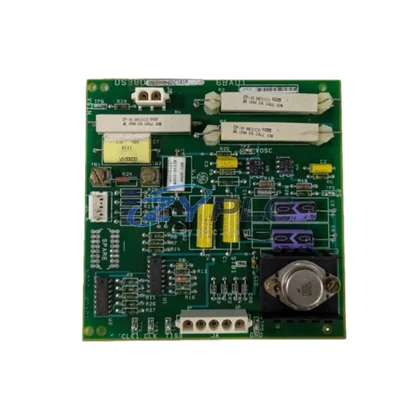
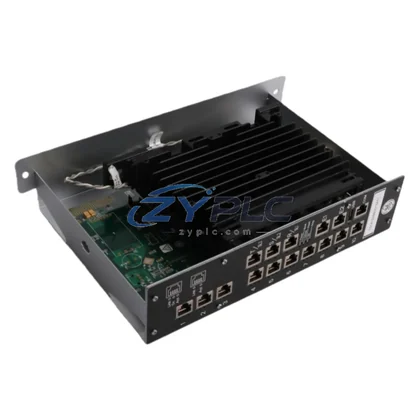
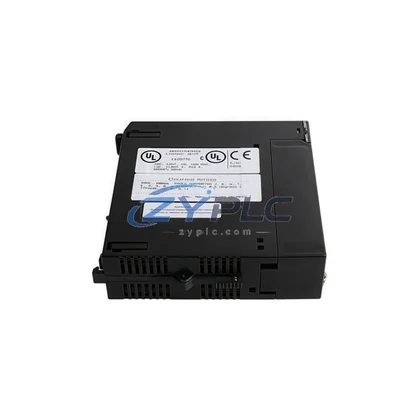
GE AEREVB 211QS10540C Vibration Sensor for AEREVB Automation
The GE AEREVB 211QS10540C is a high-precision vibration sensor engineered for industrial condition monitoring environments where energy efficiency, equipment uptime, and production line optimization are mission-critical. As part of the Bently Nevada AEREVB series, this sensor delivers continuous, real-time vibration data that enables plant engineers to shift from reactive maintenance to predictive, maintenance-focused asset management — reducing unnecessary motor run time, eliminating unplanned downtime, and cutting overall operating load across rotating machinery systems.
In modern manufacturing and process industries, undetected mechanical imbalance, misalignment, or bearing wear forces drive systems to operate at suboptimal efficiency, consuming excess power and accelerating component degradation. The 211QS10540C addresses this directly by providing high-fidelity vibration signals that feed into control and monitoring architectures, allowing operators to intervene before unplanned downtime compounds into equipment failure.
Product Specification Table
| Parameter |
Specification / Value |
| SKU / Part Number |
211QS10540C |
| Brand / Series |
GE Bently Nevada AEREVB |
| Product Category |
Industrial Vibration Sensor |
| Operating Voltage |
18–30 VDC (typical loop-powered) |
| Output Signal |
4–20 mA / Voltage analog |
| Frequency Response |
2 Hz – 10 kHz (application-dependent) |
| Compatible Systems |
Bently Nevada 3500 Series, System 1 Software, DCS/SCADA, PLC-based monitoring platforms |
| Application Environment |
Rotating machinery, compressors, turbines, pumps, motors, fans |
| Maintenance Value |
Enables predictive maintenance, reduces unplanned stops, lowers motor unplanned downtime |
| Ingress Protection |
IP67 (typical for industrial field installation) |
| Origin |
United States |
| Warranty |
warranty terms confirmed during quotation |
System Compatibility and Application
The 211QS10540C is designed to integrate seamlessly into layered industrial automation architectures where condition monitoring and control efficiency are tightly coupled. In a typical deployment, the sensor mounts directly on motor housings or bearing pedestals and transmits continuous vibration amplitude and frequency data to a Bently Nevada 3500/42M Proximitor I/O Module, which conditions the signal and forwards it to the plant’s central monitoring backbone.
From there, the vibration data is ingested by Bently Nevada System 1 Condition Monitoring Software, where trend analysis and alarm thresholds are configured. When vibration levels exceed baseline parameters — indicating bearing wear, rotor imbalance, or resonance — the system triggers alerts that allow maintenance teams to schedule corrective action during planned downtime windows rather than emergency shutdowns, preserving both energy efficiency and production throughput.
On the control side, the 211QS10540C’s analog output integrates with GE Fanuc Series 90-30 PLC or equivalent programmable logic controllers via standard analog input modules. This allows the PLC to modulate connected ABB ACS880 variable frequency drives (VFDs) in response to real-time vibration feedback — reducing motor speed when vibration thresholds approach warning levels, thereby cutting energy draw before a fault condition develops. This closed-loop approach between vibration sensing and drive control is a cornerstone of energy-optimized motor management.
For facilities running distributed control systems, the sensor’s output is compatible with Emerson DeltaV DCS analog input cards, enabling plant-wide energy dashboards that correlate vibration health with power consumption metrics. Alongside Schneider Electric PowerLogic PM8000 power meters, operators gain a unified view of both mechanical condition and electrical operating load — identifying which assets are drawing excess power due to mechanical degradation.
In multi-axis servo applications, the 211QS10540C complements Siemens SINAMICS S120 servo drive systems by providing independent vibration verification on servo-driven axes, ensuring that drive efficiency gains are not offset by mechanical transmission losses. Communication to higher-level SCADA systems is handled via Profibus DP or Modbus TCP/IP gateways, ensuring the vibration data is available for energy reporting and OEE (Overall Equipment Effectiveness) calculations across the enterprise.
Maintenance and Replacement Notes
In continuous process industries — petrochemical plants, paper mills, food processing facilities, and automotive assembly lines — rotating machinery accounts for 60–70% of total electrical operating load. The GE AEREVB 211QS10540C directly addresses this by enabling a condition-based maintenance planning strategy that goes beyond simple fault detection.
When installed on centrifugal pumps, the sensor detects cavitation and impeller imbalance early, allowing operators to adjust flow rates and reduce pump motor loading before efficiency degrades. On compressor trains, early detection of rotor rub or bearing wear prevents the progressive efficiency losses that force compressors to draw increasing power to maintain output pressure. On conveyor and fan systems, vibration trending identifies belt tension issues and blade fouling that silently increase drive operating load over weeks or months.
The 211QS10540C also supports production line rhythm optimization. By correlating vibration signatures with production cycle data, maintenance engineers can identify mechanical bottlenecks that slow line throughput — forcing upstream equipment to idle longer and consume standby energy unnecessarily. Resolving these mechanical inefficiencies tightens production cadence and reduces the total energy consumed per unit of output.
From a maintenance cost perspective, the sensor’s continuous monitoring capability eliminates the need for periodic manual vibration checks using handheld analyzers, reducing labor hours and the risk of missed fault development between inspection intervals. All units supplied by ZYPLC undergo pre-shipment functional testing to verify signal output accuracy and sensor integrity, ensuring that the 211QS10540C performs to specification from day one of installation. Every unit is backed by a warranty terms confirmed during quotation, with availability confirmed by RFQ availability supporting rapid deployment for both planned upgrades and emergency replacement scenarios.
Product Sourcing FAQ
Q1: How does the GE AEREVB 211QS10540C contribute to measurable operational stability?
By providing continuous vibration monitoring, the 211QS10540C enables early detection of mechanical inefficiencies — such as bearing wear, imbalance, and misalignment — that cause motors and drives to consume excess energy. Integrating its output with VFDs like the ABB ACS880 allows automatic speed reduction when vibration anomalies are detected, supporting earlier maintenance decisions and reducing unplanned downtime risk.
Q2: Is the 211QS10540C compatible with existing Bently Nevada monitoring systems and third-party PLCs?
Yes. The sensor is designed for integration with the Bently Nevada 3500 Series monitoring rack and System 1 software. Its standard analog output (4–20 mA) is also compatible with most third-party PLC analog input modules, including GE Fanuc, Siemens S7, and Allen-Bradley ControlLogix platforms, making it suitable for both greenfield and retrofit installations.
Q3: What is the recommended replacement and testing process when substituting an existing vibration sensor?
ZYPLC recommends verifying the mounting thread specification, cable connector type, and sensitivity range (mV/g or mV/mm·s⁻¹) of the existing sensor before ordering a replacement. All 211QS10540C units shipped by ZYPLC are tested prior to dispatch to confirm output signal integrity. Upon installation, a baseline vibration spectrum should be recorded to establish the new reference for trend monitoring.
Q4: What warranty and supply support does ZYPLC provide for the GE AEREVB 211QS10540C?
Every 211QS10540C supplied by ZYPLC carries a warranty terms confirmed during quotation covering manufacturing defects and functional failures under normal operating conditions. ZYPLC maintains RFQ-confirmed sourcing to support urgent replacement requirements, with rapid dispatch capability for minimizing production downtime. For volume procurement or project-based supply, contact the ZYPLC sales team directly.