GE DS200TCPSG1APE DC Power Supply for Mark V Automation
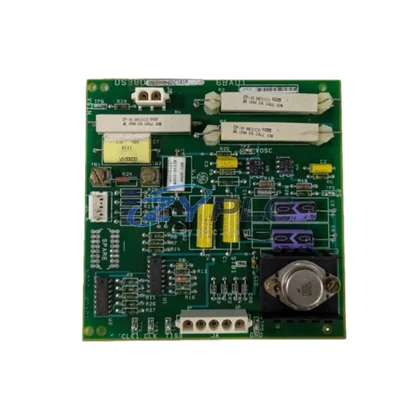
The GE DS200TCPSG1APE is a industrial-grade DC input power supply module engineered for the GE Mark V turbine control platform. In modern industrial environments where equipment uptime and replacement lead time directly affect production continuity, this module plays a critical role in stabilizing power delivery to the control system, reducing parasitic energy losses, and ensuring that downstream control components — including servo drives, I/O modules, and communication cards — operate within their optimal voltage and current envelopes. By maintaining a clean, regulated DC bus, the DS200TCPSG1APE minimizes the risk of voltage sag events that can trigger nuisance trips, force unplanned shutdowns, and erode overall equipment effectiveness (OEE).
Industrial facilities running GE Mark V turbine control systems depend on a tightly integrated architecture where every layer — from power conditioning to signal processing — contributes to the energy efficiency of the entire plant. The DS200TCPSG1APE sits at the foundation of this architecture, supplying stable DC power to boards such as the DS200TCQCG1A (turbine control quad core board), the DS200SDCCG1A (speed and dynamics control card), and the DS200TCRAG1A (relay output board). When the power supply operates at peak efficiency, these downstream boards can execute control algorithms with lower latency and higher precision, directly improving turbine response time and reducing fuel consumption per unit of output.
Product Specification Table
| Parameter |
Specification / Value |
| SKU / Part Number |
DS200TCPSG1APE |
| Compatible Platform |
GE Mark V Turbine Control System |
| Input Type |
DC Input |
| Module Category |
DC Input Power Supply Module |
| Operating Environment |
Industrial Control Panels, Turbine Control Rooms |
| Energy Efficiency Value |
Stable DC bus regulation reduces downstream switching losses and prevents voltage-induced control faults |
| Compatible Systems |
GE Mark V, Mark VI (interface-compatible boards), turbine DCS environments |
| Application Sectors |
Power Generation, Oil & Gas, Petrochemical, Heavy Industry |
| Warranty |
warranty and condition confirmed before quote |
| Testing |
Full functional test prior to shipment |
| Availability |
RFQ Available — Shipment arranged after confirmation |
System Compatibility and Application
The DS200TCPSG1APE does not operate in isolation. Its efficiency impact is best understood within the broader Mark V control architecture. The module supplies regulated DC power to the DS200TCPAG1A (power amplifier board), which in turn drives the servo actuators responsible for fuel valve positioning. Precise fuel valve control is one of the most direct levers for reducing turbine heat rate — even a 0.5% improvement in valve positioning accuracy can translate into measurable fuel savings over a full operating year.
On the signal side, the DS200TCEAG1A (excitation control board) relies on stable power delivery to maintain generator excitation within tight tolerances. Voltage fluctuations caused by a degraded power supply module can introduce reactive power imbalances that increase transmission losses and reduce power factor — both of which inflate the effective energy cost of generation. By replacing a failing DS200TCPSG1APE with a tested, fully functional unit, plant engineers can restore excitation stability and recover lost efficiency margin.
The DS200TCDAG1A (digital-to-analog conversion board) and DS200TCDAH1BHD (high-density I/O board) also benefit directly from clean power supply operation. These boards handle the analog output signals that command variable frequency drives (VFDs) on auxiliary systems — cooling fans, lube oil pumps, and fuel gas compressors. When the power supply delivers stable reference voltages, the VFD command signals remain accurate, allowing the drives to operate at the lowest speed necessary to meet process demand rather than running at fixed high speeds. This load-following behavior is one of the most effective strategies for reducing auxiliary power consumption in turbine plants.
For facilities that have integrated the GE Mark V with a distributed control system (DCS) via Modbus RTU or PROFIBUS DP communication cards, the integrity of the power supply is equally important. Communication timeouts caused by power instability can force the DCS to fall back to manual control modes, eliminating the maintenance planning benefits of automated load dispatch and setpoint management. A reliable DS200TCPSG1APE ensures that the communication layer remains active and that the plant’s maintenance planning system receives continuous, accurate data from the turbine controller.
Maintenance and Replacement Notes
In combined-cycle power plants and cogeneration facilities, the Mark V control system is often responsible for coordinating the operation of multiple turbine-generator sets. The DS200TCPSG1APE supports this coordination role by ensuring that the control system remains energized and responsive during load transitions, grid disturbances, and startup sequences — all of which are periods of elevated energy consumption and elevated risk of control system faults.
Predictive maintenance programs increasingly rely on continuous monitoring of control system health indicators, including power supply output voltage, ripple current, and thermal performance. A DS200TCPSG1APE that is approaching end of life will typically exhibit increased output ripple before it fails completely. This ripple propagates through the control backplane and can cause intermittent faults in the DS200TCQCG1A processor board, leading to spurious alarms, false trips, and unplanned outages. Proactive replacement of the power supply module — based on condition monitoring data — eliminates these failure modes and reduces the maintenance cost per operating hour.
From a production line rhythm perspective, unplanned turbine trips caused by control system power faults are among the most disruptive events in a power generation facility. Each trip event requires a full restart sequence that can take 30 minutes to several hours, depending on turbine type and cooling requirements. During this period, the facility either draws replacement power from the grid at peak tariff rates or reduces output to connected industrial customers. A single prevented trip event can justify the cost of a replacement DS200TCPSG1APE many times over.
All units supplied by ZYPLC are sourced from verified industrial channels, subjected to full functional testing under load conditions, and shipped with a warranty and condition confirmed before quote. RFQ-based availability ensures that replacement units dispatch timing is confirmed during RFQ after order confirmation, minimizing the duration of any planned maintenance window and supporting the facility’s commitment to maximum equipment utilization.
Product Sourcing FAQ
Q1: How does replacing the DS200TCPSG1APE improve turbine energy efficiency?
A: A degraded power supply introduces voltage instability across the Mark V control backplane, which can cause imprecise fuel valve positioning, excitation control errors, and VFD command signal drift. Each of these effects increases fuel consumption or auxiliary power draw. A fully functional DS200TCPSG1APE restores control precision and allows the turbine to operate at its designed heat rate.
Q2: Is the DS200TCPSG1APE compatible with both Mark V and Mark VI control systems?
A: The DS200TCPSG1APE is designed for the GE Mark V platform. Some interface-compatible boards can be used in Mark VI environments with appropriate engineering review, but compatibility should be confirmed with your control system integrator before installation. ZYPLC’s technical team can assist with compatibility assessment.
Q3: What testing is performed before shipment?
A: Every DS200TCPSG1APE unit undergoes full functional testing, including DC input acceptance, output voltage regulation verification, ripple current measurement, and thermal cycling. Test records are available upon request. All units ship with a warranty and condition confirmed before quote covering manufacturing defects and functional failures.
Q4: How quickly can a replacement unit be delivered, and what is the warranty coverage?
A: Shipment timing is confirmed after RFQ review, testing, and export packing. The warranty and condition confirmed before quote covers functional failures under normal operating conditions. ZYPLC also offers exchange programs for core returns, which can reduce the net cost of replacement and support sustainable parts management practices.