GE DS3800HSAA1U1N Industrial Network Interface for Mark IV Systems: Bridging Industrial Data Links in Smart Factory Environments
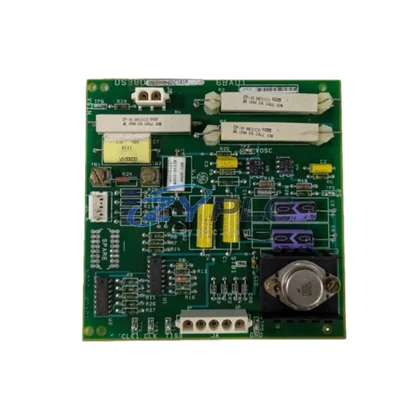
The GE DS3800HSAA1U1N is a high-performance Servo Amplifier Board engineered for the GE Mark IV turbine control platform. Beyond its core servo amplification function, this module plays a pivotal role in the industrial data chain — acting as a critical communication node between field-level actuators, PLC controllers, remote I/O subsystems, HMI panels, SCADA systems, and upper-level management networks. In modern smart factory deployments, the DS3800HSAA1U1N ensures that real-time servo positioning data, drive feedback signals, and system status information flow seamlessly across every layer of the automation hierarchy.
Compatibility & Integration Notes
| Parameter |
Specification |
| SKU |
DS3800HSAA1U1N |
| Brand / Manufacturer |
GE (General Electric) |
| Series |
Mark IV Turbine Control |
| Product Type |
Servo Amplifier Board |
| Protocol Support |
Proprietary GE Mark IV Serial Bus, RS-422, Analog I/O Signal Interface |
| Interface Type |
Multi-pin Edge Connector, Backplane Bus Interface |
| Transmission Capability |
High-speed servo feedback loop, real-time analog signal processing |
| Network Compatibility |
GE Mark IV / Mark V control racks, compatible with SPEEDTRONIC™ platform |
| System Application |
Gas turbine control, steam turbine control, compressor control, SCADA integration |
| Origin |
USA |
| Warranty |
warranty terms confirmed during quotation — all units tested prior to shipment |
Connected Automation Data Flow
In a typical Mark IV turbine control architecture, the DS3800HSAA1U1N sits at the heart of the servo control loop, receiving command signals from the main processor board — such as the DS3800HMPK1G1A — and translating them into precise actuator drive outputs. This closed-loop data path begins at the sensor layer, where thermocouples, pressure transducers, and speed pickups feed raw process data into the system. The DS3800HSAA1U1N amplifies and conditions these signals before passing them upstream to the turbine control rack.
Within the control rack, the servo amplifier board communicates directly with companion modules including the DS3800HSAB1A1A servo amplifier variant and the DS3800NPSE1C1B power supply board, which provides the stable DC bus voltage essential for consistent servo response. The DS3800HLIA1B1C I/O interface board further extends the data reach, connecting field wiring from limit switches, solenoid valves, and position feedback encoders into the Mark IV backplane.
For facilities integrating GE Mark IV systems with modern Ethernet-based SCADA platforms, the data chain typically extends through an industrial gateway — such as the IC695ETM001 Ethernet module from the GE PACSystems RX3i family — which bridges the legacy serial communication of the Mark IV rack to a TCP/IP network backbone. This allows SCADA operators running platforms like iFIX or Proficy to monitor turbine servo positions, valve stroke data, and alarm states in real time without interrupting the control loop.
At the PLC layer, controllers such as the IC695CPE400 PACSystems RX3i CPU or the IC693CPU374 Series 90-30 CPU can be configured to exchange data with the Mark IV system via dedicated communication modules, enabling coordinated control across multi-unit power generation sites. Remote I/O expansion — handled by modules like the DS200TCQAG1B terminal board — ensures that distributed field devices remain tightly integrated into the central control architecture regardless of physical distance.
HMI panels connected via the IS200TSVCH1A servo control board interface provide operators with live visualization of servo loop performance, including position error, drive current, and feedback signal quality. This end-to-end data visibility — from the DS3800HSAA1U1N at the field level all the way to the SCADA dashboard — is what defines a truly connected smart factory turbine control system. The IC695PSD140 power supply module rounds out the system by ensuring all rack-mounted modules, including the DS3800HSAA1U1N, receive clean, regulated power for uninterrupted operation.
Solving Data Isolation in Industrial Sites
One of the most persistent challenges in legacy turbine control environments is protocol fragmentation. The GE Mark IV platform uses a proprietary serial communication architecture that does not natively speak Modbus, PROFIBUS, or EtherNet/IP — the protocols common in modern PLC and SCADA ecosystems. This creates data silos where turbine performance metrics remain locked inside the Mark IV rack, invisible to plant-wide monitoring systems.
The DS3800HSAA1U1N, as a core servo amplifier board within this architecture, is the starting point for solving this isolation. By ensuring the servo control loop operates with maximum signal fidelity and minimal latency, it provides the stable, reliable data foundation that upstream protocol converters and gateways depend on. When paired with appropriate communication bridges, the DS3800HSAA1U1N’s output data — valve positions, actuator feedback, drive status — can be translated into standard industrial protocols and made available to SCADA, MES, and cloud analytics platforms.
Remote diagnostics become possible when the servo amplifier board’s health data is accessible via the network. Maintenance teams can monitor drive current trends, detect early signs of servo loop instability, and schedule predictive maintenance interventions without requiring physical access to the control room. This capability directly supports production line transparency and reduces unplanned downtime — a critical KPI in power generation and process industries.
System expansion is equally straightforward. The Mark IV rack architecture allows additional servo amplifier boards, I/O modules, and communication interfaces to be added as plant requirements grow, without redesigning the core control system. The DS3800HSAA1U1N’s compatibility with the full Mark IV module ecosystem ensures that scaling up does not introduce integration risk.
Industrial Connectivity FAQ
Q1: What communication protocols does the DS3800HSAA1U1N support, and can it integrate with modern SCADA systems?
The DS3800HSAA1U1N operates within the GE Mark IV proprietary serial bus architecture, supporting RS-422 and analog signal interfaces native to the SPEEDTRONIC™ platform. Integration with modern SCADA systems is achieved through protocol gateway modules — such as the IC695ETM001 Ethernet module — that bridge the Mark IV serial bus to standard TCP/IP networks, enabling full SCADA visibility without modifying the core control loop.
Q2: How does the DS3800HSAA1U1N perform in terms of communication latency and servo loop stability?
The DS3800HSAA1U1N is designed for deterministic, low-latency servo response within the Mark IV control cycle. The board processes feedback signals and generates drive outputs within the turbine control scan rate, typically in the millisecond range. All units supplied by ZYPLC are tested under load prior to shipment to verify servo loop stability, signal integrity, and response time compliance.
Q3: Is the DS3800HSAA1U1N compatible with both Mark IV and Mark V control systems?
The DS3800HSAA1U1N is primarily designed for the GE Mark IV SPEEDTRONIC™ turbine control platform. Compatibility with Mark V systems depends on the specific rack configuration and backplane revision. ZYPLC’s technical team can verify cross-compatibility based on your system’s serial number and configuration data — contact us at plc.sales@zyplc.com for a compatibility assessment before ordering.
Q4: What warranty and testing standards apply to the DS3800HSAA1U1N supplied by ZYPLC?
Every DS3800HSAA1U1N unit supplied by ZYPLC carries a warranty terms confirmed during quotation covering functional defects under normal operating conditions. Prior to shipment, each board undergoes functional testing including servo loop verification, signal output checks, and power supply integrity tests. Units are shipped via DHL or FedEx with full tracking, and our team provides post-delivery technical support to assist with installation and commissioning.