GE DS3800NOAA1F1D Analog Output for Speedtronic Mark IV
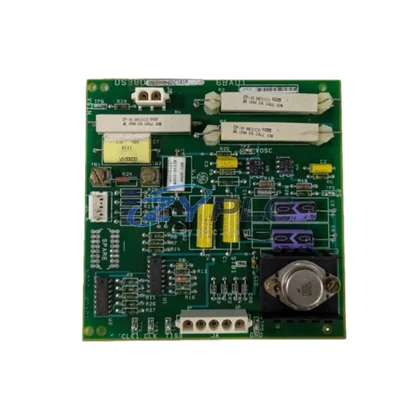
The GE DS3800NOAA1F1D is a precision analog output module engineered for deployment within the GE Speedtronic Mark IV turbine control platform. Far from a standalone component, this board occupies a critical position within a layered automation architecture — serving as the bridge between the digital command layer and the physical actuator layer in gas turbine, steam turbine, and combined-cycle power generation systems. Understanding its role requires examining the full control system hierarchy in which it operates: from the CPU and I/O backplane, through the signal conditioning and communication layers, down to the final control elements that govern fuel valves, inlet guide vanes, and bypass dampers.
In a complete Speedtronic Mark IV control cabinet, the DS3800NOAA1F1D interfaces directly with the system backplane, receiving digital setpoints from the turbine control processor and converting them into precise 4–20 mA or 0–10 V analog signals. These signals are routed to servo amplifiers, electro-hydraulic actuators, and positioners that govern the turbine’s operational parameters in real time. The module’s output resolution and signal stability are essential to maintaining tight control over turbine speed, exhaust temperature, and load distribution — parameters that directly affect both efficiency and safety margins in continuous-duty industrial environments.
Product Specification Table
| Parameter |
Specification |
| Part Number |
DS3800NOAA1F1D |
| Manufacturer |
GE (General Electric) |
| Series |
Speedtronic Mark IV |
| Module Type |
Analog Output Module |
| System Role |
Digital-to-Analog Signal Conversion for Actuator Control |
| Output Signal Type |
4–20 mA / 0–10 V DC (application-dependent) |
| Output Channels |
Multiple isolated analog output channels |
| Communication Layer |
Backplane-integrated, Mark IV I/O bus compatible |
| Installation Environment |
Industrial control cabinet, DIN rail or card rack mount |
| Operating Temperature |
0°C to 60°C (standard industrial range) |
| Power Supply Compatibility |
Mark IV system power bus (24 VDC regulated) |
| Redundancy Support |
Compatible with TMR (Triple Modular Redundancy) architecture |
| Origin |
United States |
| Warranty |
warranty terms confirmed during quotation — fully tested before shipment |
| system integration |
Verified compatible with Mark IV DCS/PLC hybrid architectures |
System Compatibility Notes
The DS3800NOAA1F1D does not operate in isolation. Its performance is inseparable from the broader Mark IV system architecture, and its correct specification requires an understanding of the upstream and downstream components with which it must coordinate. At the processor level, the DS3800HPPC1C1A turbine control processor generates the digital command signals that the DS3800NOAA1F1D translates into analog outputs. These commands are distributed across the I/O backplane via the DS3800DMEA data management board, which governs inter-module communication and ensures signal integrity across the card rack.
On the power supply side, the DS3800DPCA power supply module provides the regulated 24 VDC bus that the DS3800NOAA1F1D depends on for stable output performance. Voltage fluctuations at the power layer directly affect analog output accuracy, making the selection of a compatible, well-maintained power module a prerequisite for reliable operation. In redundant architectures, a secondary DS3800DPCA or equivalent backup supply is typically installed to ensure continuity during maintenance windows or component failures.
The analog outputs generated by the DS3800NOAA1F1D are typically routed to servo valve drivers and electro-hydraulic actuator controllers. In many Mark IV installations, the DS3800NANA analog input module works in tandem with the DS3800NOAA1F1D — receiving feedback signals from field transmitters and position sensors, closing the control loop and enabling the processor to make real-time corrections. This feedback architecture is fundamental to the proportional-integral-derivative (PID) control strategies used in turbine speed governing and temperature control.
For communication and diagnostics, the DS3800HUMB1B1A communication interface board enables the Mark IV system to exchange data with plant-level SCADA systems, historian servers, and DCS platforms via serial or proprietary GE communication protocols. This integration layer is essential for operators who require real-time visibility into turbine performance metrics and alarm states. The DS3800EPCA expander card further extends the I/O capacity of the control rack, allowing additional analog and digital modules — including supplementary DS3800NOAA1F1D boards — to be added as system requirements evolve.
At the human-machine interface layer, operator workstations running GE’s Mark IV supervisory software display the analog output values generated by the DS3800NOAA1F1D in real time, enabling engineers to monitor actuator commands, verify signal ranges, and diagnose deviations without interrupting turbine operation. Terminal boards such as the DS3800XTBA provide the field wiring interface, connecting the module’s output channels to the plant’s cable infrastructure through clearly labeled, individually fused terminal points that simplify both commissioning and long-term maintenance.
Industrial Application Notes
The DS3800NOAA1F1D finds application across a wide range of heavy industrial environments where GE Speedtronic Mark IV systems have been deployed. In power generation, it governs fuel control valves and inlet guide vane actuators in gas turbine units, directly influencing combustion efficiency, emissions compliance, and load response characteristics. Plants operating in frequency-regulation or peak-shaving roles depend on the module’s output stability to achieve the rapid load changes demanded by grid operators.
In petrochemical and refinery applications, Mark IV-controlled compressor trains and process gas turbines rely on the DS3800NOAA1F1D to maintain precise speed and surge control. The module’s ability to deliver stable, repeatable analog signals under continuous-duty conditions makes it well-suited to the demanding thermal and electrical environments found in compressor stations and LNG processing facilities.
Within steel and metallurgical plants, the module supports rolling mill drive systems and furnace atmosphere control applications where analog output precision directly affects product quality and process repeatability. In water treatment and pumping stations, Mark IV-based pump control systems use the DS3800NOAA1F1D to regulate variable-speed drives and control valve positioners, enabling energy-efficient flow management across large distribution networks.
For mining and mineral processing operations, the module’s robust industrial design and compatibility with the Mark IV redundancy architecture make it a reliable choice for conveyor drive control, crusher speed regulation, and ventilation fan management — applications where unplanned downtime carries significant operational and safety consequences. Across all these sectors, the availability of a tested, warranted DS3800NOAA1F1D with documented system integration support reduces commissioning risk and accelerates system restoration following component replacement.
Product Compatibility FAQ
Q1: Is the DS3800NOAA1F1D compatible with both early and late revisions of the Speedtronic Mark IV platform?
The DS3800NOAA1F1D is designed for the GE Speedtronic Mark IV I/O card rack architecture. Compatibility across specific firmware revisions and backplane configurations should be verified against the turbine’s original engineering documentation (BOM and wiring diagrams). Our technical team can assist with cross-referencing the module’s revision suffix against your system’s configuration records prior to installation, ensuring seamless system integration without requiring backplane modifications.
Q2: What installation and commissioning steps are required when replacing a DS3800NOAA1F1D in an operating turbine control system?
Replacement of the DS3800NOAA1F1D should be performed during a planned maintenance window with the turbine in a safe, shutdown state. The procedure typically involves documenting existing field wiring terminations at the associated terminal board (e.g., DS3800XTBA), removing the faulty module from the card rack, installing the replacement board, and verifying analog output calibration against known reference signals before returning the unit to service. All replacement modules supplied by ZYPLC are pre-tested and include a warranty terms confirmed during quotation, reducing the risk associated with component exchange in critical turbine control applications.
Q3: How does the warranty terms confirmed during quotation apply, and what support is available for long-term spare parts management?
Every DS3800NOAA1F1D supplied by ZYPLC carries a warranty terms confirmed during quotation covering functional defects identified under normal operating conditions. In the event of a warranty claim, ZYPLC provides direct technical support and expedited replacement to minimize turbine downtime. For customers managing long-term spare parts inventories across multiple Mark IV units, ZYPLC offers consignment stock arrangements and scheduled supply agreements, ensuring that critical analog output modules remain available without the lead times associated with OEM procurement channels.