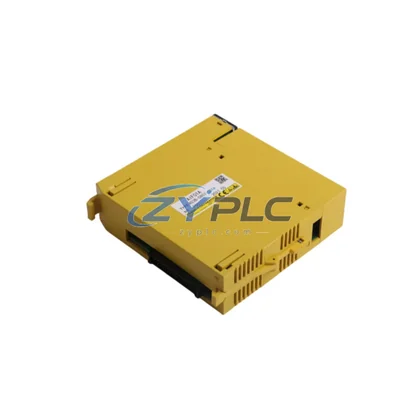
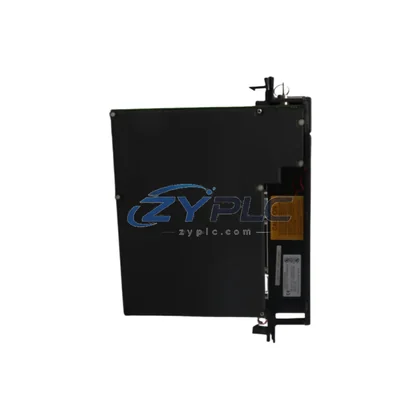
The GE Fanuc IC697MDL251 is a 24VDC discrete input module purpose-built for integration within the Series 90-70 programmable logic controller platform. Rather than functioning as a standalone component, the IC697MDL251 is designed to operate as a coordinated element within a layered industrial control architecture — contributing to signal acquisition at the field I/O layer while maintaining seamless communication with the CPU, power supply, backplane, and supervisory systems above it. In distributed manufacturing, power generation, petrochemical processing, and water treatment environments, the reliability of discrete input acquisition directly determines the integrity of the entire control loop. The IC697MDL251 addresses this requirement with a robust 32-channel 24VDC input design that supports high-density field wiring, optical isolation, and deterministic scan-cycle performance within the Series 90-70 rack infrastructure.
When deployed within a complete Series 90-70 system, the IC697MDL251 occupies a defined slot in the IC697CHS750 or IC697CHS782 baseplate, receiving backplane power and communication from the rack bus. The CPU module — typically an IC697CPU772 or IC697CPU781 — scans the input register of the IC697MDL251 on every program cycle, making field signal states immediately available to ladder logic, function block programs, and structured text routines. This tight integration between the I/O module and the CPU ensures that process events — limit switch closures, proximity sensor activations, pushbutton inputs, and relay contact states — are captured with minimal latency and reflected accurately in the controller’s data table.
Power distribution within the rack is managed by the IC697PWR710 or IC697PWR724 power supply module, which provides regulated 5VDC backplane power to all installed modules including the IC697MDL251. Proper power budgeting across the rack is essential when combining multiple I/O modules, communication processors, and specialty modules in a single chassis. The IC697MDL251’s low backplane current draw makes it well-suited for high-density rack configurations where power headroom must be carefully managed.
At the network layer, the Series 90-70 architecture supports integration with Genius Bus controllers such as the IC697BEM731, enabling the IC697MDL251’s input data to be transmitted across a Genius I/O network to remote drop controllers or supervisory SCADA systems. For Ethernet-based architectures, the IC697CMM742 communications module provides TCP/IP connectivity, allowing the CPU — and by extension the I/O data collected by the IC697MDL251 — to be accessed by HMI stations, historian servers, and MES platforms over standard industrial Ethernet infrastructure. This multi-layer communication capability ensures that discrete field signals captured by the IC697MDL251 are available at every level of the automation hierarchy, from local operator panels to enterprise data systems.
Human-machine interface integration is a critical consideration in any Series 90-70 deployment. Operator panels and HMI terminals connected via the SNP or SNP-X serial protocol can read input status registers from the IC697MDL251 in real time, providing operators with live visibility into field device states. In larger installations, SCADA platforms communicating via SRTP (Service Request Transport Protocol) over Ethernet can poll the IC697MDL251’s input data continuously, enabling alarm management, trend logging, and remote diagnostics without interrupting the controller’s scan cycle.
Redundancy is a key design consideration in critical process applications. The Series 90-70 platform supports CPU redundancy configurations using paired IC697CPU781 processors with the IC697RCM711 redundancy control module, ensuring that if the primary CPU fails, the standby unit assumes control without disrupting I/O scanning. The IC697MDL251, mounted in a standard rack slot, continues to deliver input data to whichever CPU is currently active, making it a compatible component in both simplex and redundant control architectures. For applications requiring I/O redundancy, dual-rack configurations with mirrored I/O modules provide an additional layer of fault tolerance.
From a maintenance and lifecycle perspective, the IC697MDL251’s modular design allows field replacement without disturbing adjacent modules or rewiring terminal blocks. Diagnostic LEDs on the module faceplate provide immediate visual indication of channel status and module health, reducing troubleshooting time during commissioning and routine maintenance. Spare module availability is a practical concern in long-running industrial installations, and sourcing verified IC697MDL251 units with a warranty terms confirmed during quotation ensures that replacement modules meet original performance specifications and are backed by documented quality assurance.
Product Specification Table
| Parameter |
Specification |
| System Role |
Discrete Field Input Acquisition — Series 90-70 I/O Layer |
| Input Channels |
32 Channels, 24VDC |
| Input Voltage Range |
18–30VDC (nominal 24VDC) |
| Input Current per Channel |
Approx. 7mA at 24VDC |
| Isolation |
Optical isolation, field side to backplane |
| Backplane Interface |
Series 90-70 VME-based rack bus |
| Compatible Racks |
IC697CHS750, IC697CHS782, IC697CHS790 |
| Compatible CPUs |
IC697CPU772, IC697CPU781, IC697CPU788 |
| Communication Protocols |
SNP, SNP-X, SRTP (via CPU/CMM), Genius Bus (via IC697BEM731) |
| Operating Temperature |
0°C to 60°C |
| Relative Humidity |
5% to 95% non-condensing |
| Mounting |
Series 90-70 rack slot (any I/O slot) |
| Warranty |
warranty terms confirmed during quotation — verified replacement units available |
| system integration |
Full system integration with Series 90-70 CPU, power, and network layers |
System Compatibility Notes
The IC697MDL251 achieves its full operational value when configured as part of a coordinated Series 90-70 control system. A typical architecture begins with the IC697CPU781 as the central processing unit, managing program execution and I/O scanning across all rack-mounted modules. The IC697PWR724 power supply provides stable backplane power, while the IC697CHS750 nine-slot rack serves as the physical integration platform for the CPU, I/O modules, and communication processors.
Alongside the IC697MDL251 discrete input module, a complete I/O layer typically includes the IC697MDL340 discrete output module for actuator control, the IC697ALG320 analog input module for process variable measurement, and the IC697ALG390 analog output module for control signal generation. These modules share the same backplane bus, allowing the CPU to manage both digital and analog I/O within a unified scan cycle.
Network connectivity is extended through the IC697CMM742 Ethernet communications module, which enables SRTP-based communication with SCADA systems and HMI platforms. For Genius Bus topologies, the IC697BEM731 bus controller module bridges the rack-level I/O data to remote Genius drop devices distributed across the plant floor. Terminal block assemblies and field wiring accessories complete the installation, providing organized, labeled connections between the IC697MDL251’s input channels and field devices such as limit switches, proximity sensors, and pushbutton stations.
Industrial Application Notes
In manufacturing automation, the IC697MDL251 is commonly deployed on assembly lines where discrete signal acquisition from conveyor position sensors, part-present detectors, and safety interlocks must be processed reliably at high scan rates. The module’s 32-channel capacity allows a single rack slot to monitor an entire zone of field devices, reducing rack space requirements and simplifying system architecture.
In power generation and electrical substation applications, the IC697MDL251 captures status signals from circuit breakers, disconnect switches, and protection relay contacts, providing the Series 90-70 CPU with real-time visibility into switchgear states. This data feeds into protection logic, alarm management routines, and SCADA reporting systems, supporting both operational monitoring and regulatory compliance requirements.
Petrochemical and refinery process control systems rely on the IC697MDL251 for discrete input acquisition from motor run/stop feedback, valve position limit switches, and emergency shutdown (ESD) system inputs. The module’s optical isolation ensures that high-voltage transients common in industrial field environments do not propagate to the backplane, protecting the CPU and other rack-mounted modules from electrical interference.
Water and wastewater treatment facilities use the IC697MDL251 to monitor pump status, level switch states, and flow switch contacts across distributed pump stations and treatment process areas. In mining and metallurgical applications, the module supports conveyor belt monitoring, crusher interlock systems, and ore handling equipment status acquisition, where reliable discrete input processing is essential for both production efficiency and personnel safety.
Product Compatibility FAQ
Q1: Is the IC697MDL251 compatible with all Series 90-70 rack configurations and CPU models?
The IC697MDL251 is designed for use in any standard Series 90-70 rack, including the IC697CHS750, IC697CHS782, and IC697CHS790 chassis. It is compatible with all Series 90-70 CPU modules, including the IC697CPU772, IC697CPU781, and IC697CPU788. The module occupies a standard I/O slot and requires no special configuration beyond standard I/O table assignment in the programming software. Mixed-rack configurations combining discrete input, discrete output, and analog modules are fully supported.
Q2: How does the IC697MDL251 perform in redundant CPU architectures, and what are the installation considerations?
In Series 90-70 redundant CPU configurations using the IC697RCM711 redundancy control module, the IC697MDL251 continues to provide input data to whichever CPU is currently active. The module itself does not require any special configuration for redundant operation — the redundancy management is handled at the CPU and RCM level. For installations requiring I/O redundancy, duplicate racks with mirrored IC697MDL251 modules can be configured, with the active CPU selecting the appropriate I/O rack based on the redundancy control logic.
Q3: What does the warranty terms confirmed during quotation cover, and how does it support long-term maintenance planning?
The warranty terms confirmed during quotation covers the IC697MDL251 against defects in materials and workmanship under normal operating conditions. Warranted units are tested to verify input channel functionality, optical isolation integrity, backplane communication, and LED diagnostic operation prior to shipment. For maintenance planners managing aging Series 90-70 installations, sourcing warranted replacement modules provides assurance that spare parts meet documented performance standards, reducing the risk of introducing faulty modules during emergency replacements. Extended supply availability and warranty coverage support multi-year maintenance contracts and planned lifecycle extension programs for Series 90-70 control systems.