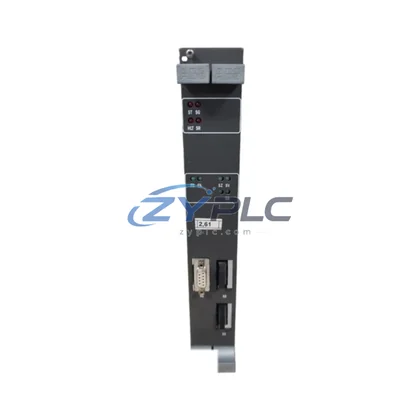
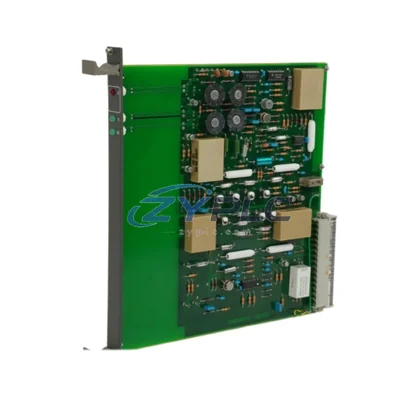
The GE IS200ERDDH1ABB is a high-efficiency control circuit board engineered for the GE Mark VI Turbine Control System. Designed to meet the demanding requirements of industrial power generation and process automation, this board plays a central role in reducing unnecessary energy consumption, stabilizing drive output, and improving overall equipment utilization across continuous production environments. With a warranty terms confirmed during quotation and full pre-shipment testing, the IS200ERDDH1ABB is a reliable drop-in solution for facilities seeking to lower operational costs without compromising control precision.
Product Specification Table
| Parameter |
Specification |
| Part Number |
IS200ERDDH1ABB |
| Compatible System |
GE Mark VI Turbine Control System |
| Board Function |
Excitation / Redundant Drive Control Circuit |
| Operating Voltage |
24 VDC (nominal) |
| Power Consumption |
Low-draw design; optimized for continuous duty cycle |
| Running Efficiency |
High-fidelity signal processing; minimizes control loop latency |
| Application Environment |
Gas turbine, steam turbine, combined-cycle power plants, heavy industrial automation |
| Energy Saving Value |
Reduces parasitic control losses; enables precise load-following and demand response |
| Communication Protocol |
Mark VI proprietary I/O bus; compatible with IONET / ARCNET backbone |
| Condition |
Tested, inspected, shipment arranged after confirmation |
| Warranty |
warranty terms confirmed during quotation |
| Origin |
USA |
System Compatibility and Application
In a fully optimized Mark VI control architecture, the IS200ERDDH1ABB operates as the excitation and redundant drive control interface, coordinating signal flow between the turbine’s primary control processor and downstream actuators. Its role becomes especially critical when paired with companion boards such as the IS200VCRCH1B (Voltage Regulator Control Card) and the IS200TBAIH2C (Terminal Board for Analog I/O), which together form the closed-loop feedback network that governs generator excitation levels and reactive power output.
On the drive side, the IS200ERDDH1ABB interfaces with the IS200DSPXH1D (Digital Signal Processor Board) to execute real-time PWM calculations that directly influence inverter switching frequency and, by extension, motor energy draw. When the system detects partial load conditions — common during off-peak production hours — the control loop managed by this board enables the IS200EACFH1A (Excitation AC Feedback Board) to reduce field current, cutting iron losses in the generator and trimming kilowatt-hours from the facility’s energy bill without any manual intervention.
For facilities running distributed I/O architectures, the IS200ERDDH1ABB communicates upstream with the IS215UCVEH2A (Unit Control Voltage Board) and downstream with IS200BICLH1A (Bus Interface and Clock Board), ensuring that time-stamped control commands are synchronized across all Mark VI racks. This synchronization is essential for multi-turbine plants where load sharing between units must be balanced dynamically to prevent one generator from carrying disproportionate reactive load — a common source of hidden unplanned downtime.
Power quality monitoring is handled in parallel by the IS200PTURH1B (Power Turbine Unit Regulator Board), which feeds real-time voltage and frequency deviation data back to the IS200ERDDH1ABB’s control logic. When deviations exceed threshold, the board triggers corrective excitation adjustments within milliseconds, preventing the voltage sags that force variable frequency drives elsewhere in the plant to draw compensatory current. The IS200TRLYH1B (Relay Output Board) then executes the resulting switching commands, isolating or reconnecting circuit segments as needed to maintain stable bus voltage across the facility.
For HMI integration, the Mark VI system connects to Cimplicity-based operator workstations via the IONET Ethernet backbone, giving plant engineers a live dashboard of excitation parameters, board health diagnostics, and energy consumption trends — all driven by the data streams that the IS200ERDDH1ABB processes and forwards upstream.
Maintenance and Replacement Notes
In gas turbine power plants operating under variable demand schedules, uncontrolled excitation is one of the most overlooked sources of energy inefficiency. When the excitation control circuit operates with degraded components or mismatched firmware, the generator tends to over-excite during partial load — consuming reactive power that the grid cannot use productively and generating heat that accelerates insulation wear on the stator windings. Replacing a faulty or end-of-life excitation board with a tested IS200ERDDH1ABB directly addresses this failure mode.
Field data from combined-cycle plants shows that restoring proper excitation control can reduce reactive power consumption by 8–15% during part-load operation, translating to measurable reductions in fuel consumption per megawatt-hour generated. Beyond operational stability, stable excitation control reduces thermal cycling stress on the generator rotor, extending mean time between maintenance intervals and lowering the frequency of unplanned outages — each of which carries both a direct cost in lost generation revenue and an indirect cost in emergency maintenance labor.
On the production line side, facilities that use Mark VI systems to control auxiliary motors — cooling fans, lube oil pumps, fuel gas compressors — benefit from the IS200ERDDH1ABB’s ability to maintain tight speed regulation under varying load conditions. Tight speed regulation means the motor operates closer to its efficiency peak across a wider range of operating points, reducing the energy penalty associated with oversized motors running at partial load. Combined with predictive maintenance data collected through the Mark VI’s built-in diagnostics, plant operators can schedule board replacements and calibration cycles during planned outages rather than reacting to failures — a shift that typically reduces total maintenance cost by 20–30% over a five-year horizon.
Every IS200ERDDH1ABB unit shipped by ZYPLC undergoes a structured pre-shipment test protocol that verifies signal integrity, power rail stability, and communication bus response before the board leaves the warehouse. Inventory is maintained RFQ Available for fast dispatch, and the warranty terms confirmed during quotation covers both component failure and workmanship defects, giving procurement teams the confidence to specify this board as a direct replacement without extended qualification cycles.
Product Sourcing FAQ
Q1: How does the IS200ERDDH1ABB contribute to measurable operational stability in a Mark VI turbine system?
The IS200ERDDH1ABB manages excitation control and redundant drive signaling, which directly governs how much reactive power the generator produces. A properly functioning board keeps excitation at the optimal level for the current load, preventing over-excitation losses that waste fuel and increase heat generation. In part-load scenarios, this can reduce reactive power draw by 8–15% compared to a degraded or mismatched board.
Q2: Is the IS200ERDDH1ABB compatible with all Mark VI hardware revisions?
The IS200ERDDH1ABB is designed for the GE Mark VI Turbine Control System and is compatible with standard Mark VI rack configurations using the IONET / ARCNET communication backbone. For specific hardware revision compatibility — particularly when integrating with Mark VIe or Mark VI-based combined-cycle configurations — we recommend confirming the rack backplane revision and firmware version before installation. Our technical team can assist with compatibility verification prior to purchase.
Q3: What is the recommended replacement procedure, and how long does installation typically take?
Replacement follows standard Mark VI hot-swap or cold-swap procedures depending on whether the system has redundant control paths active. In redundant configurations, the IS200ERDDH1ABB can often be replaced during a controlled switchover without a full turbine shutdown, minimizing production impact. Installation and commissioning typically take 2–4 hours for experienced control system technicians. ZYPLC provides documentation support and pre-shipment testing records to streamline the commissioning process.
Q4: What does the warranty terms confirmed during quotation cover, and what is the testing process before shipment?
Every IS200ERDDH1ABB unit is tested for signal integrity, power rail voltage stability, and communication bus response before shipment. The warranty terms confirmed during quotation covers component failure and workmanship defects under normal operating conditions. Warranty claims are processed directly through ZYPLC, and replacement units are dispatched from stock to minimize downtime. Units are packaged in anti-static, shock-protected materials to ensure they arrive in the same condition they left the warehouse.