GE IS200JPDMG1ADC PCB: Compatibility and Replacement Notes
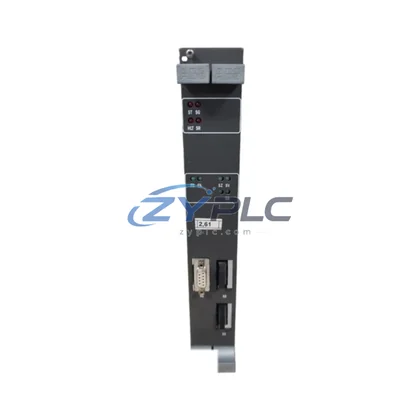
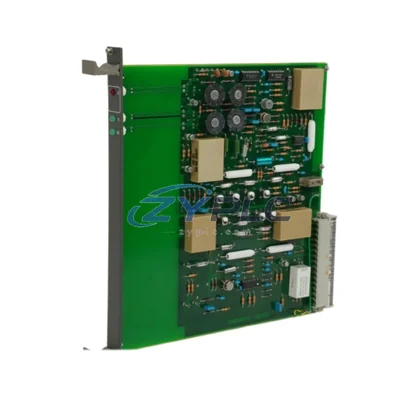
The GE IS200JPDMG1ADC is a printed circuit board module engineered for deployment within GE’s Mark VI turbine control platform — one of the most widely adopted distributed control architectures in power generation, oil & gas, and heavy industrial environments. Rather than functioning as a standalone component, the IS200JPDMG1ADC is designed to operate as an integrated node within a layered automation hierarchy, where signal integrity, module interoperability, and long-term serviceability are non-negotiable engineering requirements.
In modern industrial control system (ICS) design, every PCB module must be evaluated not only by its individual electrical specifications, but by its role within the broader control architecture. The IS200JPDMG1ADC fulfills a critical function within the Mark VI I/O and processing layer, ensuring that control signals are accurately conditioned, routed, and delivered to downstream actuators and feedback loops without latency or signal degradation. Its compatibility with the Mark VI backplane and rack infrastructure makes it a preferred choice for system integrators managing large-scale turbine control upgrades, redundancy expansions, and lifecycle replacement programs.
Product Specification Table
| Parameter |
Specification |
| Part Number / SKU |
IS200JPDMG1ADC |
| Manufacturer / Brand |
GE (General Electric) |
| Product Type |
Printed Circuit Board (PCB Module) |
| Compatible Platform |
GE Mark VI Turbine Control System |
| System Role |
I/O Signal Processing & Distribution Layer |
| Backplane Compatibility |
Mark VI Standard Rack / VME-based Backplane |
| Communication Capability |
IONet (GE proprietary), compatible with ARCNET-based I/O bus |
| Operating Voltage |
24 VDC (nominal, rack-supplied) |
| Operating Temperature |
0°C to 60°C (standard industrial range) |
| Mounting |
Card-slot insertion, Mark VI standard rack |
| Country of Origin |
United States |
| Warranty |
warranty terms confirmed during quotation (ZYPLC) |
| system integration |
Supported — compatible with Mark VI TMR and Simplex architectures |
System Compatibility Notes
The IS200JPDMG1ADC does not operate in isolation. Its value is fully realized when it is deployed as part of a coordinated Mark VI control system architecture. In a typical turbine control cabinet, the IS200JPDMG1ADC interfaces directly with the IS215UCVEH2A or IS215UCVEH2AE UCVE controller board, which serves as the primary CPU module managing turbine sequencing, protection logic, and setpoint control. The UCVE controller communicates with I/O boards — including the IS200JPDMG1ADC — via the IONet communication bus, ensuring deterministic, low-latency data exchange across the control rack.
Power distribution within the Mark VI rack is managed by dedicated power supply modules such as the IS200EPSMG1A (EPS power supply module), which provides regulated 28 VDC to all installed boards. Stable power delivery is essential for the IS200JPDMG1ADC to maintain consistent signal conditioning performance, particularly in high-vibration or thermally demanding environments such as gas turbine enclosures or offshore platforms.
On the I/O side, the IS200JPDMG1ADC works in conjunction with terminal board assemblies such as the IS200TBCIH2C or IS200TBCIH2BCA, which provide the physical field wiring termination points for analog and digital signals. These terminal boards connect to the PCB module via ribbon cables or direct backplane routing, forming a complete signal chain from field sensor to control processor. For applications requiring thermocouple or RTD input conditioning, companion modules such as the IS200TICIH1C (thermocouple input board) are typically installed in adjacent card slots.
In Triple Modular Redundant (TMR) configurations — the preferred architecture for critical turbine protection systems — three parallel sets of I/O and processing modules, including three instances of boards in the IS200 series, operate simultaneously. Voting logic within the IS215UCVEH2A controller compares outputs from all three channels, ensuring that a single-board failure does not interrupt turbine operation. This redundancy architecture is particularly important in combined-cycle power plants, LNG compression stations, and nuclear auxiliary systems where unplanned shutdowns carry significant operational and safety consequences.
Network connectivity between the Mark VI controller and plant-level SCADA or DCS systems is typically handled by communication gateway modules such as the IS200IOCIH1A or Modbus/OPC-DA interface cards, enabling the IS200JPDMG1ADC’s processed I/O data to be transmitted upstream to historian servers, operator workstations, and alarm management systems. HMI integration is commonly achieved through GE’s Cimplicity or ToolboxST engineering workstation software, which provides real-time visualization of all I/O module states, including the IS200JPDMG1ADC’s channel status and diagnostic flags.
Industrial Application Notes
The IS200JPDMG1ADC has demonstrated reliable performance across a broad range of industrial automation sectors:
Power Generation: In gas turbine and steam turbine power plants, the IS200JPDMG1ADC is deployed within Mark VI control panels managing fuel control valves, inlet guide vane actuators, and exhaust temperature monitoring arrays. Its ability to process multiple I/O channels simultaneously makes it well-suited for turbines with complex multi-variable control loops.
Oil & Gas / Petrochemical: Upstream and midstream facilities operating centrifugal compressors, gas lift systems, and pipeline booster stations rely on Mark VI-based control architectures for their proven reliability in hazardous area classifications. The IS200JPDMG1ADC supports these applications by providing stable I/O processing under continuous 24/7 operational demands.
Water Treatment & Utilities: Municipal water treatment plants and industrial utility systems increasingly adopt Mark VI-compatible modules for pump station automation, chemical dosing control, and SCADA integration. The IS200JPDMG1ADC’s compatibility with standard industrial communication protocols facilitates seamless integration into existing utility control networks.
Mining & Metallurgy: In mineral processing plants and smelting operations, where high-power drives and heavy electrical loads create challenging electromagnetic environments, the IS200JPDMG1ADC’s robust PCB design ensures signal integrity is maintained even under adverse electrical conditions.
Packaging & Discrete Manufacturing: For OEMs and system integrators building high-speed packaging lines or precision assembly systems on GE control platforms, the IS200JPDMG1ADC provides the I/O density and processing reliability needed to support multi-axis coordination and real-time quality inspection feedback loops.
Product Compatibility FAQ
Q1: Is the IS200JPDMG1ADC compatible with both TMR and Simplex Mark VI configurations?
Yes. The IS200JPDMG1ADC is designed for use in both Simplex (single-channel) and Triple Modular Redundant (TMR) Mark VI architectures. In TMR systems, three boards are installed in parallel across the R, S, and T control racks, with voting logic managed by the UCVE controller. In Simplex configurations, a single board is installed per rack. Always verify the specific revision suffix (e.g., ADC) against your system’s BOM to ensure hardware revision compatibility before installation.
Q2: What commissioning steps are required when replacing the IS200JPDMG1ADC in a live Mark VI system?
Replacement should be performed during a planned maintenance window. Prior to removal, download the current I/O configuration from ToolboxST and document all channel assignments. After installing the replacement IS200JPDMG1ADC, re-upload the configuration, perform a channel-by-channel loop check against field instruments, and verify that all diagnostic LEDs indicate normal operation before returning the turbine to service. ZYPLC recommends retaining the replaced board as a spare for at least 12 months post-replacement.
Q3: What does the warranty terms confirmed during quotation cover, and how does ZYPLC support long-term spare parts availability?
ZYPLC’s warranty terms confirmed during quotation covers manufacturing defects and functional failures under normal operating conditions from the date of shipment. If the IS200JPDMG1ADC fails within the warranty period, ZYPLC will provide a replacement or full refund at no additional cost. Beyond the warranty period, ZYPLC maintains a dedicated inventory of Mark VI series modules to support long-term spare parts programs, ensuring that engineers can source critical replacement boards without extended lead times. Contact our technical team at plc.sales@zyplc.com for availability and pricing.