GE IS230SNRTH2A IS200SRTDH2ACB: Industrial Data Link for Mark VI Turbine Control Networks
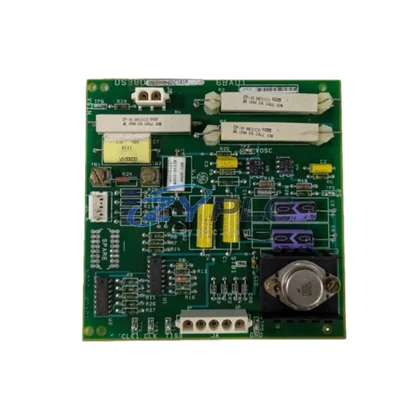
The GE IS230SNRTH2A paired with the IS200SRTDH2ACB forms a precision RTD (Resistance Temperature Detector) input module assembly engineered for GE’s Mark VI turbine control platform. In modern smart factory and power generation environments, reliable temperature signal acquisition is the foundation of every data-driven decision. This module captures analog RTD signals from field-mounted sensors — including PT100 and PT1000 elements — converts them into digital engineering values, and transmits real-time process data across the Mark VI backplane to the turbine control system’s core processors. The result is a seamless industrial data link from the physical process layer to the supervisory control and SCADA layer, enabling operators to monitor, diagnose, and respond to thermal conditions across the entire turbine train without data latency or signal isolation.
Compatibility & Integration Notes
| Parameter |
Specification |
| SKU |
IS230SNRTH2A / IS200SRTDH2ACB |
| Brand / Series |
GE / Mark VI Turbine Control |
| Module Type |
RTD Input Module (Resistance Temperature Detector) |
| Supported Protocols |
Mark VI IONet (proprietary GE backplane protocol), Modbus RTU (via gateway integration), OPC-UA (via Mark VIe / CIMPLICITY interface) |
| Interface Type |
Mark VI I/O Backplane Connector, Terminal Board (IS200SRTDH2ACB) |
| Signal Input |
RTD (PT100, PT1000, Ni120), 3-wire and 4-wire configurations |
| Transmission Capability |
Real-time analog-to-digital conversion; high-resolution temperature data to Mark VI controller |
| Network Compatibility |
GE Mark VI / Mark VIe control architecture; compatible with UCVEH, VCMI, and PPRO processor boards |
| System Application |
Gas turbine, steam turbine, combined-cycle power plants, compressor control, SCADA/HMI integration via CIMPLICITY or iFIX |
| Product Category |
Industrial I/O Module / Temperature Input / Turbine Control |
| Origin |
USA |
| Warranty |
Warranty and support terms confirmed before quote — All units ship after full functional testing |
Connected Automation Data Flow
In a typical Mark VI-based turbine control architecture, the IS230SNRTH2A / IS200SRTDH2ACB RTD input module sits at the front end of the industrial data chain. Field-mounted PT100 RTD sensors installed on turbine bearing housings, exhaust ducts, and inlet guide vane assemblies feed analog temperature signals into the IS200SRTDH2ACB terminal board. The board conditions and routes these signals to the IS230SNRTH2A processor card, which performs analog-to-digital conversion and transmits structured data packets over the Mark VI IONet backplane.
Downstream, the GE UCVEH or VCMI controller board receives this real-time temperature data and executes protection logic — triggering alarms, initiating load shedding, or commanding fuel valve actuators via companion output modules such as the IS200SVOTH1A servo output board or the IS230SNAOH1A analog output module. Simultaneously, the IS200EPCTG1A Ethernet communication card bridges the Mark VI IONet to the plant’s Ethernet backbone, making live process values available to CIMPLICITY HMI workstations and iFIX SCADA servers for operator visualization and historical trending.
For plants integrating third-party DCS or MES platforms, a Modbus TCP/RTU gateway — such as the GE IS200ECTBG1A or a compatible industrial protocol converter — can translate Mark VI IONet data into standard Modbus registers, enabling seamless communication with Siemens S7 PLCs, ABB AC800M controllers, or Rockwell ControlLogix systems on the same plant network. Remote I/O panels equipped with IS200SRLYH1A relay output modules extend the control reach to field switchgear and motor control centers, while edge gateways aggregate multi-turbine data streams for cloud-based analytics and predictive maintenance platforms.
Variable frequency drives (VFDs) monitoring cooling fan motors and lube oil pump motors also receive speed reference commands derived from the thermal data processed by this RTD module, closing the loop between temperature measurement and mechanical response. The entire data flow — from RTD sensor signal to SCADA dashboard to drive command — is made possible by the reliable, low-latency performance of the IS230SNRTH2A / IS200SRTDH2ACB assembly.
Solving Data Isolation in Industrial Sites
One of the most persistent challenges in legacy power generation and industrial automation facilities is protocol fragmentation. Older turbine control systems often operate on proprietary communication architectures that cannot natively exchange data with modern Ethernet-based SCADA platforms, MES systems, or cloud analytics tools. The IS230SNRTH2A / IS200SRTDH2ACB module, as part of the Mark VI ecosystem, addresses this by providing a structured, high-integrity data pathway from the field sensor level to the control processor — a pathway that can then be bridged to open protocols via GE’s own communication interface cards or third-party industrial gateways.
Plants that have historically suffered from data silos — where turbine temperature data existed only within the Mark VI system and could not be accessed by plant-wide historians or corporate ERP systems — can resolve this by deploying OPC-UA servers connected to the Mark VIe controller, exposing real-time and historical RTD values to any OPC-UA-compliant client. This enables production line transparency: maintenance engineers can view bearing temperature trends on mobile HMI tablets, while plant managers access KPI dashboards showing thermal performance across multiple turbine units simultaneously.
Remote monitoring and diagnostics are equally transformed. With the RTD data flowing continuously through the Mark VI network and out to SCADA, remote operations centers can detect early signs of bearing overheating, exhaust temperature deviation, or cooling system degradation — often hours before a physical inspection would reveal the issue. Alarm management systems can be configured to send automated notifications via email or SMS when temperature thresholds are exceeded, reducing downtime and extending equipment life.
For facilities planning system expansion — adding new turbine units, integrating renewable energy assets, or upgrading to Mark VIe architecture — the IS230SNRTH2A / IS200SRTDH2ACB provides a compatible, proven foundation. Its standardized terminal board interface and backplane communication protocol ensure that new I/O modules can be added to the control rack without redesigning the existing wiring infrastructure, protecting the plant’s capital investment while enabling incremental modernization.
Industrial Connectivity FAQ
Q1: What communication protocols does the GE IS230SNRTH2A support, and can it integrate with non-GE control systems?
The IS230SNRTH2A communicates natively over the GE Mark VI IONet backplane protocol. Integration with non-GE systems — such as Siemens, ABB, or Rockwell PLCs — is achieved through GE’s Ethernet communication interface cards (e.g., IS200EPCTG1A) or third-party Modbus/OPC-UA gateways. This allows RTD data to be shared across heterogeneous plant networks without replacing the existing Mark VI infrastructure.
Q2: How does this module ensure network stability and data integrity in high-noise industrial environments?
The IS230SNRTH2A is designed to GE’s Mark VI hardware standards, which include EMI shielding, differential signal conditioning on the terminal board (IS200SRTDH2ACB), and hardware-level fault detection. The module performs continuous self-diagnostics and reports channel-level faults to the Mark VI controller, ensuring that any signal degradation or sensor open-circuit condition is immediately flagged in the SCADA alarm system rather than silently corrupting process data.
Q3: What is the typical communication latency for RTD data from field sensor to SCADA display?
Within the Mark VI architecture, RTD scan cycles are typically executed at 10–50 ms intervals depending on controller configuration. End-to-end latency from field sensor to SCADA HMI display — including IONet backplane transmission, controller processing, and OPC or Modbus polling — is generally under 500 ms under normal network load, which is well within the requirements for turbine protection and operator monitoring applications.
Q4: Does ZYPLC test units before shipment, and what warranty coverage is provided?
Yes. All GE IS230SNRTH2A / IS200SRTDH2ACB units supplied by ZYPLC undergo full functional testing prior to shipment, verifying channel integrity, backplane communication, and signal conditioning performance. Every unit is covered by a warranty and support terms confirmed before quote from the date of shipment. Availability and shipment timing are confirmed by RFQ, and our technical team provides pre-sale compatibility verification and post-sale integration support.