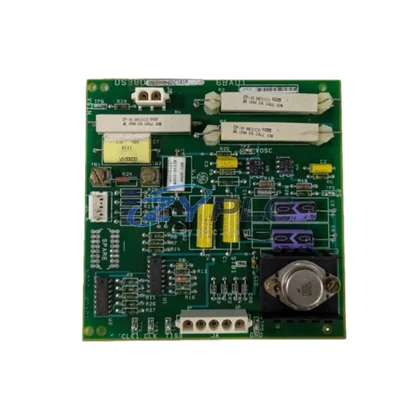
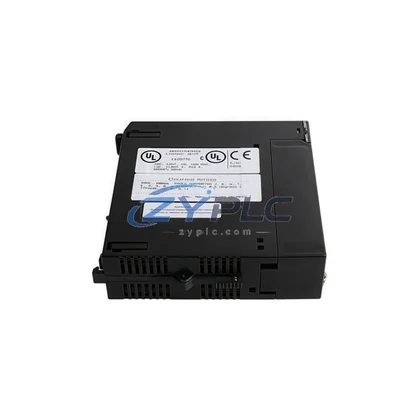
The GE IS430SNUAH1A is a high-performance universal analogue I/O module from GE’s IS400 series, engineered to deliver precise signal acquisition and output control in demanding industrial environments. Designed for turbine control systems, power generation plants, and process automation lines, this module plays a critical role in reducing unnecessary energy consumption by enabling accurate, real-time monitoring and closed-loop control of field devices. When integrated into a well-architected automation system, the IS430SNUAH1A helps facilities achieve measurable improvements in equipment utilization, motor drive efficiency, and overall production line throughput — all while minimizing unplanned downtime and maintenance overhead.
In modern industrial facilities, unplanned downtime often originates not from major equipment failures but from imprecise signal handling — sensors that drift, control loops that hunt, and actuators that respond to inaccurate analogue data. The IS430SNUAH1A addresses this at the source. Its universal analogue input and output channels support a wide range of signal types, allowing seamless integration with thermocouples, RTDs, pressure transmitters, and flow sensors across the plant floor. By delivering clean, conditioned analogue data to the control processor, the module ensures that variable frequency drives (VFDs), servo amplifiers, and proportional control valves receive accurate command signals — eliminating the energy-wasting oscillation that results from poor signal quality.
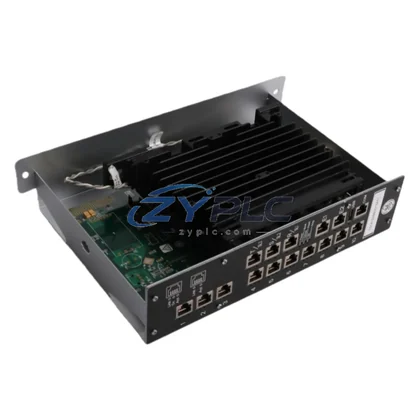
Within GE’s Mark VI and Mark VIe turbine control platforms, the IS430SNUAH1A works in concert with companion I/O modules such as the IS420ESWAH1A Ethernet switch module and the IS200TRPAH1B terminal board to form a tightly integrated signal chain. The terminal board provides the physical interface for field wiring, while the IS430SNUAH1A handles analogue conditioning and conversion, passing processed values to the Mark VIe controller core. This architecture reduces signal latency and improves the responsiveness of the control loop — a direct contributor to energy efficiency in rotating machinery applications where even small deviations in speed or load setpoint translate into measurable kilowatt-hour losses.
From a drive optimization perspective, the IS430SNUAH1A’s high-resolution analogue outputs provide the precise 4–20 mA or 0–10 V command references required by industrial variable speed drives and servo controllers. When a VFD receives a clean, stable analogue reference, it can maintain the motor at the optimal operating point on its efficiency curve — avoiding the excess heat generation and energy draw that accompany reference signal noise. In pump and fan applications governed by affinity laws, even a 5% improvement in speed setpoint accuracy can yield disproportionate reductions in power consumption, since power scales with the cube of speed.
For production line pacing and cycle time optimization, the IS430SNUAH1A’s multi-channel analogue input capability allows simultaneous monitoring of multiple process variables — temperature, pressure, flow, and position — within a single module footprint. This consolidated data acquisition reduces the number of I/O modules required in the control cabinet, lowering both the panel’s power budget and its thermal load. Fewer modules also mean fewer potential failure points, which directly supports the predictive maintenance strategies that modern facilities rely on to maximize equipment availability and minimize emergency repair costs.
The module’s compatibility with GE’s IS400 series backplane and communication infrastructure means it can be paired with IS200VTURH1BEE turbine I/O boards and IS200DSPXH1DBB digital signal processors to build a comprehensive condition monitoring and control architecture. Real-time analogue data from the IS430SNUAH1A feeds into the control processor, where it can be logged, trended, and analyzed for anomalies that indicate developing equipment issues — bearing wear, seal degradation, or heat exchanger fouling — before they escalate into costly failures. This predictive capability is central to reducing both unplanned downtime and maintenance expenditure in capital-intensive industrial operations.
Every IS430SNUAH1A unit supplied by ZYPLC undergoes comprehensive functional testing prior to shipment, including channel-by-channel analogue accuracy verification, isolation testing, and communication interface validation. Units are sourced from verified industrial surplus and OEM channels, inspected against GE’s original specifications, and shipped with full documentation. RFQ-confirmed availability supports rapid deployment for both planned upgrades and emergency replacement scenarios, minimizing the production downtime that represents the highest per-hour energy and revenue cost in any manufacturing or power generation facility. All units are covered by a warranty terms confirmed during quotation, providing confidence in long-term operational reliability.
Product Specification Table
| Parameter |
Specification / Value |
| Part Number / SKU |
IS430SNUAH1A |
| Series |
IS400 |
| Manufacturer |
GE (General Electric) |
| Module Type |
Universal Analogue I/O |
| Signal Types Supported |
4–20 mA, 0–10 V, Thermocouple, RTD, mV |
| Resolution |
16-bit (typical for IS400 series analogue modules) |
| Operating Voltage |
24 VDC (backplane powered) |
| Power Consumption |
Low-power design; reduces panel thermal load vs. discrete I/O |
| Compatible Systems |
GE Mark VI, Mark VIe Turbine Control; IS400 Series Backplane |
| Application Environments |
Power Generation, Oil & Gas, Process Automation, Heavy Industry |
| Maintenance Value |
Precise analogue reference for VFD/servo control; eliminates signal-noise-driven unplanned downtime |
| Condition |
Tested, Inspected, shipment arranged after confirmation |
| Warranty |
warranty terms confirmed during quotation |
| Origin |
USA |
System Compatibility and Application
The IS430SNUAH1A is most effective when deployed as part of a coherent, industrial automation system. In a typical turbine or compressor control application, the module sits at the heart of the analogue signal chain. Field sensors — including thermocouples wired through the IS200TRPAH1B terminal board and pressure transmitters connected via the IS200TBAIH1C analogue input terminal board — feed raw signals into the IS430SNUAH1A, which conditions and digitizes them for the Mark VIe controller processor core.
The processed control outputs from the IS430SNUAH1A drive field actuators including control valves and variable speed drives. When paired with a GE IS200VSVOH1B servo output board, the system gains the ability to command servo-driven inlet guide vanes and fuel control valves with the precision required for turbine heat rate optimization — a direct energy efficiency metric in power generation. On the drive side, the module’s analogue outputs interface with industrial VFDs to regulate compressor and pump speeds in real time, ensuring that motor loading tracks actual process demand rather than running at fixed speed against a throttling valve.
For system-level condition monitoring, the IS430SNUAH1A’s input channels can be configured to accept signals from power transducers and energy metering modules, bringing real-time kW and kVAR data into the control system. This closes the energy feedback loop: the controller can compare actual power consumption against process output and adjust drive setpoints to maintain optimal efficiency. Communication between the IS400 series I/O rack and the plant DCS or SCADA system is handled via the IS420ESWAH1A Ethernet switch module, enabling energy data to flow to historian and analytics platforms without additional hardware. The IS200DSPXH1DBB digital signal processor board provides additional computational resources for advanced control algorithms, including model-predictive control strategies that further reduce energy consumption by anticipating load changes before they occur.
In multi-drive applications, the IS430SNUAH1A can simultaneously monitor motor current feedback signals from multiple IS200VTURH1BEE turbine I/O boards, providing the control system with a comprehensive view of drive loading across the production line. This visibility enables load-balancing strategies that prevent individual motors from operating in inefficient partial-load conditions — a common source of hidden unplanned downtime in facilities with multiple parallel drive trains.
Maintenance and Replacement Notes
In a combined-cycle power plant, the IS430SNUAH1A serves as the primary analogue interface for gas turbine control. Its high-accuracy temperature inputs monitor exhaust gas temperatures across multiple measurement points, enabling the Mark VIe controller to optimize fuel flow and maintain the turbine at peak thermal efficiency. A 1% improvement in turbine heat rate at a 100 MW facility translates to hundreds of thousands of dollars in annual fuel savings — and the signal accuracy of the IS430SNUAH1A is a foundational enabler of that optimization.
In process manufacturing environments — chemical plants, refineries, and food processing facilities — the module’s multi-channel analogue I/O capability supports the tight process control required to minimize energy-intensive rework and off-spec production. When temperature, pressure, and flow are held precisely at setpoint, reactors and heat exchangers operate at designed efficiency, and the energy cost per unit of output is minimized. The IS430SNUAH1A’s low-drift analogue inputs ensure that setpoint deviations are detected and corrected within milliseconds, before they propagate into energy-wasting process excursions.
From a maintenance cost perspective, the IS430SNUAH1A’s reliable signal conditioning reduces the incidence of nuisance trips caused by signal noise — a common and costly problem in older I/O architectures. Each nuisance trip represents not only lost production but also the energy cost of restarting large rotating equipment: motors, compressors, and turbines consume significantly more energy during acceleration than during steady-state operation. By providing clean, stable analogue signals, the IS430SNUAH1A helps facilities avoid these energy-intensive restart cycles and maintain the continuous, efficient operation that maximizes both output and energy productivity.
ZYPLC maintains ready stock of the IS430SNUAH1A to support both planned maintenance outages and emergency replacement requirements. Rapid availability eliminates the extended downtime that results from long OEM lead times, ensuring that facilities can restore full-efficiency operation as quickly as possible. Each unit is tested and shipped with a warranty terms confirmed during quotation, providing assurance of performance from the first day of installation.
Product Sourcing FAQ
Q1: How does the IS430SNUAH1A contribute to measurable operational stability in a turbine control system?
The IS430SNUAH1A provides high-accuracy analogue signal conditioning for temperature, pressure, and flow inputs that the Mark VIe controller uses to optimize fuel flow and load dispatch. By eliminating signal noise and drift, it enables tighter control loop performance, which directly reduces fuel consumption per unit of electrical output. In turbine applications, improved heat rate control is the primary mechanism through which analogue I/O accuracy translates into energy cost reduction.
Q2: Is the IS430SNUAH1A compatible with third-party VFDs and servo drives, or only GE equipment?
The IS430SNUAH1A outputs standard industry-compatible analogue signals (4–20 mA, 0–10 V), which are accepted by virtually all industrial variable frequency drives and servo amplifiers regardless of manufacturer. While it is designed for the GE IS400 series backplane and Mark VI/VIe control platforms, its analogue output signals can interface with drives from Siemens, ABB, Rockwell, Yaskawa, and other major manufacturers, making it suitable for mixed-vendor automation environments.
Q3: What is the recommended replacement procedure, and how long does installation typically take?
The IS430SNUAH1A is a hot-swap-capable module within the IS400 series rack architecture, allowing replacement without a full system shutdown in redundant configurations. In simplex configurations, a planned maintenance window is required. The physical replacement process — module extraction, insertion, and configuration verification — typically takes under 30 minutes for a trained technician. ZYPLC provides pre-tested units that are ready for immediate installation, minimizing the time between module receipt and return to full-efficiency operation.
Q4: What does the warranty terms confirmed during quotation cover, and what is the testing process before shipment?
Every IS430SNUAH1A supplied by ZYPLC is subjected to a comprehensive pre-shipment test protocol that includes channel-by-channel analogue accuracy verification across the full signal range, isolation resistance testing, backplane communication interface validation, and visual inspection against GE’s original manufacturing standards. The warranty terms confirmed during quotation covers defects in materials and workmanship under normal operating conditions. Units that fail to perform to specification within the warranty period are replaced or refunded, ensuring that customers can deploy ZYPLC-supplied modules with the same confidence as new OEM parts.