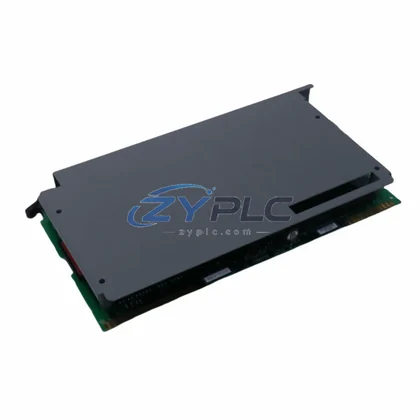
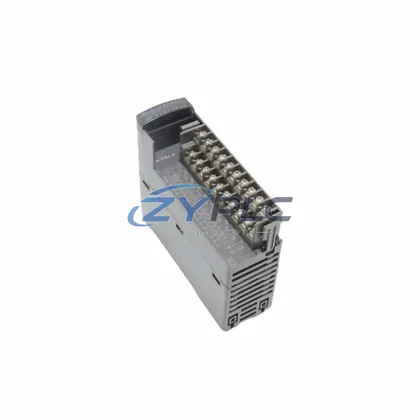
GE UR9VM Voltage Module for UR Series
The GE UR9VM is a precision-engineered voltage input module designed to operate as an integral component within the GE Universal Relay (UR) Series protection and control platform. Rather than functioning as a standalone device, the UR9VM is purpose-built to slot into the UR Series modular chassis, where it works in concert with the broader relay architecture to deliver accurate voltage signal acquisition, real-time protection logic, and seamless inter-module communication. In power utility substations, industrial switchgear panels, and process plant electrical protection systems, the UR9VM serves as the voltage sensing backbone that enables the entire UR platform to respond with precision and speed.
Understanding the UR9VM requires understanding the layered architecture of the UR Series system itself. At the control layer, the UR Series CPU module — such as the UR6xx or UR7xx processor cards — executes protection algorithms and coordinates relay logic. The UR9VM feeds conditioned voltage measurements directly into this processing layer, ensuring that overcurrent, undervoltage, overvoltage, and differential protection functions receive clean, calibrated analog inputs. Without accurate voltage data at this layer, even the most sophisticated protection scheme becomes unreliable. The UR9VM eliminates that risk by providing high-accuracy AC voltage sensing across multiple input channels, matched to the electrical characteristics of the monitored power system.
At the I/O layer, the UR9VM integrates with digital output modules and contact input cards within the same UR chassis backplane. When a voltage anomaly is detected — such as a sustained undervoltage condition or a rapid voltage swell — the UR9VM’s measurements trigger the CPU to assert trip signals through the relay’s output contact modules, which then actuate circuit breakers or isolators in the field. This tight coupling between the voltage input layer and the output execution layer is what makes the UR Series architecture so effective in time-critical protection scenarios, including transformer differential protection, bus protection, and feeder overcurrent schemes.
The network and communication layer of the UR Series is equally important to the UR9VM’s role. The UR platform supports IEC 61850 GOOSE messaging, DNP3, Modbus, and IEC 60870-5-104 protocols, allowing protection events and voltage measurements captured by the UR9VM to be transmitted in real time to SCADA systems, maintenance planning platforms, and substation automation controllers. In a modern digital substation, the UR9VM’s voltage data does not remain isolated within the relay — it flows upstream to control room HMI displays, historian servers, and protection coordination tools, enabling operators to monitor system health and respond to disturbances with full situational awareness.
From a power supply and hardware integrity perspective, the UR9VM is designed to operate within the UR Series chassis power budget, drawing regulated DC power from the UR Series power supply module. This ensures that voltage fluctuations on the station battery bus do not affect the accuracy of voltage measurements. The chassis backplane also provides the physical and electrical interface between the UR9VM and adjacent modules, including current input modules such as the UR9CM, which together with the UR9VM form the complete analog input set required for most protection functions. The combination of voltage and current inputs within a single UR chassis allows engineers to implement complex protection functions — including impedance-based distance protection and power directional elements — without external signal conditioning hardware.
In layered automation systems, the UR9VM contributes to redundancy and system resilience. Many UR Series deployments use dual-redundant relay configurations, where a primary and a backup relay chassis each contain their own UR9VM modules, both monitoring the same voltage bus. Should the primary relay chassis experience a hardware fault, the backup relay — with its own UR9VM providing independent voltage measurements — seamlessly assumes protection responsibility. This architecture is standard practice in high-availability applications such as 110 kV and 220 kV transmission substations, large industrial motor protection panels, and generator protection systems at power plants.
For maintenance engineers, the UR9VM’s modular design significantly reduces mean time to repair. Because the module slots into the UR Series chassis without requiring rewiring of the voltage transformer secondary circuits — which connect to the chassis terminal blocks rather than directly to the module — replacement can be performed quickly during a planned maintenance window. The UR Series relay management software, such as EnerVista UR Setup, allows technicians to verify UR9VM channel calibration, review voltage measurement accuracy, and confirm protection setting integrity after a module swap, all without requiring a full relay recommissioning.
ZYPLC maintains availability subject to RFQ confirmation of the GE UR9VM, sourced from authorized supply channels and subjected to pre-shipment functional testing. Every unit ships with a warranty terms confirmed during quotation, covering hardware defects and operational failures under normal service conditions. Global shipping is available, with lead times confirmed at the time of order.
Product Specification Table
| Parameter |
Specification |
| System Role |
Voltage Input Module — UR Series Modular Protection Relay Chassis |
| Compatible Platform |
GE Universal Relay (UR) Series — UR6xx / UR7xx / UR8xx Chassis |
| Input Type |
AC Voltage (VT Secondary Inputs) |
| Nominal Input Voltage |
100–120 V AC (standard VT secondary) |
| Measurement Accuracy |
±0.1% of rated input (typical) |
| Communication Capability |
Via UR chassis backplane — IEC 61850, DNP3, Modbus, IEC 60870-5-104 |
| Installation Environment |
Indoor substation / switchgear panel / industrial control cabinet |
| Operating Temperature |
-20°C to +60°C |
| Chassis Interface |
UR Series backplane slot (hot-swap capable in supported configurations) |
| Warranty |
warranty terms confirmed during quotation — hardware defects and operational failures |
System Compatibility Notes
The UR9VM does not operate in isolation — its value is realized through tight integration with the full UR Series hardware ecosystem. At the processing core, the UR Series CPU module (UR6xx or UR7xx processor card) receives digitized voltage measurements from the UR9VM via the chassis backplane and executes protection elements including 27 (undervoltage), 59 (overvoltage), 47 (negative sequence voltage), and 81 (frequency) functions. Alongside the UR9VM, the UR9CM current input module provides the complementary current measurements needed for differential, distance, and directional overcurrent protection — together, these two analog input modules form the complete sensing layer of the UR relay.
The UR Series digital output module translates CPU protection decisions into physical trip and alarm contacts, driving circuit breakers, lockout relays, and annunciator panels. The UR Series contact input module feeds breaker status, isolator position, and external interlock signals back into the relay logic, closing the control loop between the field and the protection system. All of these modules share the UR Series chassis backplane, which provides both power distribution and high-speed inter-module data exchange.
At the communication and integration layer, the UR Series Ethernet communication module bridges the relay to the substation LAN, enabling IEC 61850 GOOSE peer-to-peer messaging between relays and MMS reporting to the substation automation server. In substations using legacy protocols, the same module supports DNP3 and Modbus TCP, ensuring backward compatibility with existing SCADA infrastructure. The EnerVista UR Setup software serves as the engineering and commissioning interface, allowing protection engineers to configure UR9VM channel assignments, scaling factors, and harmonic filtering parameters, as well as to perform end-to-end functional tests before energization.
For substation-level power integrity, the UR Series power supply module converts station battery DC voltage (typically 24–250 V DC) to the regulated internal voltages required by all chassis modules, including the UR9VM. In redundant relay architectures, a second power supply module provides hot-standby power backup, ensuring that a power supply failure does not interrupt protection coverage. This layered hardware design — from voltage sensing through processing, output execution, communication, and power — gives the UR9VM its place as a foundational element of a complete, resilient protection system.
Industrial Application Notes
In power transmission and distribution substations, the UR9VM is deployed in transformer protection panels, bus protection schemes, and feeder protection relays at voltage levels from 11 kV to 500 kV. The module’s high-accuracy voltage inputs support both fundamental frequency measurements and harmonic analysis, enabling the UR relay to distinguish between genuine fault conditions and transformer inrush events — a critical capability for minimizing nuisance trips in high-value transmission assets.
In large industrial facilities — including petrochemical plants, steel mills, cement works, and mining operations — the UR9VM is used in motor protection relays and generator protection panels, where accurate voltage monitoring is essential for detecting phase imbalance, voltage sag during motor starting, and loss-of-excitation conditions in synchronous machines. The UR Series platform’s ability to integrate voltage and current measurements within a single chassis simplifies panel design and reduces the number of discrete relay devices required in the protection scheme.
In water treatment and municipal utility applications, the UR9VM supports protection of medium-voltage pump motors and distribution feeders, where reliable voltage monitoring helps prevent equipment damage during grid disturbances and ensures rapid restoration of supply after fault clearance. The relay’s communication capabilities allow voltage event data to be logged and transmitted to the utility’s SCADA system, supporting regulatory compliance and post-event analysis.
Across all of these applications, the UR9VM’s role is consistent: to provide the voltage measurement foundation upon which the entire UR Series protection architecture depends. Its modular design, backplane integration, and compatibility with the full range of UR Series I/O and communication modules make it a versatile and long-term-supportable component in any protection and control system built on the GE UR platform.
Product Compatibility FAQ
Q1: Is the GE UR9VM compatible with all UR Series relay chassis variants?
The UR9VM is designed for use within the GE Universal Relay (UR) Series modular chassis platform, including UR6xx, UR7xx, and UR8xx form factors. Compatibility depends on the specific chassis slot configuration and firmware version of the host relay. Engineers should verify the relay’s hardware configuration guide and order code to confirm UR9VM slot compatibility before installation. ZYPLC’s technical team can assist with compatibility verification based on your existing relay model and chassis layout.
Q2: Can the UR9VM be replaced in the field without full relay recommissioning?
In most UR Series deployments, the UR9VM connects to the chassis via the backplane slot, while voltage transformer secondary wiring terminates at the chassis terminal blocks — not directly on the module. This means the UR9VM can typically be replaced without disturbing field wiring. After replacement, technicians should use EnerVista UR Setup software to verify channel configuration, scaling, and calibration settings, and perform a functional test of voltage measurement accuracy before returning the relay to service. Full recommissioning is generally not required for a like-for-like module replacement.
Q3: What warranty and post-sale support does ZYPLC provide for the GE UR9VM?
Every GE UR9VM supplied by ZYPLC is covered by a warranty terms confirmed during quotation against hardware defects and operational failures under normal service conditions. Units undergo pre-shipment functional testing to verify measurement accuracy and backplane interface integrity. ZYPLC maintains ongoing inventory of UR Series modules to support rapid replacement needs, and our technical team is available to assist with compatibility questions, installation guidance, and post-installation troubleshooting throughout the warranty period.