Honeywell 10001/A/1 Bus Driver for TDC 3000: Compatibility and Replacement Notes
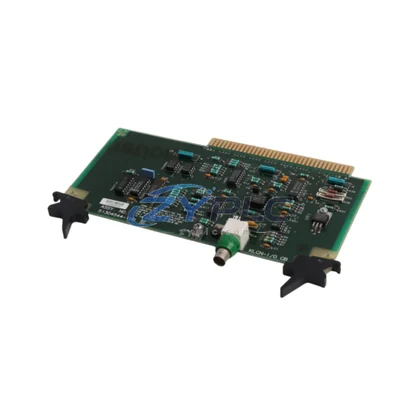
The Honeywell 10001/A/1 Vertical Bus Driver is a foundational communication backbone component within the TDC 3000 Distributed Control System (DCS) architecture. Rather than functioning as a standalone module, this bus driver operates as a critical signal routing and power distribution interface that binds together the control layer, I/O layer, network layer, and power layer of a complete TDC 3000 process automation system. Its role in maintaining vertical bus integrity directly determines the reliability of data exchange between field instruments, controllers, and operator stations across the entire plant automation hierarchy.
In large-scale industrial environments — including petrochemical refineries, power generation facilities, water treatment plants, and continuous manufacturing lines — the vertical bus architecture of the TDC 3000 platform provides the physical and electrical foundation upon which all higher-level control logic depends. The 10001/A/1 ensures that signal paths between the Universal Control Network (UCN), the Local Control Network (LCN), and the field I/O subsystems remain stable, noise-free, and electrically consistent under demanding 24/7 operational conditions.
Product Specification Table
| Parameter |
Specification |
| Part Number |
10001/A/1 |
| Manufacturer |
Honeywell |
| Platform / Series |
TDC 3000 Distributed Control System |
| Module Function |
Vertical Bus Driver — signal routing and bus power distribution |
| System Role |
Backplane bus interface between control modules and I/O subsystems |
| Electrical Interface |
Vertical bus connector, compatible with TDC 3000 standard card cage |
| Communication Capability |
Supports UCN and LCN internal bus protocols within TDC 3000 architecture |
| Installation Environment |
Control cabinet / card cage rack mount; industrial-grade EMI tolerance |
| Operating Temperature |
0°C to 60°C (typical DCS cabinet environment) |
| Power Supply Compatibility |
Compatible with TDC 3000 standard 24VDC backplane power distribution |
| Product Condition |
Tested, inspected, and verified functional prior to shipment |
| Warranty |
warranty terms confirmed during quotation — full replacement or repair coverage |
| Origin |
United States |
System Compatibility Notes
The 10001/A/1 Vertical Bus Driver achieves its full value only when understood within the context of the complete TDC 3000 system architecture. At the control layer, Honeywell’s PM (Process Manager) and HPM (High-Performance Process Manager) controllers depend on a stable vertical bus to execute scan cycles and communicate process variable data without latency or signal corruption. The bus driver ensures that these controllers maintain uninterrupted access to the backplane data highway.
At the I/O layer, analog and digital I/O modules — including Honeywell’s FTA (Field Termination Assembly) units and associated IOP (I/O Processor) cards — rely on the vertical bus for both power delivery and data transfer. Any degradation in bus driver performance directly impacts the fidelity of field signal acquisition, which in turn affects PID loop stability and alarm response accuracy. The 10001/A/1 maintains the electrical integrity that these I/O subsystems require.
At the network layer, the NIM (Network Interface Module) and UCN Node components bridge the TDC 3000 internal bus with the plant-wide Universal Control Network. The vertical bus driver supports the timing and signal conditioning requirements that allow these network modules to synchronize data across multiple process units without introducing communication jitter or packet loss.
At the power layer, the TDC 3000 Power Supply Module and its redundant counterpart distribute 24VDC across the card cage backplane. The 10001/A/1 interfaces directly with this power distribution architecture, ensuring that voltage levels remain within specification across all bus segments even under peak load conditions. This is particularly important in redundant power configurations where seamless switchover must not disrupt bus communication.
At the human-machine interface layer, Honeywell GUS (Global User Station) and US (Universal Station) operator consoles receive real-time process data through the LCN highway. The reliability of this data stream depends on the uninterrupted operation of the vertical bus infrastructure that the 10001/A/1 supports. Operators making critical process decisions rely on the data consistency that a properly functioning bus driver enables.
At the execution layer, final control elements — including control valves, variable frequency drives, and motor control centers — receive setpoint commands that originate from the PM/HPM controllers and travel through the bus architecture. The 10001/A/1 ensures that command signals reach their destinations without distortion, supporting precise process control and safe shutdown response times.
For system engineers designing or maintaining TDC 3000 installations, the 10001/A/1 is also compatible with Honeywell’s card cage backplane assemblies and can be integrated alongside redundant bus driver configurations to eliminate single points of failure in critical process control loops. This redundancy design is especially relevant in safety-instrumented system (SIS) adjacent architectures where bus availability is a functional safety requirement.
Industrial Application Notes
Petrochemical and Refinery Applications: In continuous process plants such as crude distillation units, catalytic crackers, and hydrocracker complexes, the TDC 3000 DCS manages thousands of control loops simultaneously. The 10001/A/1 Vertical Bus Driver supports the high-density I/O configurations typical of these environments, where multiple card cages are stacked within a single control room cabinet and bus integrity is non-negotiable for safe operation.
Power Generation: Thermal power stations and combined-cycle plants use TDC 3000 systems to manage boiler controls, turbine sequencing, and auxiliary systems. The vertical bus driver’s role in maintaining stable communication between the PM controllers and the field I/O subsystems is critical during startup sequences and load-following operations where response time directly affects grid stability.
Water and Wastewater Treatment: Municipal water treatment facilities operating TDC 3000 platforms benefit from the 10001/A/1’s long-term reliability in environments with variable ambient conditions. The module supports the continuous monitoring of flow, pressure, pH, and turbidity control loops that must operate without interruption to meet regulatory compliance requirements.
Mining and Metallurgy: Mineral processing plants and smelting operations use TDC 3000 DCS for ore handling, flotation control, and furnace management. The vertical bus driver’s ability to maintain signal integrity in electrically noisy environments — common in high-current motor drive applications — makes it well-suited for these demanding industrial settings.
Packaging and Discrete Manufacturing: While the TDC 3000 is primarily a process control platform, its modular architecture allows integration with packaging line supervisory systems. The 10001/A/1 supports the I/O density required for multi-zone temperature control, conveyor synchronization, and batch recipe management in food and pharmaceutical manufacturing environments.
Product Compatibility FAQ
Q1: Is the Honeywell 10001/A/1 compatible with all TDC 3000 card cage configurations, and can it be used in redundant bus architectures?
The 10001/A/1 is designed for use within the standard TDC 3000 card cage backplane system and is compatible with both single and redundant bus driver configurations. In redundant installations, two bus drivers are installed in parallel within the same card cage, with automatic failover ensuring that a single driver failure does not interrupt bus communication. Engineers should verify the specific card cage model and backplane revision to confirm slot compatibility before installation. ZYPLC provides pre-shipment functional testing and can advise on redundancy configuration requirements based on your system architecture documentation.
Q2: How does the 10001/A/1 affect long-term maintenance planning for TDC 3000 systems, and what is the recommended replacement interval?
As a bus-level component, the 10001/A/1 is subject to gradual electrical wear from continuous operation, particularly in high-temperature cabinet environments. Honeywell’s TDC 3000 maintenance guidelines recommend periodic bus signal integrity testing using the system’s built-in diagnostic tools. For aging systems operating beyond 15 years, proactive replacement of bus driver modules during planned maintenance windows is advisable to prevent unplanned downtime. ZYPLC maintains inventory of tested 10001/A/1 units to support both emergency replacement and scheduled maintenance programs, backed by a warranty terms confirmed during quotation on all supplied modules.
Q3: What is the system integration capability of the 10001/A/1, and how does it support system upgrades or hybrid DCS architectures?
system integration refers to the 10001/A/1’s ability to function within its original TDC 3000 architecture while also supporting system migration scenarios where legacy TDC 3000 subsystems are integrated with newer Honeywell Experion PKS platforms or third-party SCADA systems via gateway modules. The vertical bus driver maintains backward compatibility with existing backplane assemblies, allowing engineers to upgrade controller modules or add communication gateways without replacing the bus infrastructure. This system integration capability significantly reduces migration costs and project risk for plants undertaking phased DCS modernization programs.