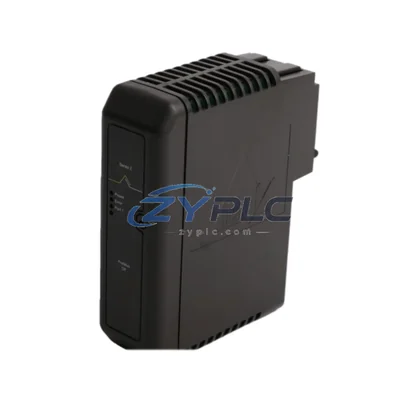
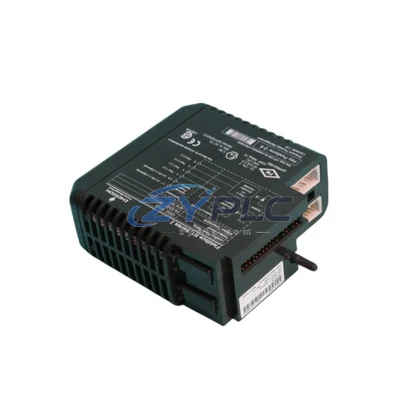
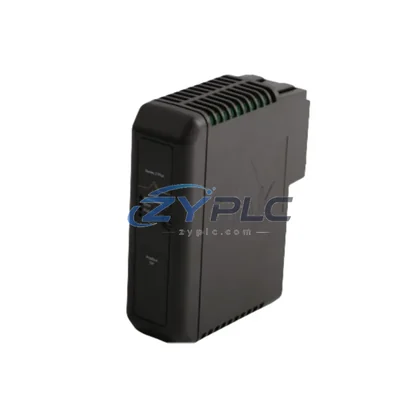
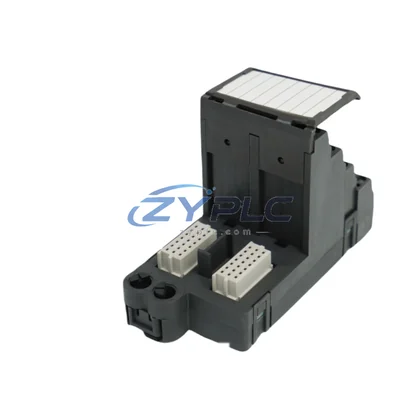
Honeywell 261A1812P012 Flame Scanner Durastill: Precision Combustion Control for Optimized Automation
The Honeywell 261A1812P012 is a high-efficiency flame detection module from the Durastill series, engineered to deliver reliable, real-time combustion monitoring in demanding industrial environments. By providing accurate flame presence feedback to burner management systems, this scanner directly reduces unnecessary fuel consumption, prevents incomplete combustion cycles, and minimizes the energy losses that accumulate over thousands of operating hours in power generation, petrochemical, and process manufacturing facilities.
In modern industrial plants, combustion inefficiency is one of the most overlooked sources of unplanned downtime. A misread or delayed flame signal forces burner management controllers to execute unnecessary purge cycles, re-ignition sequences, and safety shutdowns — each consuming additional fuel and electrical energy while degrading production throughput. The 261A1812P012 eliminates this uncertainty by delivering a fast, stable flame signal that keeps the burner management loop tight and responsive, directly supporting energy-optimized plant operation.
Product Specification Table
| Parameter |
Specification / Value |
| SKU / Part Number |
261A1812P012 |
| Brand / Series |
Honeywell / Durastill |
| Product Category |
Flame Scanner / Flame Detector |
| Operating Power Consumption |
Low-power design; optimized for continuous duty cycle |
| Detection Response Speed |
Fast-response flame signal output for tight BMS loop control |
| Compatible Systems |
Honeywell Burner Management Systems (BMS), DCS, PLC-based combustion control platforms |
| Application Environment |
Boilers, furnaces, gas turbines, process heaters, power generation |
| Maintenance Value |
Reduces unnecessary purge cycles, re-ignition events, and fuel waste from false flame loss signals |
| Origin |
United States |
| Warranty |
warranty terms confirmed during quotation — tested before shipment |
System Compatibility and Application
The 261A1812P012 does not operate in isolation — it is a critical sensing node within a broader industrial automation system. In a typical high-efficiency combustion control system, the flame scanner feeds its signal into a Honeywell RM7800 Series Burner Management Relay Module, which governs the ignition sequence, flame supervision, and safety interlock logic. The RM7800 interprets the 261A1812P012’s output to determine whether to sustain, modulate, or safely shut down the burner — decisions that directly affect fuel consumption per operating hour.
Upstream of the burner management relay, a Honeywell HC900 Process Controller or equivalent DCS platform manages the broader combustion loop, integrating air-to-fuel ratio control, oxygen trim, and load-following logic. The flame scanner’s signal quality directly influences how aggressively the controller can optimize the combustion setpoint without risking unsafe flame loss events. A stable, noise-free signal from the 261A1812P012 allows the control system to operate closer to the theoretical efficiency curve.
On the drive side, variable frequency drives such as the Honeywell SmartVFD HVAC or compatible third-party VFDs regulate combustion air fan and fuel pump motor speeds in response to load demand signals from the BMS. When the flame scanner confirms stable combustion, the VFD can reduce fan speed to match actual airflow requirements rather than running at fixed speed — a direct reduction in auxiliary electrical consumption that compounds across thousands of operating hours annually.
Power quality and energy consumption at the motor and drive level are monitored by power monitoring modules integrated into the plant’s maintenance planning system. These modules capture real-time kWh data, demand peaks, and power factor metrics that allow maintenance engineers to correlate combustion efficiency events — such as flame instability periods — with measurable spikes in auxiliary energy consumption. The 261A1812P012’s contribution to flame signal stability therefore has a quantifiable downstream effect on the plant’s condition monitoring dashboard.
I/O modules within the control cabinet — such as Honeywell Experion PKS I/O modules or equivalent remote I/O units — relay the flame scanner’s discrete output signal to the DCS historian and alarm management system. This integration enables operators to track flame scanner health, signal quality trends, and response time degradation over time, supporting predictive maintenance scheduling before a failing scanner causes an unplanned shutdown event.
For facilities using Modbus RTU or PROFIBUS DP communication protocols, the flame scanner signal can be integrated into the plant-wide SCADA system via protocol converters or smart I/O gateways, enabling centralized energy performance monitoring across multiple burner trains simultaneously. This architecture allows energy managers to identify which burner units are consuming excess fuel due to suboptimal flame detection and prioritize scanner replacement or recalibration accordingly.
The 261A1812P012 is also compatible with Honeywell Slate BMS platforms and legacy 7800 Series amplifier bases, making it a drop-in efficiency upgrade for existing installations without requiring control system redesign. Pairing it with a Honeywell R7847 or R7849 Flame Amplifier provides enhanced signal conditioning and self-check capability, further reducing the risk of nuisance shutdowns that waste fuel and disrupt production schedules.
Maintenance and Replacement Notes
In a continuous process plant operating multiple burner trains — such as a refinery process heater or a utility boiler — the cumulative energy impact of flame scanner performance is significant. Each unnecessary burner shutdown triggered by a degraded or intermittent flame signal initiates a full purge cycle before re-ignition is permitted. A single purge cycle on a large industrial burner can consume several minutes of full airflow at maximum fan speed, representing a measurable quantity of electrical energy for the combustion air fan drive and wasted thermal energy as the furnace cools slightly before re-firing.
The Honeywell 261A1812P012 addresses this directly by providing a robust, interference-resistant flame signal that maintains burner operation through normal combustion variations without triggering false flame loss events. Plants that have upgraded from aging or generic flame scanners to the Durastill series have reported reductions in nuisance shutdown frequency, which translates directly into improved equipment utilization rates, reduced maintenance labor for re-ignition procedures, and lower auxiliary energy consumption from repeated purge cycle fan operation.
From a predictive maintenance perspective, the 261A1812P012’s signal output can be trended over time to detect gradual degradation in scanner sensitivity — typically caused by lens fouling, UV source aging, or optical path contamination. By identifying this degradation trend before it causes a flame loss event, maintenance teams can schedule scanner cleaning or replacement during planned downtime rather than responding to an unplanned shutdown. This shift from reactive to predictive maintenance directly reduces the total number of emergency shutdown events per year, each of which carries a significant energy penalty in addition to lost production value.
For facilities with multiple burner management zones, deploying the 261A1812P012 across all burner trains creates a consistent, standardized flame detection platform that simplifies spare parts inventory management. Maintaining a small buffer stock of 261A1812P012 units ensures that any scanner replacement can be completed within a single maintenance window, minimizing the duration of any forced outage. All units supplied by ZYPLC are tested prior to shipment and covered by a warranty terms confirmed during quotation, providing procurement teams with confidence in replacement unit reliability.
Product Sourcing FAQ
Q1: How does the Honeywell 261A1812P012 contribute to measurable operational stability in a combustion system?
The 261A1812P012 reduces unplanned downtime by providing a stable, accurate flame signal that prevents unnecessary burner shutdowns and purge cycles. Each avoided purge cycle eliminates several minutes of high-speed combustion air fan operation and prevents the thermal energy loss associated with furnace cool-down and re-heat. In facilities with multiple burner trains operating continuously, reducing nuisance shutdown frequency by even a small percentage produces a measurable annual reduction in auxiliary electrical consumption and fuel usage.
Q2: Is the 261A1812P012 compatible with existing Honeywell BMS and third-party DCS platforms?
Yes. The 261A1812P012 is designed for use with Honeywell 7800 Series amplifier bases, including the R7847 and R7849 flame amplifiers, and is compatible with the broader Honeywell Slate and RM7800 burner management ecosystem. Its discrete output signal can be integrated into third-party DCS and SCADA platforms via standard I/O modules or protocol gateways supporting Modbus RTU or PROFIBUS DP, making it suitable for both Honeywell-native and mixed-vendor control architectures.
Q3: What is the recommended replacement and testing procedure for the 261A1812P012?
Replacement should be performed during a planned maintenance window with the burner safely shut down and isolated. After installation, the flame scanner should be verified by performing a controlled ignition sequence and confirming that the BMS receives a valid flame signal within the specified response time. All 261A1812P012 units supplied by ZYPLC are pre-tested prior to shipment to verify signal output integrity, reducing commissioning time and the risk of installing a defective unit during a critical maintenance window.
Q4: What warranty coverage is provided, and what does it include?
All Honeywell 261A1812P012 units supplied by ZYPLC are covered by a warranty terms confirmed during quotation from the date of shipment. This warranty covers defects in materials and workmanship under normal operating conditions. Units are tested before dispatch to confirm functional integrity. In the event of a warranty claim, ZYPLC provides replacement unit support to minimize the impact on plant operations and maintenance schedules.