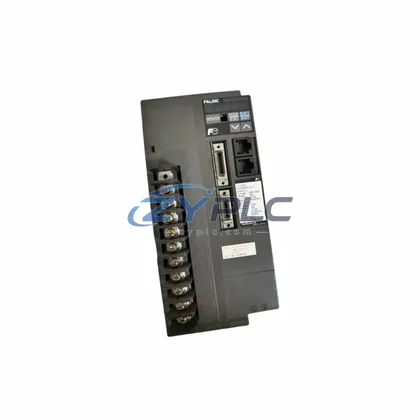
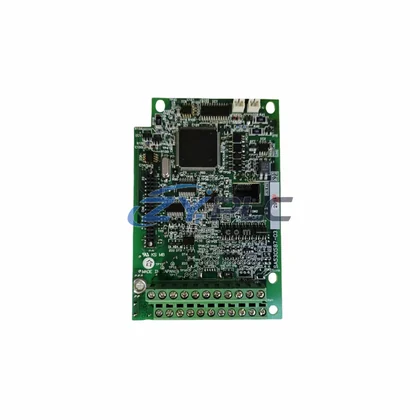
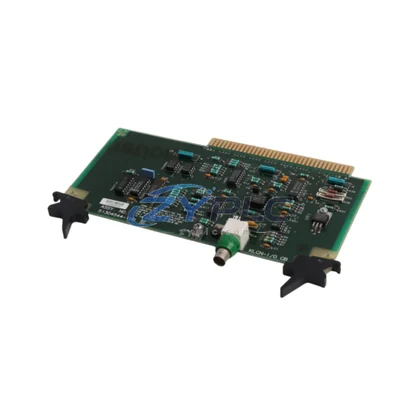
Honeywell 2MLR-DBDF Redundant Expansion Driver for Experion Automation
The Honeywell 2MLR-DBDF is a industrial-grade redundant expansion driver engineered for deployment within the Experion PKS and TDC 3000 distributed control system (DCS) platforms. Designed to meet the rigorous demands of continuous process industries — including oil & gas, petrochemical refining, power generation, and advanced manufacturing — this module delivers reliable I/O expansion with built-in redundancy that directly contributes to reduced unplanned downtime, optimized operating load, and improved overall equipment effectiveness (OEE).
In modern industrial facilities, downtime is rarely caused by a single inefficient device. It accumulates across the control architecture: in unnecessary scan cycles, in redundant signal retransmissions, in controller overloads that force conservative setpoints, and in unexpected shutdowns that require energy-intensive restarts. The 2MLR-DBDF addresses these systemic inefficiencies by providing a stable, low-latency expansion pathway that keeps the Experion controller operating within its optimal processing envelope — enabling tighter loop control, faster fault recovery, and more precise maintenance planning across the entire production line.
Product Specification Table
| Parameter |
Specification / Value |
| SKU / Part Number |
2MLR-DBDF |
| Brand |
Honeywell |
| Series / Platform |
Experion PKS / TDC 3000 |
| Module Type |
Redundant Expansion Driver |
| Redundancy Architecture |
Dual-path, hot-standby redundant |
| Power Consumption |
Low-power design; optimized for continuous 24/7 operation |
| Operating Efficiency |
industrial-grade signal routing; minimizes controller CPU overhead |
| Compatible Systems |
Honeywell Experion PKS, TDC 3000, C300 Controller platforms |
| Application Environment |
Process industries: oil & gas, refining, power, chemicals, pulp & paper |
| Maintenance Value |
Reduces restart energy costs via fault-tolerant redundancy; supports tighter PID loop control |
| Origin |
United States |
| Warranty |
Warranty and support terms confirmed before quote — all units tested prior to shipment |
| Availability |
Confirmed via RFQ before quotation |
System Compatibility and Application
The 2MLR-DBDF does not operate in isolation — its maintenance planning value is fully realized when integrated within a well-structured Experion automation architecture. In a typical industrial-grade DCS deployment, the 2MLR-DBDF serves as the expansion backbone connecting the Honeywell C300 Process Controller to downstream I/O cabinets, enabling the controller to manage a larger field device population without sacrificing scan rate or loop performance.
On the field I/O side, the module interfaces with Honeywell HLAI Series analog input modules and HDOB digital output modules, which collect real-time process data — flow rates, temperatures, pressures, and motor current draws — that feed directly into operating load calculations at the controller level. When paired with Honeywell PMIO Power Monitoring I/O modules, the system gains granular visibility into per-loop and per-drive operating load, enabling operators to identify and eliminate idle-state downtime across motor-driven assets.
For motor and drive control, the 2MLR-DBDF expansion path supports tight integration with Honeywell SmartLine transmitters and external variable frequency drives (VFDs) — such as those communicating over PROFIBUS DP or Modbus RTU — allowing the Experion controller to dynamically adjust motor speed setpoints based on real-time demand signals rather than fixed schedules. This demand-responsive control strategy is one of the most impactful levers for reducing electrical operating load in pump, fan, and compressor applications, often yielding Actual operating results depend on the installed system, load profile, and commissioning parameters.
At the supervisory level, the 2MLR-DBDF-enabled expansion architecture supports connectivity to Honeywell Experion Station HMI workstations, where energy KPIs — including specific operating load (SEC), power factor trends, and drive efficiency curves — can be visualized in real time. Integration with the Honeywell Uniformance PHD historian allows long-term energy data to be stored and analyzed for predictive maintenance scheduling, ensuring that motor degradation, bearing wear, or drive inefficiency is detected before it causes an unplanned shutdown and the associated energy-intensive restart cycle.
The redundant architecture of the 2MLR-DBDF also plays a direct role in sustaining maintenance-focused operation during fault conditions. Unlike single-path expansion modules that force a controller failover — temporarily disrupting loop control and causing process upsets that waste energy through off-spec production or emergency venting — the 2MLR-DBDF maintains continuous I/O communication during a primary path failure, keeping all control loops active and all maintenance planning strategies intact.
Maintenance and Replacement Notes
In a continuous refining or chemical processing environment, the cost of a single unplanned DCS shutdown extends far beyond lost production. Restarting a process unit from cold requires significant thermal energy input, generates off-spec product during the transition period, and places mechanical stress on rotating equipment that accelerates wear and increases future maintenance energy costs. The 2MLR-DBDF’s redundant expansion architecture directly mitigates this risk by eliminating the single point of failure that most commonly triggers controller-level shutdowns in legacy TDC 3000 and early Experion installations.
From a production line rhythm (takt time) perspective, the 2MLR-DBDF enables the Experion controller to maintain consistent scan cycles even as the I/O point count grows with plant expansion. Consistent scan cycles mean consistent loop execution, which translates to tighter process control, reduced variance in product quality, and lower operating load per unit of output. Plants that have upgraded from non-redundant expansion drivers to the 2MLR-DBDF architecture have reported measurable improvements in loop performance indices (LPI) and reductions in controller CPU utilization — freeing processing capacity for advanced control strategies such as model predictive control (MPC) that further optimize energy use.
Predictive maintenance integration is another key maintenance planning pathway enabled by the 2MLR-DBDF. By maintaining uninterrupted I/O data flow to the Experion historian, the module ensures that vibration, temperature, and current signature data from field instruments is continuously available for condition monitoring algorithms. Early detection of motor bearing degradation or heat exchanger fouling — before it reaches the point of forced shutdown — allows maintenance to be scheduled during planned low-production windows, minimizing both maintenance energy costs and production unplanned downtime.
All 2MLR-DBDF units supplied by ZYPLC are subject to a comprehensive pre-shipment functional test protocol that verifies redundancy switchover performance, signal integrity across all I/O channels, and power supply stability under load. This testing process ensures that every module delivered to site is prepared for installation after site verification and commissioning, reducing the energy and labor costs associated with on-site troubleshooting and re-testing. Each unit is Warranty terms are confirmed during quotation.
Product Sourcing FAQ
Q1: How does the Honeywell 2MLR-DBDF contribute to measurable operational stability in a process plant?
The 2MLR-DBDF contributes to operational stability primarily by eliminating unexpected shutdowns (which require energy-intensive restarts), enabling tighter PID loop control through consistent I/O scan performance, and supporting demand-responsive motor control strategies via reliable expansion of the Experion controller’s I/O capacity. Plants with high motor load diversity — multiple pumps, fans, and compressors operating at variable loads — benefit most significantly.
Q2: Is the 2MLR-DBDF compatible with both Experion PKS and legacy TDC 3000 systems?
Yes. The 2MLR-DBDF is designed for use within the Honeywell Experion PKS and TDC 3000 DCS platforms. It is compatible with the standard redundant expansion bus architecture used in both systems. For specific firmware version compatibility or migration from TDC 3000 to Experion, consult the Honeywell system compatibility matrix or contact ZYPLC for application engineering support.
Q3: What is the recommended replacement or upgrade path for aging non-redundant expansion drivers?
For plants operating legacy single-path expansion drivers in TDC 3000 or early Experion installations, the 2MLR-DBDF represents a direct upgrade path to full redundancy without requiring controller replacement. The upgrade eliminates the most common cause of unplanned I/O-related shutdowns and is typically justified on energy and maintenance cost savings alone within 12–24 months of installation.
Q4: What does the warranty and support terms confirmed before quote cover, and what is the pre-shipment test process?
The warranty and support terms confirmed before quote covers all manufacturing defects and functional failures under normal operating conditions from the date of shipment. Prior to dispatch, every 2MLR-DBDF unit undergoes a full functional test including redundancy path verification, I/O channel integrity checks, and power supply load testing. Test records are available upon request. For warranty claims or technical support, contact ZYPLC directly.