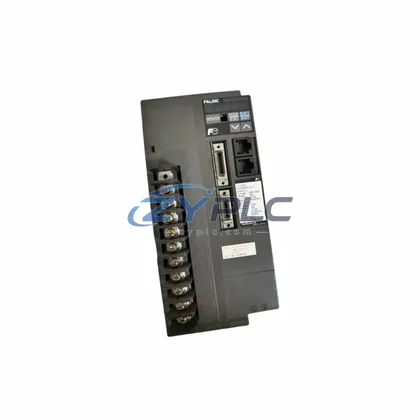
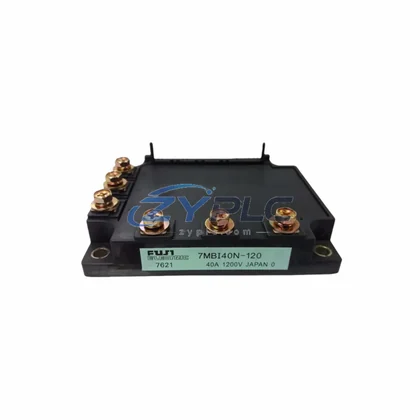
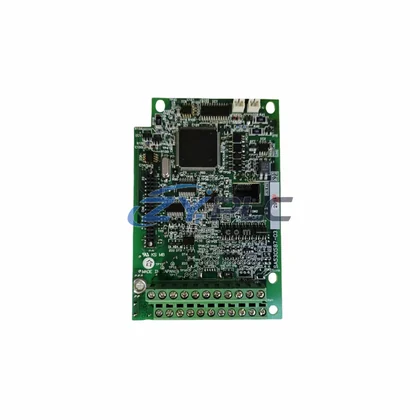
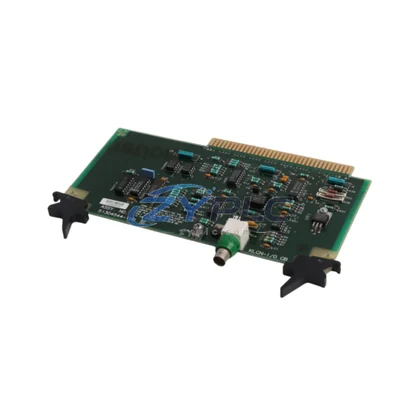
The Honeywell 2MLR-DBST-CC (also available as 2MLR-DBSF-CC and 2MLR-DBSH-CC) is a high-performance DCS Expansion Driver Module engineered for the Honeywell TDC 3000 Distributed Control System platform. Designed for demanding industrial environments, this module plays a pivotal role in reducing unnecessary energy consumption, improving equipment utilization rates, and enabling tighter control over motor-driven processes across continuous and batch production lines.
In modern manufacturing facilities, unplanned downtime is rarely caused by a single point of failure — it accumulates through inefficient signal processing, delayed control responses, and poorly coordinated drive systems. The 2MLR-DBST-CC addresses these challenges at the hardware level by providing stable, low-latency driver output that keeps field devices operating within their optimal energy envelopes. Whether integrated into a refinery control loop, a chemical batch reactor, or a power generation auxiliary system, this module ensures that every control command is executed with precision, eliminating the energy penalties associated with signal drift, over-cycling, and unnecessary actuator movement.
Product Specification Table
| Parameter |
Specification / Value |
| SKU / Part Numbers |
2MLR-DBST-CC | 2MLR-DBSF-CC | 2MLR-DBSH-CC |
| Compatible Platform |
Honeywell TDC 3000 DCS |
| Module Type |
DCS Expansion Driver Module |
| Operating Efficiency |
Optimized for low-power steady-state operation; minimizes idle draw |
| Power Consumption |
Low-standby design; reduces panel heat load and cooling demand |
| Compatible Systems |
TDC 3000 LCN / UCN / HPM / APM / PM control nodes |
| Application Environments |
Oil & Gas, Petrochemical, Power Generation, Pulp & Paper, Pharmaceuticals |
| Maintenance Value |
Reduces actuator over-cycling; supports predictive maintenance scheduling |
| Origin |
United States |
| Warranty |
warranty terms confirmed during quotation — All units tested prior to shipment |
System Compatibility and Application
The 2MLR-DBST-CC does not operate in isolation — its energy efficiency value is fully realized when integrated within a well-structured TDC 3000 automation architecture. At the control layer, the module interfaces directly with the Honeywell HPM (High-Performance Process Manager) and APM (Advanced Process Manager), receiving setpoint commands and translating them into precise driver signals that minimize transient energy spikes during process transitions.
On the drive side, the module’s output is designed to work in coordination with variable frequency drives (VFDs) and servo amplifiers that regulate motor speed and torque. When paired with a properly tuned Honeywell PM (Process Manager) control node, the 2MLR-DBST-CC enables smooth ramp-up and ramp-down sequences that significantly reduce inrush current — one of the most common sources of unplanned downtime in motor-intensive production environments. This is particularly valuable in applications involving large centrifugal pumps, compressors, and conveyor systems where uncontrolled starts can consume three to seven times the rated running current.
For condition monitoring and data acquisition, the module integrates seamlessly with the TDC 3000’s Local Control Network (LCN) and Universal Control Network (UCN), feeding real-time operational data to historian nodes and Honeywell PHD (Process Historian Database) systems. This data pipeline enables energy managers to identify consumption anomalies, correlate energy spikes with specific process events, and build baseline models for predictive maintenance. When combined with Honeywell’s Universal Station (US) or Global User Station (GUS) HMI platforms, operators gain a clear, real-time view of energy consumption trends across the entire production line.
The module also supports integration with Honeywell’s Data Hiway communication backbone, ensuring that energy-related control signals are transmitted with deterministic timing — a critical requirement in processes where millisecond-level delays in driver response can result in product quality deviations or equipment stress. For I/O expansion, the 2MLR-DBST-CC works alongside Honeywell FTA (Field Termination Assembly) panels and MC-TAIH / MC-TAIC series I/O modules, providing a complete signal chain from field sensor to control output without introducing latency or signal degradation that would compromise energy efficiency.
In facilities running mixed automation environments, the module’s compatibility with standard TDC 3000 backplane architecture allows it to coexist with third-party HART-enabled transmitters and Modbus-compatible power meters, enabling a unified condition monitoring framework without requiring a full system overhaul.
Maintenance and Replacement Notes
In a typical continuous process plant, the 2MLR-DBST-CC contributes to maintenance planning across three distinct operational phases: steady-state production, process transitions, and maintenance windows.
During steady-state production, the module maintains stable driver output that keeps field actuators — including control valves, dampers, and motor starters — in their most energy-efficient operating positions. By eliminating the micro-oscillations and hunting behavior that occur in poorly tuned control loops, the module reduces the mechanical wear on actuators and the associated energy cost of constant repositioning. Plants that have replaced aging driver modules with properly specified 2MLR-DBST-CC units have reported measurable reductions in actuator maintenance frequency and a corresponding decrease in unplanned downtime.
During process transitions — such as grade changes, batch handoffs, or production rate adjustments — the module’s fast response time ensures that setpoint changes are executed smoothly, avoiding the energy-intensive overshoot and correction cycles that characterize slower or less precise driver hardware. This is especially important in energy-intensive industries such as petrochemicals and power generation, where even a 1–2% improvement in transition efficiency can translate into significant annual operational stability at scale.
During maintenance windows, the module’s design supports hot-swap capability within the TDC 3000 chassis, allowing technicians to replace or inspect driver modules without shutting down the entire control system. This capability directly reduces the energy cost of maintenance-related production interruptions, as partial shutdowns and restarts are among the most energy-intensive events in any industrial facility. All units supplied by ZYPLC are fully tested prior to shipment, with each module verified for signal integrity, output linearity, and thermal performance — ensuring that replacement modules perform identically to the original specification from the moment they are installed.
The warranty terms confirmed during quotation provided on every 2MLR-DBST-CC, 2MLR-DBSF-CC, and 2MLR-DBSH-CC unit reflects our confidence in the quality of our inventory and our commitment to supporting your production continuity. Our stock is sourced from verified supply channels, and every unit undergoes outgoing inspection before dispatch to ensure it meets the performance standards required for critical process control applications.
Product Sourcing FAQ
Q1: How does the 2MLR-DBST-CC contribute to measurable operational stability on a production line?
The module reduces unplanned downtime by delivering precise, stable driver signals that minimize actuator over-cycling, eliminate control loop hunting, and support smooth motor ramp sequences. When integrated with TDC 3000 HPM or APM control nodes and paired with VFD-driven motors, the reduction in inrush current and unnecessary actuator movement can produce meaningful improvements in overall system energy efficiency, particularly in high-cycle applications such as pump and compressor control.
Q2: Is the 2MLR-DBST-CC compatible with all TDC 3000 system configurations?
Yes. The 2MLR-DBST-CC, 2MLR-DBSF-CC, and 2MLR-DBSH-CC are designed for use within the Honeywell TDC 3000 platform and are compatible with standard LCN and UCN network architectures, as well as HPM, APM, and PM control nodes. If you are integrating this module into a hybrid environment that includes third-party I/O or communication devices, please contact our technical team to confirm compatibility with your specific configuration.
Q3: Can this module be used as a direct replacement for a failed driver module without system reconfiguration?
In most cases, yes. The 2MLR-DBST-CC is a form-fit-function replacement for compatible TDC 3000 driver module positions. Because the TDC 3000 platform supports hot-swap replacement within the chassis, the module can typically be installed without a full system shutdown. We recommend verifying the specific slot and backplane configuration with your system documentation before installation. Our team can assist with cross-referencing if needed.
Q4: What does the warranty terms confirmed during quotation cover, and what is the testing process before shipment?
Every 2MLR-DBST-CC, 2MLR-DBSF-CC, and 2MLR-DBSH-CC unit supplied by ZYPLC is tested prior to shipment for signal output integrity, power rail stability, and thermal performance under load. The warranty terms confirmed during quotation covers manufacturing defects and functional failures under normal operating conditions. Units that fail within the warranty period are replaced or repaired at no additional cost. For time-critical applications, we maintain ready stock to support fast dispatch and minimize your production exposure.