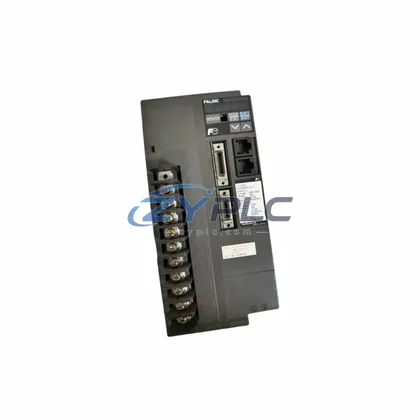
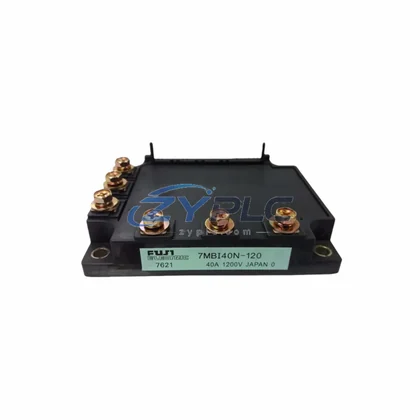
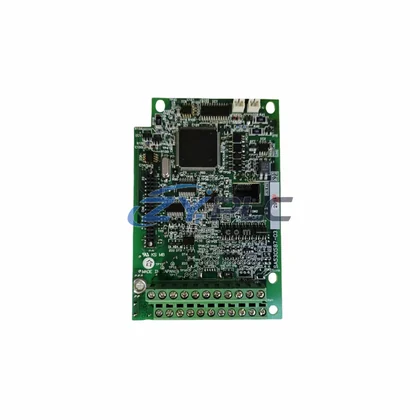
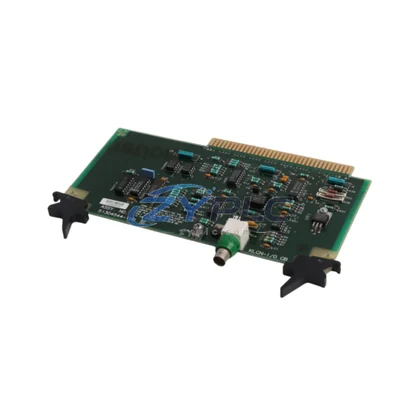
Honeywell 51198947-100 Power Supply for TDC 3000 Automation
The Honeywell 51198947-100 is a high-efficiency power supply module engineered for the TDC 3000 Distributed Control System (DCS), one of Honeywell’s most enduring and widely deployed process automation platforms. In energy-intensive industrial environments — from petrochemical refineries to continuous manufacturing lines — the quality and stability of DC power delivery directly determines how efficiently field devices, controllers, and drive systems perform. This module is designed to eliminate power-side inefficiencies that silently inflate energy costs and accelerate component wear.
Unlike generic replacement units, the 51198947-100 is built to Honeywell’s original TDC 3000 power architecture specifications, ensuring that voltage regulation, ripple suppression, and load response characteristics match the demands of the system’s I/O modules, communication cards, and process controllers. When power supply performance degrades, the downstream effects cascade: PID loop instability, erratic valve positioner behavior, false alarms from analog input modules, and increased heat dissipation across the backplane — all of which translate into measurable unplanned downtime and unplanned downtime.
Product Specification Table
| Parameter |
Specification / Value |
| SKU / Part Number |
51198947-100 (Alt: 51198651-100) |
| Compatible System |
Honeywell TDC 3000 DCS |
| Module Type |
Power Supply Module |
| Output Stability |
Regulated DC output with low ripple for stable field device operation |
| Operating Efficiency |
Optimized for continuous 24/7 industrial duty cycles |
| Application Environment |
Process control panels, DCS cabinets, petrochemical, power generation, pulp & paper |
| Maintenance Value |
Reduces heat load, stabilizes bus voltage, lowers reactive power draw on control circuits |
| Origin |
United States |
| Warranty |
warranty terms confirmed during quotation |
| Availability |
RFQ Available — Ships within 1–3 business days |
System Compatibility and Application
The 51198947-100 does not operate in isolation — it is the power foundation upon which the entire TDC 3000 control architecture depends. In a typical TDC 3000 installation, the system integrates a range of modules that collectively govern energy flow, process control, and data acquisition. The Honeywell 51309288-175 High-Performance Process Manager (HPM) relies on stable, clean DC power to execute control algorithms without interruption. Similarly, the 51401544-150 Advanced Process Manager (APM) card processes analog signals from field transmitters — any voltage fluctuation introduced by a degraded power supply directly corrupts the 4–20 mA signal chain, leading to inaccurate flow, pressure, or temperature readings that cause the control system to overcorrect and waste energy.
On the I/O side, modules such as the 51304485-150 Analog Input Module and the 51309276-150 Digital Output Module depend on the power rail maintained by the 51198947-100 to switch field devices — including motor starters, solenoid valves, and variable frequency drives (VFDs) — with precision timing. When the power supply delivers clean, regulated voltage, the Honeywell HC900 Hybrid Controller and associated 900RCS Remote Control Station can execute coordinated start/stop sequences that minimize inrush current and reduce peak demand charges.
For drive-level maintenance planning, the TDC 3000 platform often interfaces with Honeywell SmartLine transmitters and Experion PKS supervisory nodes via the Data Hiway communication backbone. The integrity of this communication depends on the power supply maintaining stable voltage across the hiway interface cards. A failing power supply introduces noise onto the hiway, causing retransmissions, increased CPU load on the 51401088-100 Universal Control Network (UCN) Interface, and degraded scan rates — all of which reduce the system’s ability to respond to energy-optimization setpoints in real time.
In multi-cabinet TDC 3000 installations, the 51198947-100 is often deployed alongside the 51198651-100 (its functional equivalent) to provide redundant power paths. This redundancy architecture ensures that a single power supply failure does not interrupt the control of energy-critical loops such as boiler drum level, furnace temperature, or compressor surge control — processes where a momentary loss of control can result in significant fuel waste or equipment damage.
Maintenance and Replacement Notes
In a continuous process plant running 8,000+ hours per year, the cumulative energy impact of a degraded power supply is substantial. When the 51198947-100 is operating within specification, the TDC 3000 system maintains tight control over energy-intensive processes. Boiler combustion control loops, for example, can sustain air-to-fuel ratios within ±0.5% of setpoint — a level of precision that directly reduces excess oxygen in flue gas and cuts fuel consumption by 2–5% compared to a system operating with noisy or unstable control power.
On motor-driven systems, the power supply’s role in maintaining clean signals to VFD command interfaces is equally important. When analog output modules — powered by the 51198947-100 — send speed reference signals to variable frequency drives controlling pumps, fans, and compressors, signal integrity determines how accurately the drive tracks the energy-optimal operating point. A 1% error in the speed reference signal on a 200 kW pump motor can translate to a 3% increase in power consumption due to the cubic relationship between motor speed and power in centrifugal applications.
Predictive maintenance is another area where this power supply’s reliability pays dividends. TDC 3000 systems equipped with functioning power supplies maintain consistent communication with Honeywell’s Asset Management System (AMS), enabling continuous monitoring of valve signatures, transmitter diagnostics, and motor current trends. When the power supply degrades, these diagnostic channels are the first to suffer — leaving maintenance teams blind to developing faults until they become failures. Replacing the 51198947-100 proactively, based on hours-in-service data, keeps the diagnostic infrastructure intact and supports a predictive maintenance strategy that reduces unplanned downtime by Actual operating results depend on the installed system, load profile, and commissioning parameters.
Every unit shipped from our facility undergoes functional load testing under simulated TDC 3000 operating conditions before dispatch. Output voltage, ripple, and load regulation are verified against Honeywell’s original acceptance criteria. This pre-shipment testing protocol, combined with our warranty terms confirmed during quotation, ensures that the module you install performs to specification from day one — with no burn-in period required on your production line.
Product Sourcing FAQ
Q1: How does replacing the 51198947-100 power supply reduce operating load in a TDC 3000 system?
A degraded power supply increases ripple and voltage sag on the control bus, forcing downstream modules to draw higher current to maintain operation. This increases heat dissipation in the cabinet and causes control loops to hunt rather than hold setpoint, resulting in over-actuation of final control elements such as control valves and VFDs. A new 51198947-100 restores clean power delivery, tightening loop performance and reducing unnecessary actuator movement — directly cutting unplanned downtime in the controlled process.
Q2: Is the 51198947-100 compatible with all TDC 3000 cabinet configurations, including redundant power setups?
Yes. The 51198947-100 is designed for standard TDC 3000 power supply slots and is functionally interchangeable with the 51198651-100 in redundant configurations. It supports both simplex and redundant power architectures without requiring firmware changes or system reconfiguration. Always verify the physical connector and slot assignment against your cabinet’s wiring diagram before installation.
Q3: What is the recommended replacement interval, and how do I know when the power supply is degrading?
Honeywell recommends proactive replacement based on operating hours and environmental conditions rather than waiting for failure. Early indicators of degradation include increased cabinet temperature, intermittent communication errors on the Data Hiway, analog input drift, and nuisance alarms from I/O modules. If your TDC 3000 system is exhibiting any of these symptoms, testing the power supply output under load is the recommended first diagnostic step.
Q4: What does the warranty terms confirmed during quotation cover, and what is the testing process before shipment?
The warranty terms confirmed during quotation covers defects in materials and workmanship under normal operating conditions. Prior to shipment, each 51198947-100 unit is subjected to full functional testing including output voltage verification, load regulation testing, and ripple measurement. Units that do not meet Honeywell’s original performance specifications are not shipped. Warranty claims are supported with direct technical assistance and expedited replacement to minimize your system downtime.