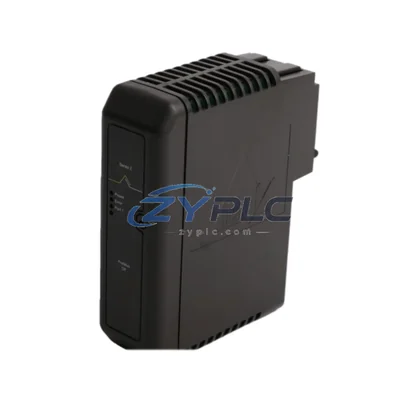
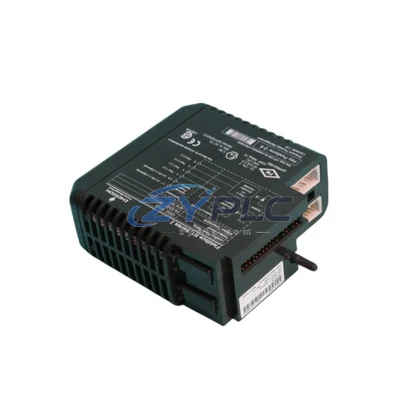
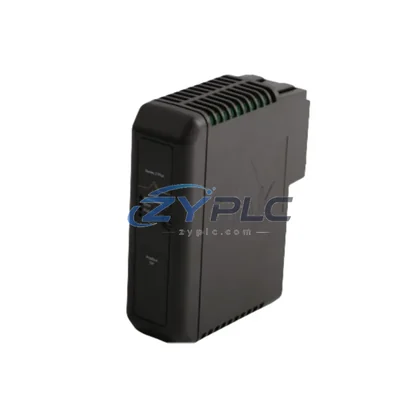
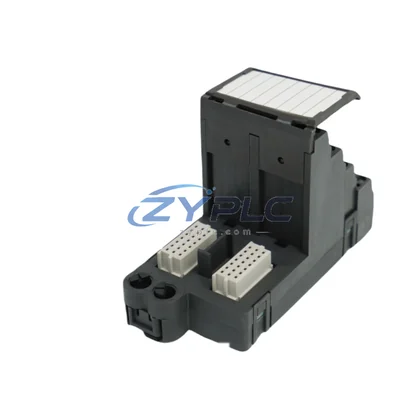
Honeywell FS-BCU-0036: Industrial Data Link for Smart Factory Connectivity
The Honeywell FS-BCU-0036 is a high-performance Foundation Fieldbus Control Unit engineered to serve as the critical communication backbone between field instrumentation and upper-level control systems in modern industrial environments. Designed for demanding process automation applications, the FS-BCU-0036 bridges the gap between field-level devices — including transmitters, actuators, and smart sensors — and DCS platforms, SCADA systems, and HMI interfaces, enabling seamless, real-time data exchange across the entire automation hierarchy.
In today’s smart factory landscape, data isolation remains one of the most persistent challenges facing plant engineers. The FS-BCU-0036 directly addresses this by providing a robust, deterministic Foundation Fieldbus (FF H1) communication link that supports up to 32 field devices per segment, delivering cyclic and acyclic data with sub-second response times. Whether deployed in oil and gas, chemical processing, power generation, or pharmaceutical manufacturing, this control unit ensures that every signal — from a pressure transmitter on the process line to a flow controller in the utility loop — is accurately captured, converted, and transmitted to the control layer without data loss or latency-induced errors.
Compatibility & Integration Notes
| Parameter |
Specification |
| Communication Protocol |
Foundation Fieldbus H1 (FF H1) |
| Interface Type |
Fieldbus Segment Interface, RS-485 compatible backbone |
| Transmission Speed |
31.25 kbps (FF H1 standard) |
| Max Devices per Segment |
Up to 32 field devices |
| Network Compatibility |
DCS, SCADA, HMI, PLC via HSE (High Speed Ethernet) gateway |
| System Application |
Process automation, remote I/O integration, smart instrumentation |
| Power Supply |
Bus-powered / external 24VDC |
| Operating Temperature |
-20°C to +70°C |
| Certifications |
ATEX, IECEx (zone-rated variants available) |
| Warranty |
warranty terms confirmed during quotation — tested and verified before shipment |
Connected Automation Data Flow
The FS-BCU-0036 sits at the heart of a layered industrial network architecture. At the field level, smart instruments such as Honeywell STT850 temperature transmitters and Honeywell SPS series pressure sensors communicate natively over the FF H1 bus, delivering not just process values but also device diagnostics, configuration parameters, and alarm states — all within a single twisted-pair cable. The FS-BCU-0036 aggregates these signals and presents them to the Honeywell Experion PKS DCS platform via the HSE (High Speed Ethernet) backbone, where operators can monitor, trend, and control the entire process from a centralized Honeywell Station HMI console.
For plants running hybrid architectures, the FS-BCU-0036 integrates seamlessly with Honeywell ControlEdge PLC systems, allowing fieldbus data to be shared across both continuous process control and discrete automation domains. Remote I/O modules such as the Honeywell HC900 I/O subsystem can be linked into the same network fabric, extending the reach of the fieldbus segment to distributed plant areas without requiring additional wiring infrastructure. This is particularly valuable in large-scale facilities where field devices may be located hundreds of meters from the control room.
At the SCADA layer, the FS-BCU-0036 supports integration with leading platforms including Honeywell Uniformance PHD historian and third-party SCADA systems via OPC-DA/UA data servers. This enables plant-wide data aggregation, KPI dashboards, and long-term process trending — all fed by the real-time fieldbus data stream originating from the FS-BCU-0036 segment. Variable frequency drives (VFDs) and motor control centers equipped with FF-compatible interfaces can also be incorporated into the segment, providing closed-loop speed and torque feedback directly to the DCS without analog signal conversion losses.
Edge computing gateways deployed alongside the FS-BCU-0036 can further process fieldbus data locally — performing alarm pre-filtering, data compression, and protocol translation to MQTT or OPC-UA — before forwarding aggregated datasets to cloud-based MES or ERP platforms. This architecture supports the IIoT vision of transparent, end-to-end data flow from sensor to enterprise, with the FS-BCU-0036 serving as the reliable, deterministic foundation of the entire data chain.
Solving Data Isolation in Industrial Sites
Many industrial facilities still operate with fragmented automation islands — legacy 4-20mA loops alongside newer HART devices, proprietary DCS networks that cannot communicate with modern SCADA platforms, and remote field stations that lack any real-time visibility. The Honeywell FS-BCU-0036 resolves these challenges by providing a standardized, open Foundation Fieldbus interface that is vendor-neutral at the field device level while integrating natively with Honeywell’s control ecosystem.
Protocol unification is achieved through the FF H1-to-HSE gateway function embedded in the FS-BCU-0036, eliminating the need for separate protocol converters or signal conditioners. Plant engineers can replace multiple point-to-point wiring runs with a single fieldbus segment, reducing installation costs, simplifying cable management, and dramatically improving diagnostic transparency. Each connected device publishes its own health status, calibration data, and fault codes directly over the bus — enabling predictive maintenance workflows and reducing unplanned downtime.
Remote monitoring and diagnostics are fully supported: operators can access device parameters, perform online reconfiguration, and receive alarm notifications from any connected HMI or SCADA workstation without dispatching field technicians. For multi-plant enterprises, this remote diagnostic capability translates directly into reduced travel costs and faster mean-time-to-repair (MTTR). System expansion is equally straightforward — additional FF H1 segments can be added by deploying additional FS-BCU-0036 units, each managed centrally through the Experion PKS asset management interface, ensuring that the network scales with production demands without architectural redesign.
Every unit supplied by ZYPLC undergoes pre-shipment functional testing, including communication link verification, segment load testing, and firmware version confirmation, ensuring that the FS-BCU-0036 arrives ready for immediate installation and commissioning.
Industrial Connectivity FAQ
Q1: What is the communication latency of the FS-BCU-0036 on a fully loaded FF H1 segment?
A: Under standard operating conditions with 16–32 devices on a single segment, the FS-BCU-0036 maintains cyclic update rates of 1–2 seconds per device, with acyclic (diagnostic and configuration) traffic handled in the background without impacting process data throughput. For time-critical loops, segment loading should be optimized to fewer devices to achieve sub-500ms update cycles.
Q2: Is the FS-BCU-0036 compatible with non-Honeywell DCS and SCADA platforms?
A: Yes. The Foundation Fieldbus protocol is an open international standard (IEC 61158), and the FS-BCU-0036 supports interoperability with any FF-compliant host system. Integration with third-party SCADA platforms is achievable via OPC-DA/UA servers or HSE-to-Modbus/Profibus gateway modules, making it suitable for multi-vendor plant environments.
Q3: How does the FS-BCU-0036 maintain network stability in electrically noisy industrial environments?
A: The unit incorporates built-in surge protection, galvanic isolation on the fieldbus segment, and complies with IEC 61000-4 EMC immunity standards. Proper segment termination and cable shielding practices, combined with the FS-BCU-0036’s noise rejection circuitry, ensure reliable communication even in environments with heavy motor drives, welding equipment, or high-voltage switchgear nearby.
Q4: What warranty and support does ZYPLC provide with the FS-BCU-0036?
A: All FS-BCU-0036 units supplied by ZYPLC carry a warranty terms confirmed during quotation covering manufacturing defects and communication failures. Each unit is functionally tested prior to shipment, and our technical team provides pre-sales configuration support and post-sales commissioning guidance. Replacement units are dispatched within 48 hours for warranty claims, minimizing production impact.