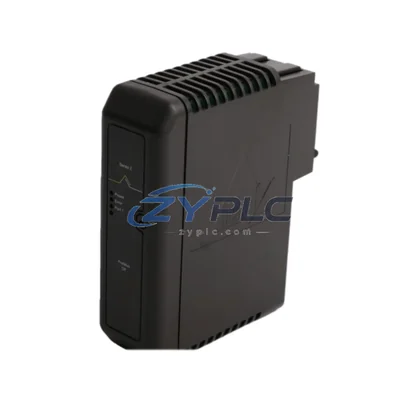
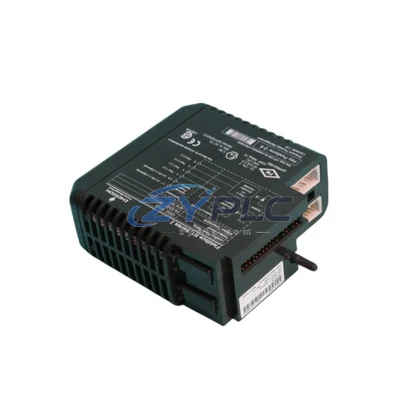
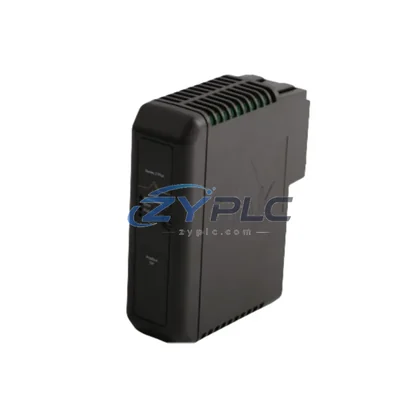
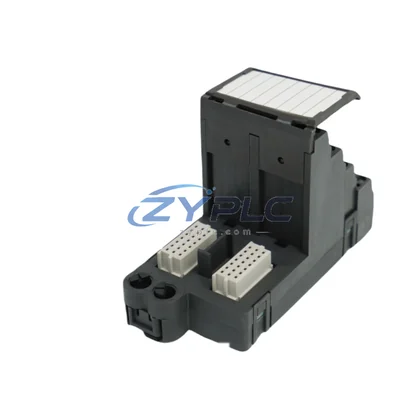
Honeywell FS-IOBUS-CPIO3 Network Interface for Safety Manager Industrial Data Links
In modern smart factory environments, seamless data flow between field devices and supervisory systems is the backbone of operational safety and efficiency. The Honeywell FS-IOBUS-CPIO3 IO Bus Communication Module is purpose-built to serve as a critical link in the Safety Manager (SM) architecture, enabling reliable, high-speed communication between the Safety Manager controller and distributed I/O subsystems across the plant floor. Whether your facility runs continuous process operations, batch manufacturing, or hybrid automation, the FS-IOBUS-CPIO3 delivers the protocol integrity and network stability that safety-critical applications demand.
The FS-IOBUS-CPIO3 operates as a dedicated IO Bus interface within the Honeywell Safety Manager platform, managing the deterministic exchange of process data between the SM controller and remote I/O field termination assemblies (FTAs). Its role in the data chain begins at the signal acquisition layer — where field instruments, pressure transmitters, temperature sensors, and discrete safety switches feed live process values into the IO Bus — and extends upward through the Safety Manager’s logic solver to SCADA and DCS integration layers. This end-to-end data path ensures that every safety interlock, alarm condition, and process variable is communicated with the latency and reliability that SIL-rated systems require.
Compatibility & Integration Notes
| Parameter |
Specification |
| SKU / Part Number |
FS-IOBUS-CPIO3 |
| Brand / Manufacturer |
Honeywell |
| Series |
Safety Manager (SM) |
| Module Type |
IO Bus Communication Module |
| Communication Protocol |
Honeywell IO Bus (Proprietary Safety Bus) |
| Interface Type |
IO Bus Backplane / Field Bus Interface |
| Network Compatibility |
Safety Manager Controller, Remote I/O FTA, SM Expansion Chassis |
| Data Transmission |
Deterministic, cyclic real-time process data exchange |
| System Application |
SIL-rated Safety Instrumented Systems (SIS), Emergency Shutdown (ESD), Fire & Gas (F&G) |
| SCADA / HMI Integration |
Compatible via Safety Manager DCS gateway modules |
| Origin |
United States |
| Warranty |
12 Months |
Connected Automation Data Flow
The FS-IOBUS-CPIO3 sits at the heart of a tightly integrated safety automation architecture. In a typical Safety Manager deployment, the IO Bus Communication Module connects the SM Controller (FS-SCPU) — the central logic solver — to a network of remote I/O chassis populated with digital input modules such as the FS-DI-0808 and digital output modules like the FS-DO-0808. These I/O modules interface directly with field instruments: pressure switches, gas detectors, solenoid valves, and motor control relays that form the physical safety layer of the plant.
As process signals are acquired from field devices, the FS-IOBUS-CPIO3 manages the cyclic transfer of this data across the IO Bus to the Safety Manager logic solver, where safety functions are executed in accordance with IEC 61511 requirements. The processed outputs — trip signals, alarm activations, and permissive commands — are then transmitted back through the IO Bus to the relevant output FTAs, closing the safety loop in real time.
At the supervisory level, the Safety Manager communicates with plant-wide SCADA and DCS platforms through dedicated gateway modules such as the FS-HNET Honeywell Network Interface, enabling operators to monitor safety system status, acknowledge alarms, and review event logs from the Experion PKS or third-party HMI workstations. The FS-IOBUS-CPIO3 ensures that the data flowing from field to SCADA is consistent, time-stamped, and diagnostically transparent.
In larger installations, multiple IO Bus segments may be deployed across different process units — compressor trains, reactor vessels, storage tank farms — each served by its own FS-IOBUS-CPIO3 module. These segments are coordinated by the Safety Manager controller, which aggregates data from all IO Bus nodes and presents a unified safety picture to the Safety Manager Engineering Station (SMES) for configuration, diagnostics, and online testing. Integration with Honeywell FTA (Field Termination Assembly) panels further simplifies field wiring and module replacement, reducing maintenance downtime and supporting hot-swap operations where the system architecture permits.
For facilities that also operate Honeywell’s Experion HS (High-Speed) or legacy TDC 3000 platforms, the Safety Manager’s gateway capabilities — enabled in part by the reliable IO Bus infrastructure provided by the FS-IOBUS-CPIO3 — allow cross-platform data sharing, supporting unified alarm management and plant-wide historian integration.
Solving Data Isolation in Industrial Sites
One of the most persistent challenges in industrial automation is the fragmentation of safety and process data across incompatible systems. Legacy plants often operate with a patchwork of proprietary protocols — Modbus RTU on older field devices, HART on smart transmitters, Foundation Fieldbus on process instruments, and proprietary safety buses on SIS platforms — creating data silos that impede real-time visibility and complicate maintenance workflows.
The Honeywell FS-IOBUS-CPIO3 addresses this challenge within the Safety Manager ecosystem by providing a standardized, deterministic IO Bus interface that consolidates safety I/O data from distributed field termination assemblies into a single, coherent data stream for the SM controller. This eliminates the need for ad-hoc protocol converters between safety I/O and the logic solver, reducing potential failure points and simplifying system validation for SIL certification.
For remote monitoring and diagnostics, the Safety Manager’s architecture — anchored by modules like the FS-IOBUS-CPIO3 — supports remote access to system diagnostics via the SMES engineering workstation. Maintenance engineers can review module health, IO Bus communication status, and fault logs without requiring physical access to the controller cabinet, enabling faster root-cause analysis and reducing mean time to repair (MTTR) in critical process environments.
As production lines expand and new process units are commissioned, the modular architecture of the Safety Manager platform allows additional IO Bus segments and remote I/O chassis to be integrated without redesigning the core safety system. The FS-IOBUS-CPIO3 supports this scalability by providing a consistent, validated communication interface that can be replicated across new expansion chassis, ensuring that system growth does not compromise safety integrity or network performance.
From production transparency to alarm rationalization and regulatory compliance reporting, the FS-IOBUS-CPIO3 plays a foundational role in making safety data accessible, actionable, and auditable across the smart factory.
Industrial Connectivity FAQ
Q1: What communication protocol does the Honeywell FS-IOBUS-CPIO3 use, and is it compatible with third-party I/O systems?
The FS-IOBUS-CPIO3 uses Honeywell’s proprietary IO Bus protocol, which is specifically designed for deterministic, SIL-rated communication within the Safety Manager platform. It is optimized for use with Honeywell Safety Manager I/O modules and FTAs and is not intended for direct interfacing with third-party I/O systems. Integration with external networks (DCS, SCADA) is achieved through dedicated Safety Manager gateway modules.
Q2: How does the FS-IOBUS-CPIO3 ensure network stability in safety-critical applications?
The module is designed for deterministic cyclic communication, ensuring that process data is exchanged at fixed, predictable intervals regardless of network load. The Safety Manager architecture also supports redundant IO Bus configurations in high-availability installations, minimizing the risk of communication loss in the event of a single module or cable fault.
Q3: Can the FS-IOBUS-CPIO3 be replaced online without shutting down the Safety Manager system?
Hot-swap capability depends on the specific Safety Manager system configuration and the redundancy mode in use. In redundant IO Bus configurations, module replacement may be possible without a full system shutdown. We recommend consulting the Honeywell Safety Manager hardware manual and your system integrator before performing any online maintenance on safety-critical modules.
Q4: What warranty and pre-shipment testing does ZYPLC provide for the FS-IOBUS-CPIO3?
All Honeywell FS-IOBUS-CPIO3 modules supplied by ZYPLC are covered by a warranty terms confirmed during quotation from the date of shipment. Each unit undergoes pre-shipment functional verification to confirm communication integrity and module health before dispatch. We maintain ready stock of Safety Manager components to support urgent project timelines and unplanned maintenance requirements.