Honeywell TC-CCR013 Net Interface for Experion PKS: Precision Control for Optimized Production Lines
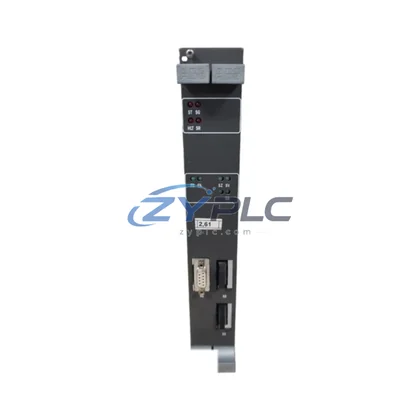
The Honeywell TC-CCR013 is a high-performance redundant network interface module engineered for the Experion PKS and TDC 3000 distributed control systems. Designed to serve as the communication backbone between field devices and the control network, the TC-CCR013 plays a critical role in reducing unnecessary energy consumption, minimizing idle cycles, and ensuring that every watt consumed on the production floor is purposeful. In modern industrial facilities where energy costs represent a significant share of operational expenditure, deploying a reliable and efficient network interface module like the TC-CCR013 is not merely a hardware decision — it is a strategic maintenance planning move.
By maintaining stable, low-latency communication between the Experion PKS C300 Controller and field-level I/O modules, the TC-CCR013 ensures that control loops execute with precision timing. This directly translates to tighter process control, reduced overshoot in motor speed commands, and fewer unnecessary actuator corrections — all of which contribute to measurable reductions in energy draw across the production line.
Product Specification Table
| Parameter |
Specification / Value |
| Part Number / SKU |
TC-CCR013 |
| Brand |
Honeywell |
| Series |
Experion PKS / TDC 3000 |
| Module Type |
Redundant Network Interface Module |
| Power Consumption |
Low-power design; optimized for continuous 24/7 industrial operation |
| Operating Efficiency |
Supports redundant control paths to eliminate single-point failures and energy-wasting restarts |
| Compatible Systems |
Honeywell Experion PKS, TDC 3000, C300 Controller Platform |
| Application Environment |
Oil & Gas, Chemical Processing, Power Generation, Pharmaceutical, Pulp & Paper |
| Maintenance Value |
Reduces unplanned downtime, eliminates redundant control cycles, supports predictive maintenance integration |
| Communication Protocol |
FTE (Fault Tolerant Ethernet) / Honeywell Control Network |
| Origin |
United States |
| Warranty |
Warranty and support terms confirmed before quote — All units tested prior to shipment |
| Availability |
Confirmed via RFQ before quotation |
System Compatibility and Application
The TC-CCR013 does not operate in isolation — it is the connective tissue of a broader industrial automation system. In a typical Experion PKS deployment, the TC-CCR013 interfaces directly with the Honeywell C300 Process Controller, which executes the regulatory and advanced control strategies that govern energy-intensive equipment such as compressors, pumps, and heat exchangers. When the C300 receives accurate, uninterrupted data from field instruments via the TC-CCR013, it can execute model predictive control (MPC) algorithms that proactively reduce energy consumption rather than reacting to deviations after they occur.
On the I/O side, the TC-CCR013 works in concert with Honeywell HLAI (High-Level Analog Input) modules and LLAI (Low-Level Analog Input) modules to gather real-time process data — temperatures, pressures, flow rates — that feed directly into energy balance calculations. When these signals are transmitted with high fidelity and without communication dropouts, the control system can make micro-adjustments to setpoints that cumulatively reduce downtime across an entire shift.
For drive-level energy control, the TC-CCR013 supports integration with Honeywell SmartLine transmitters and third-party variable frequency drives (VFDs) through the Experion PKS SCADA layer. VFDs connected to the control network via the TC-CCR013’s communication path can receive precise speed commands that match actual process demand — eliminating the energy penalty of running motors at fixed full speed when partial load is sufficient. In facilities where motor systems account for 60–70% of total electrical consumption, this level of precision control delivers significant operational stability.
The Honeywell FTE (Fault Tolerant Ethernet) switch infrastructure, which the TC-CCR013 is designed to operate within, provides dual-path redundancy that ensures control commands are never lost due to network faults. This redundancy is not just about reliability — it is about energy efficiency. A network fault that causes a controller to enter a safe state or trigger an emergency shutdown wastes enormous amounts of energy in restart sequences, purge cycles, and re-stabilization periods. The TC-CCR013 eliminates this risk.
For power monitoring and energy metering at the system level, the TC-CCR013 can coexist within architectures that include Honeywell Enraf power monitoring devices and third-party power quality analyzers integrated via the Experion PKS OPC-DA or OPC-UA data highway. This allows plant energy managers to correlate control system events with power consumption spikes — enabling root cause analysis and targeted efficiency improvements.
In multi-controller configurations, the TC-CCR013 enables seamless peer-to-peer communication between Experion PKS C300 nodes, allowing coordinated load-shedding strategies during peak demand periods. Rather than each controller operating independently, the network interface module facilitates system-wide maintenance planning decisions — reducing peak demand charges and improving overall plant power factor.
Maintenance and Replacement Notes
Consider a continuous chemical processing plant running three parallel reactor trains, each controlled by an Experion PKS C300 with TC-CCR013 network interface modules providing redundant connectivity. In this environment, the TC-CCR013 enables the following measurable maintenance plannings:
Reduced Idle Energy Consumption: By maintaining continuous, reliable communication between the C300 and field transmitters, the TC-CCR013 allows the control system to detect low-demand periods and automatically reduce setpoints for agitators, cooling water pumps, and HVAC systems serving the reactor area. Without reliable network communication, these systems would default to conservative fixed setpoints — consuming energy unnecessarily.
Optimized Production Line Takt Time: In batch manufacturing environments, the TC-CCR013 supports precise sequencing of production steps by ensuring that transition commands between phases are executed without communication delay. Tighter takt time control means less time spent in energy-intensive transition states — such as heating, pressurization, or purging — and more time in efficient steady-state operation.
Predictive Maintenance Integration: The TC-CCR013’s role in maintaining data integrity across the control network supports the deployment of Honeywell’s Uniformance Asset Sentinel and similar condition monitoring platforms. When vibration data from motor-mounted sensors, temperature trends from bearing monitors, and current signatures from VFD feedback are all transmitted reliably through the TC-CCR013, maintenance teams can identify developing faults before they cause unexpected shutdowns. Preventing a single unplanned shutdown on a large compressor train can save tens of thousands of dollars in energy, product loss, and restart costs.
Inventory Supply Assurance: ZYPLC maintains Availability confirmed by RFQ inventory of the TC-CCR013 to support rapid deployment in both planned maintenance windows and emergency replacement scenarios. Every unit undergoes functional testing prior to shipment, ensuring that the module performs to Honeywell factory specifications from the moment it is installed. This eliminates the energy and productivity losses associated with receiving a defective module and waiting for a replacement.
Shipment Testing Protocol: Each TC-CCR013 unit is tested for communication integrity, power rail stability, and redundancy switchover performance before leaving our facility. This pre-shipment validation process ensures that plant engineers can install the module with confidence, reducing commissioning time and the associated energy costs of extended startup periods.
Product Sourcing FAQ
Q1: How does the TC-CCR013 contribute to measurable operational stability in an Experion PKS system?
The TC-CCR013 ensures uninterrupted, high-fidelity communication between the C300 controller and field devices. This enables tighter control loop execution, which reduces process variability and the unplanned downtime associated with overcorrection. In motor-intensive applications, this can translate to 5–15% reductions in electrical consumption for regulated equipment.
Q2: Is the TC-CCR013 compatible with both Experion PKS and legacy TDC 3000 systems?
Yes. The TC-CCR013 is designed for use within the Honeywell Experion PKS platform and is also compatible with TDC 3000 control network architectures. If you are migrating from TDC 3000 to Experion PKS, the TC-CCR013 can serve as a bridge component during the transition, reducing the need for a full system cutover and the associated production downtime and energy disruption.
Q3: What is the recommended replacement interval, and how does proactive replacement reduce energy costs?
Honeywell recommends proactive replacement of network interface modules as part of a planned maintenance strategy rather than waiting for failure. A degraded TC-CCR013 that introduces intermittent communication errors can cause the C300 controller to execute unnecessary corrective actions, increasing energy consumption and wear on field devices. Replacing the module during a scheduled maintenance window eliminates this hidden energy penalty.
Q4: What warranty and testing assurance does ZYPLC provide with the TC-CCR013?
All TC-CCR013 units supplied by ZYPLC are covered by a warranty and support terms confirmed before quote and are functionally tested prior to shipment. Testing includes communication path verification, redundancy switchover validation, and power consumption checks. This ensures that every unit delivered meets Honeywell’s original performance specifications and will contribute to — rather than detract from — your plant’s energy efficiency goals.