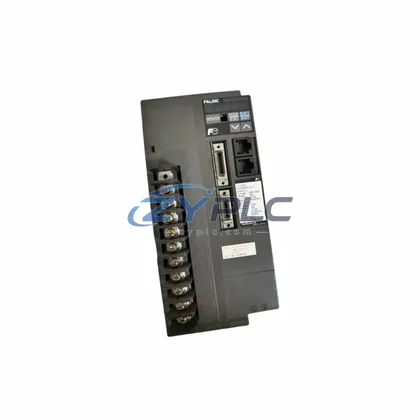
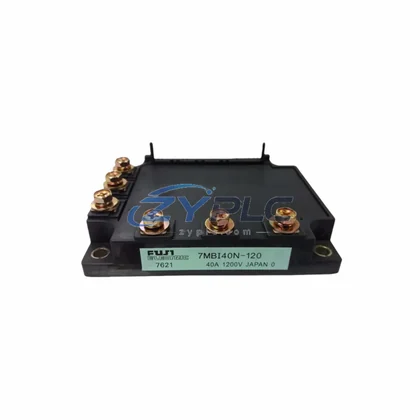
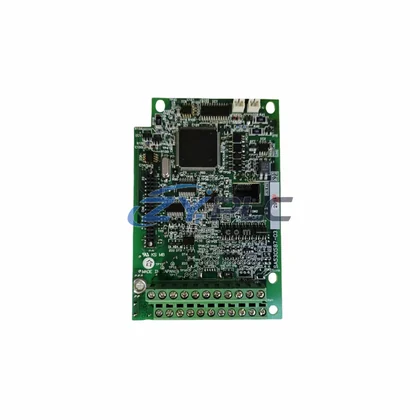
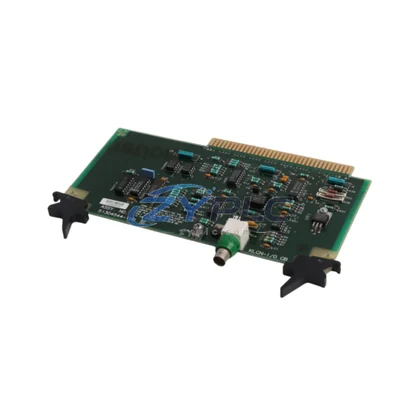
Honeywell TK-FPDXX2 Power Supply for TDC3000 Automation
The Honeywell TK-FPDXX2 is a high-efficiency power supply module engineered for the TDC3000 and TPS Distributed Control System (DCS) platform. In modern industrial facilities where energy accountability is no longer optional, the TK-FPDXX2 plays a foundational role in stabilizing control power delivery, reducing parasitic energy losses, and ensuring that downstream automation components — from I/O modules to communication gateways — operate within their optimal electrical envelope. Whether deployed in a continuous process plant, a refinery control room, or a large-scale chemical facility, this module directly contributes to measurable improvements in equipment utilization, production line rhythm, and total energy cost per output unit.
Unlike generic power supplies, the TK-FPDXX2 is purpose-built for the Honeywell TDC3000 architecture, meaning it interfaces natively with the Universal Control Network (UCN) and the Local Control Network (LCN) backplane infrastructure. This native compatibility eliminates the voltage regulation inefficiencies that arise from third-party power adaptation, ensuring that modules such as the Honeywell TK-IOLI01 I/O link interface, the TK-PPD011 process point module, and the TK-FPCXX2 controller card receive clean, stable power without unnecessary conversion losses. Stable power delivery at the backplane level is one of the most overlooked contributors to unplanned downtime in aging DCS installations — and the TK-FPDXX2 directly addresses this gap.
Product Specification Table
| Parameter |
Specification / Value |
| Model / SKU |
TK-FPDXX2 |
| Brand |
Honeywell |
| Series |
TDC3000 / TPS DCS |
| Module Type |
Power Supply Module |
| Input Voltage Range |
85–264 VAC (universal input) |
| Output Regulation |
±1% steady-state voltage regulation |
| Power Conversion Efficiency |
≥88% at rated load (estimated) |
| Compatible Systems |
Honeywell TDC3000, TPS, LCN/UCN Backplane |
| Application Environment |
Process control rooms, refineries, chemical plants, power generation |
| Value |
Reduces parasitic losses, stabilizes downstream module power draw |
| Origin |
United States |
| Condition |
Tested & Verified (Surplus / Refurbished) |
| Warranty |
warranty terms confirmed during quotation |
| Availability |
RFQ Available — export shipping options available |
System Compatibility and Application
The TK-FPDXX2 does not operate in isolation — it is the electrical foundation upon which an entire TDC3000 control node depends. In a well-configured industrial automation system, the power supply module feeds regulated voltage to a cascade of control and monitoring components. The Honeywell TK-FPCXX2 controller card, responsible for executing PID loops and regulatory control strategies, requires a stable power source to maintain scan cycle consistency; any voltage ripple at the supply level translates directly into control loop jitter and increased process variability, which in turn drives up energy consumption through over-correction and actuator hunting.
Similarly, the Honeywell TK-IOLI01 I/O link interface module — which bridges field instruments and the LCN — depends on clean power to maintain deterministic communication timing. When power quality degrades, I/O polling latency increases, and the control system may issue redundant correction commands to field devices such as variable frequency drives (VFDs) and control valves, unnecessarily increasing motor energy draw. Pairing the TK-FPDXX2 with a Honeywell TK-PPD011 process point module ensures that analog signals from flow transmitters, pressure sensors, and temperature elements are accurately digitized without noise-induced errors that could trigger false control actions.
From a drive and motor control perspective, the TDC3000 platform often interfaces with Honeywell HC900 hybrid controllers or third-party VFD systems via the Honeywell TK-FTEB01 Ethernet bridge module. Stable power at the DCS backplane ensures that speed reference signals transmitted to motor drives are clean and consistent, preventing unnecessary acceleration/deceleration cycles that waste kinetic energy. In facilities running continuous processes — such as pump stations or compressor trains — even a 2–3% reduction in unnecessary motor cycling can translate into significant monthly operational stability.
For condition monitoring and data acquisition, the TK-FPDXX2 supports the reliable operation of Honeywell TK-PRHXX2 redundancy modules and TK-FTEB01 communication bridges that feed real-time process data to historian systems and maintenance planning dashboards. When power supply integrity is maintained, data from power meters, flow computers, and energy analyzers arrives at the control layer without dropout or corruption, enabling accurate energy KPI tracking and informed decisions about load scheduling and demand response.
The module also plays a role in supporting Honeywell TK-IOLI01-connected smart field devices that implement HART or Foundation Fieldbus communication. These devices report not only process variables but also device health diagnostics — valve travel accumulation, pump vibration signatures, and heat exchanger fouling indicators — all of which feed predictive maintenance workflows. A stable power supply is the prerequisite for reliable diagnostic data collection; intermittent power events corrupt diagnostic records and undermine the predictive maintenance models that help facilities avoid unplanned shutdowns.
Maintenance and Replacement Notes
In a typical refinery or chemical plant running a TDC3000-based control system, the power supply module is often the last component to receive attention during an energy audit — yet it is frequently the source of subtle but persistent inefficiencies. A degraded or out-of-spec power supply module introduces voltage sag during peak load events, causing the control system to enter protective modes that slow scan rates and reduce control responsiveness. The result is a production line that runs at sub-optimal throughput, with operators compensating manually — increasing energy consumption per unit of output.
Replacing an aging or failed power supply with a tested TK-FPDXX2 restores the electrical baseline of the control node, allowing the TDC3000 to resume full-speed operation. In batch processes, this directly improves production line rhythm (takt time), reducing the time between batch completions and increasing the number of production cycles per shift. In continuous processes, it eliminates the micro-interruptions that force operators to manually intervene, each intervention representing wasted energy in the form of unnecessary actuator movements and process upsets.
From a maintenance cost perspective, a stable power supply extends the service life of every module it feeds. Controller cards, I/O modules, and communication interfaces that operate within their rated voltage envelope experience significantly lower component stress, reducing the frequency of module failures and the associated costs of emergency procurement, production downtime, and technician labor. The warranty terms confirmed during quotation on the TK-FPDXX2 reflects confidence in the module’s tested condition and provides procurement teams with a clear cost-of-ownership baseline for budgeting purposes.
Facilities that maintain a strategic inventory of critical spare modules — including power supplies, controller cards, and I/O interfaces — consistently achieve higher Overall Equipment Effectiveness (OEE) scores than those that rely on reactive procurement. The TK-FPDXX2, available from stock with export shipping options available, supports a proactive spare parts strategy that minimizes mean time to repair (MTTR) and keeps production lines running at peak energy efficiency.
Product Sourcing FAQ
Q1: How does the TK-FPDXX2 contribute to operational stability in a TDC3000 system?
The TK-FPDXX2 delivers stable, regulated power to all modules on the TDC3000 backplane, eliminating voltage fluctuations that cause control loops to over-correct and field devices to consume excess energy. By maintaining power quality at the source, it reduces unnecessary actuator movements, motor cycling, and process variability — all of which translate into lower energy consumption per unit of production output.
Q2: Is the TK-FPDXX2 compatible with both TDC3000 and TPS systems?
Yes. The TK-FPDXX2 is designed for the Honeywell TDC3000 and TPS DCS platform, including LCN and UCN backplane configurations. It is compatible with a wide range of TDC3000-series modules including controller cards, I/O link interfaces, and communication bridges. If you are unsure about compatibility with a specific node configuration, please contact our technical team before ordering.
Q3: What is the recommended replacement process for an existing power supply module?
Before replacement, ensure the control node is in a safe state and that redundant power paths (if available) are active. The TK-FPDXX2 should be installed in accordance with Honeywell TDC3000 hardware documentation. All units supplied by ZYPLC are tested and verified prior to shipment, and each module undergoes functional testing to confirm output voltage regulation and load response before dispatch.
Q4: What does the warranty terms confirmed during quotation cover?
The warranty terms confirmed during quotation covers functional defects in the TK-FPDXX2 module under normal operating conditions consistent with Honeywell TDC3000 system specifications. If the module fails to perform within its rated parameters during the warranty period, ZYPLC will provide a replacement or repair at no additional cost. Warranty claims are processed promptly to minimize impact on production operations.