JDSU MLA251DH2-DVE HPM5B2AXAWS306: Industrial Laser Power Data Link for Smart Factory Systems
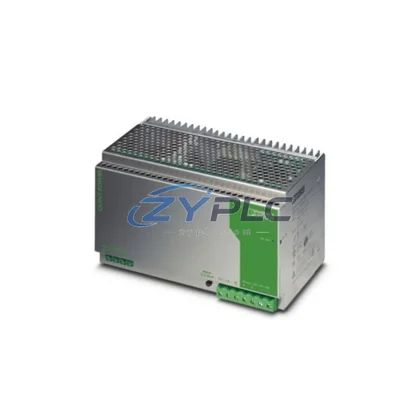
The JDSU MLA251DH2-DVE (P/N: 385224-01, Model: HPM5B2AXAWS306) is a precision industrial laser power supply engineered for demanding automation environments where stable, regulated power delivery is the backbone of uninterrupted data acquisition and process control. Rated at 100/115–120V AC input, 19A, 50/60Hz, with a regulated DC output range of 3–12V, this unit is purpose-built to sustain laser-based sensing, measurement, and communication modules that feed real-time data into SCADA, HMI, and PLC control architectures.
In modern smart factories, the integrity of the power supply chain is inseparable from the integrity of the data chain. A laser module powered by the MLA251DH2-DVE does not merely emit light — it drives the optical signal path that connects field-level sensors to upper-layer control systems. Whether the application involves laser distance measurement, barcode scanning on a conveyor, or optical fiber communication between remote I/O nodes and a central PLC rack, the stability of the HPM5B2AXAWS306 directly determines the quality and continuity of the data flowing through the network.
Compatibility & Integration Notes
| Parameter |
Specification |
| Model |
MLA251DH2-DVE |
| Part Number |
HPM5B2AXAWS306 / P/N 385224-01 |
| Input Voltage |
100 / 115–120V AC |
| Input Current |
19A |
| Input Frequency |
50 / 60 Hz |
| Output Voltage Range |
3–12V DC (Regulated) |
| Interface Compatibility |
Laser module drive, optical sensor power, fiber transceiver support |
| Protocol / System Compatibility |
SCADA, HMI, PLC (Siemens, Allen-Bradley, Mitsubishi, Omron), DCS |
| Communication Role |
Stable power for laser-based data acquisition and optical communication nodes |
| Network Architecture Support |
Ethernet/IP, PROFINET, Modbus TCP (via connected laser/sensor modules) |
| Industrial Application |
Smart factory, process automation, remote I/O, conveyor vision systems |
| Warranty |
warranty terms confirmed during quotation |
| Origin |
USA (JDSU) |
| Availability |
RFQ Available — Global Shipping |
Connected Automation Data Flow
To understand the role of the JDSU MLA251DH2-DVE in a connected automation architecture, consider the full data path from field device to control room. At the field level, laser sensors and optical transceivers — powered directly by the HPM5B2AXAWS306 — capture process variables such as distance, position, speed, or material presence. These signals are transmitted to remote I/O modules, such as a Siemens ET 200SP distributed I/O station or an Allen-Bradley Point I/O node, which digitize and forward the data over PROFINET or EtherNet/IP to the main PLC rack.
Within the PLC environment — whether a Siemens S7-1500, a Rockwell Automation ControlLogix L8x, or a Mitsubishi MELSEC iQ-R series controller — the laser-sourced data is processed against control logic and setpoints. The PLC then communicates upstream via an industrial Ethernet switch, such as a Hirschmann MICE or Moxa EDS-510E managed switch, to the SCADA server and HMI terminals. Operators monitoring a Wonderware InTouch or Ignition SCADA platform receive real-time laser measurement data with millisecond-level latency, enabling immediate process adjustments.
For applications involving fiber optic backbone networks — common in large-scale plants where copper Ethernet reaches its distance limits — the MLA251DH2-DVE powers the optical transceivers that convert electrical signals to light pulses for long-distance, noise-immune transmission. These fiber links connect outlying process cells back to the central control room, where a Cisco IE 4000 industrial Ethernet switch aggregates all network traffic before it reaches the DCS or SCADA historian. The power stability provided by the HPM5B2AXAWS306 is critical here: any voltage fluctuation at the transceiver level translates directly into bit errors, retransmissions, and potential data loss in the control network.
In drive and motion control applications, laser encoders and position sensors powered by the MLA251DH2-DVE feed real-time position data to Siemens SINAMICS S120 or Yaskawa Sigma-7 servo drives, enabling closed-loop position control with micron-level precision. The power supply’s regulated 3–12V output ensures that the encoder’s signal conditioning circuitry operates within its specified voltage window, preventing drift that would corrupt position feedback and destabilize the motion axis.
Solving Data Isolation in Industrial Sites
One of the most persistent challenges in industrial automation is the fragmentation of data across incompatible systems — what engineers call the data island problem. A plant may operate laser measurement systems from one vendor, PLC platforms from another, and SCADA software from a third, with each layer using different communication protocols and power requirements. The JDSU MLA251DH2-DVE HPM5B2AXAWS306 addresses the power layer of this challenge by providing a stable, universal AC-to-DC conversion platform that can drive laser and optical modules regardless of the upstream control system brand.
When laser sensors lose power stability — due to aging power supplies, voltage sags, or harmonic distortion on the AC line — the resulting signal noise propagates through the entire data chain. Remote monitoring dashboards show erratic readings, alarm systems generate false positives, and maintenance teams waste hours chasing phantom faults. By replacing degraded power supplies with a verified MLA251DH2-DVE unit, plant engineers restore signal integrity at the source, eliminating data corruption before it enters the network.
For facilities undergoing digital transformation — adding IIoT edge gateways, cloud historians, or MES integration — the reliability of every node in the field network becomes more critical than ever. An edge gateway collecting OPC-UA data from laser-based quality inspection systems depends on those systems being continuously powered and communicating. The HPM5B2AXAWS306 provides the foundation-level power stability that makes higher-layer digital initiatives viable. Remote diagnostics platforms can then monitor laser module health, power consumption trends, and communication uptime without interruption, supporting predictive maintenance strategies that reduce unplanned downtime.
System expansion is equally straightforward: because the MLA251DH2-DVE operates on standard 100–120V AC infrastructure, adding new laser measurement points to an existing automation network requires no special power distribution redesign. Engineers can deploy additional optical sensors, fiber transceivers, or laser communication modules and connect them to the same power supply architecture, scaling the data acquisition network incrementally without disrupting production.
Industrial Connectivity FAQ
Q1: Is the JDSU MLA251DH2-DVE HPM5B2AXAWS306 compatible with SCADA and PLC systems from multiple vendors?
A: Yes. As a laser power supply, the MLA251DH2-DVE powers the optical and laser modules that interface with any SCADA or PLC platform — including Siemens, Rockwell Automation, Mitsubishi, Omron, and Schneider Electric systems — provided the connected laser or sensor module supports the relevant communication protocol (PROFINET, EtherNet/IP, Modbus, etc.).
Q2: How does power supply stability affect communication latency and data integrity in industrial networks?
A: Voltage instability at the laser or optical transceiver level introduces signal jitter and bit errors that increase retransmission rates and effective communication latency. The MLA251DH2-DVE’s regulated DC output maintains the laser module’s operating point within specification, ensuring consistent signal quality and minimizing protocol-level retransmissions that would otherwise degrade real-time control performance.
Q3: Can this unit support network expansion without requiring infrastructure changes?
A: Yes. The standard 100–120V AC input is compatible with industrial power distribution panels worldwide, and the 3–12V regulated output covers the operating range of most laser sensors, optical transceivers, and fiber communication modules. Adding new network nodes powered by the HPM5B2AXAWS306 requires only standard AC branch circuit capacity — no special power conditioning or distribution redesign.
Q4: What does the warranty terms confirmed during quotation cover, and has this unit been tested before shipment?
A: Every JDSU MLA251DH2-DVE HPM5B2AXAWS306 unit shipped by ZYPLC undergoes pre-shipment functional testing to verify input/output voltage regulation, current capacity, and operational stability. The warranty terms confirmed during quotation covers defects in materials and workmanship under normal industrial operating conditions. Availability is confirmed via RFQ for shipment arranged after confirmation with global shipping support.
2026 ZYPLC. All rights reserved.
Contact: +86 19859288691 | plc.sales@zyplc.com