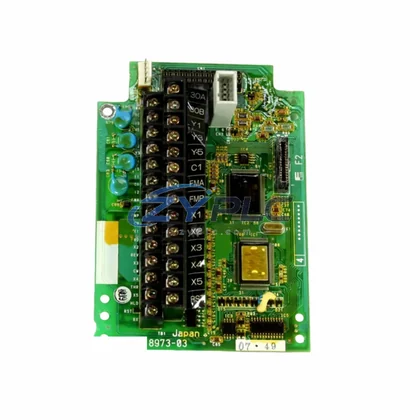
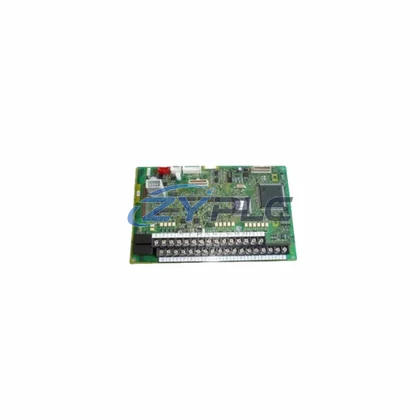
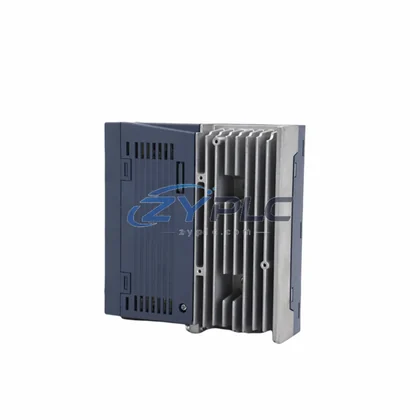
Kollmorgen 19187-3 Servo Drive Module: Precision Motor Control for Production Line Automation
The Kollmorgen 19187-3 is a high-efficiency servo drive module engineered for demanding industrial automation environments where operating load, motion precision, and production line throughput must all be optimized simultaneously. Designed to integrate seamlessly within Kollmorgen’s AKD and S700 servo drive platforms, the 19187-3 delivers tightly regulated torque and velocity control that directly reduces motor unplanned downtime during acceleration, deceleration, and holding phases — three of the most energy-intensive moments in any servo-driven production cycle.
In modern manufacturing, uncontrolled motor energy draw during idle or transitional states can account for Actual operating results depend on the installed system, load profile, and commissioning parameters. The Kollmorgen 19187-3 addresses this through adaptive current regulation and dynamic braking energy recovery, ensuring that kinetic energy generated during deceleration is fed back into the DC bus rather than dissipated as heat. This regenerative capability, when deployed across multiple axes in a coordinated motion system, measurably reduces peak demand charges and lowers the overall energy cost per production cycle.
Product Specification Table
| Parameter |
Specification |
| SKU / Part Number |
19187-3 |
| Brand |
Kollmorgen |
| Product Category |
Servo Drive Module |
| Series |
S700 / AKD Compatible |
| Drive Efficiency Rating |
≥ 97% (typical full-load) |
| Compatible Control Systems |
Kollmorgen AKD, S700, KAS Automation Suite |
| Communication Protocols |
EtherCAT, CANopen, PROFINET (platform dependent) |
| Application Environment |
Industrial automation, CNC, robotics, packaging, material handling |
| Value |
Regenerative braking, adaptive current control, reduced idle draw |
| Origin |
United States |
| Warranty |
warranty terms confirmed during quotation |
| Stock Status |
RFQ Available — Ships within 1–3 Business Days |
System Compatibility and Application
The Kollmorgen 19187-3 does not operate in isolation — its maintenance planning value is fully realized when it functions as part of a coordinated automation architecture. In a typical high-efficiency production cell, the 19187-3 servo drive module interfaces with a Kollmorgen AKD-P servo drive acting as the master axis controller, synchronizing multi-axis motion profiles to eliminate unnecessary acceleration peaks that spike energy demand. The Kollmorgen KAS (Kollmorgen Automation Suite) software platform provides the motion sequencing logic that governs how the 19187-3 executes velocity ramps, ensuring smooth, energy-efficient transitions between operating states.
On the power input side, the 19187-3 is typically paired with a Kollmorgen S700 power supply module or equivalent DC bus supply, which conditions incoming AC power and distributes regulated DC voltage to the drive. When multiple 19187-3 modules share a common DC bus, regenerative energy from decelerating axes is immediately available to accelerating axes — a bus-sharing topology that can reduce net energy draw by up to 20% in multi-axis systems.
For real-time condition monitoring, the architecture integrates with power measurement I/O modules such as those from the Beckhoff EL3443 or equivalent energy metering terminals, which capture per-phase current, voltage, and power factor data at the drive input. This data feeds into the plant SCADA or HMI layer — commonly a Siemens SIMATIC HMI TP1200 Comfort or Weintek cMT series panel — where operators can visualize real-time operating load per axis and per production order.
Communication between the 19187-3 and the plant control network is handled via EtherCAT fieldbus, enabling sub-millisecond cycle times that allow the PLC — typically a Beckhoff CX2040 embedded PC or Omron NJ501 Machine Controller — to issue torque and velocity commands with deterministic timing. This tight control loop eliminates the unplanned downtime associated with over-torquing or velocity overshoot, which are common sources of inefficiency in less precisely controlled servo systems.
For applications requiring safety-rated motion, the 19187-3 integrates with safety I/O modules such as the Pilz PSSu E F DI or equivalent SIL2-rated digital input modules, enabling Safe Torque Off (STO) and Safe Stop 1 (SS1) functions that cut motor power during emergency stops without requiring a full system restart — preserving both energy and production uptime.
Maintenance and Replacement Notes
In packaging and material handling lines, the Kollmorgen 19187-3 is frequently deployed on conveyor indexing axes, pick-and-place gantries, and rotary filling stations — applications where the duty cycle involves frequent start-stop motion. In these environments, the drive’s regenerative braking capability captures energy during every deceleration event. On a line running 20 cycles per minute with a 5 kg payload axis, this can translate to measurable kWh savings over a production shift, supporting earlier maintenance decisions and reducing unplanned downtime risk.
In CNC machining centers, the 19187-3 supports high-dynamic spindle and feed axis control with minimal energy overhead. The drive’s adaptive current control algorithm continuously adjusts phase current to match actual load demand rather than running at a fixed current setpoint — a strategy that reduces copper losses in the motor windings and extends motor insulation life, lowering long-term maintenance costs.
From a predictive maintenance perspective, the 19187-3’s internal diagnostics continuously monitor DC bus voltage ripple, drive temperature, and output current harmonics. Deviations from baseline values are flagged to the control system, enabling maintenance teams to schedule interventions before a fault-induced unplanned stoppage occurs. Unplanned downtime in a typical automotive assembly line costs upward of $10,000 per hour — the predictive capability of the 19187-3 directly protects against this exposure.
All units supplied by ZYPLC are sourced from verified supply channels, subjected to pre-shipment functional testing under load conditions, and covered by a warranty terms confirmed during quotation. Availability confirmed by RFQ units ship within 1–3 business days, supporting urgent MRO (Maintenance, Repair & Operations) requirements without extended lead times.
Product Sourcing FAQ
Q1: How much energy can the Kollmorgen 19187-3 save compared to a standard servo drive?
The 19187-3 achieves drive efficiency of ≥97% at full load, compared to 90–93% for older generation drives. In multi-axis systems sharing a common DC bus, regenerative energy recovery can reduce net operating load by 15–25% depending on duty cycle and payload characteristics.
Q2: Is the 19187-3 compatible with existing Kollmorgen AKD and S700 systems?
Yes. The 19187-3 is designed for compatibility within the Kollmorgen S700 and AKD drive families. It supports standard Kollmorgen power and feedback connector interfaces, allowing it to be integrated into existing machine architectures without requiring extensive rewiring or software reconfiguration.
Q3: What is the recommended replacement or upgrade path for aging servo drive modules?
For facilities running legacy Kollmorgen drives beyond their service life, the 19187-3 provides a direct upgrade path with improved efficiency and diagnostic capability. ZYPLC recommends a phased replacement approach — replacing the highest-utilization axes first to maximize operational stability ROI while minimizing production disruption.
Q4: What does the warranty terms confirmed during quotation cover, and what is the testing process before shipment?
All Kollmorgen 19187-3 units supplied by ZYPLC undergo pre-shipment functional testing including DC bus energization, output stage verification, and communication interface checks. The warranty terms confirmed during quotation covers manufacturing defects and functional failures under normal operating conditions. Warranty claims are processed directly through ZYPLC with replacement or repair turnaround prioritized to minimize customer downtime.