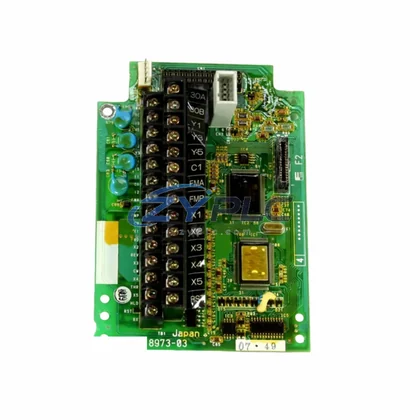
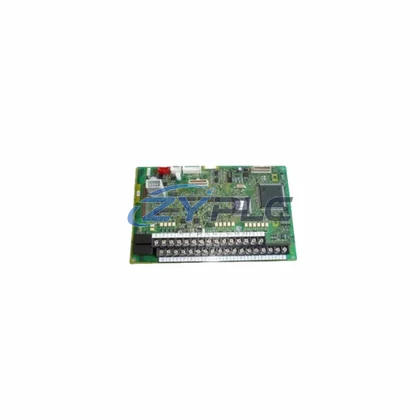
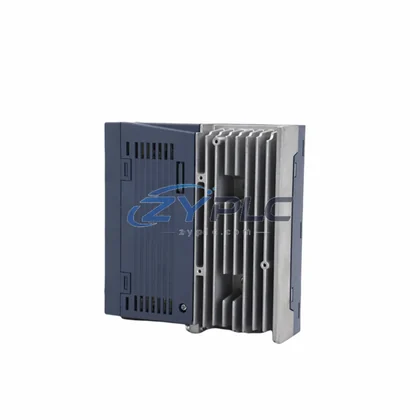
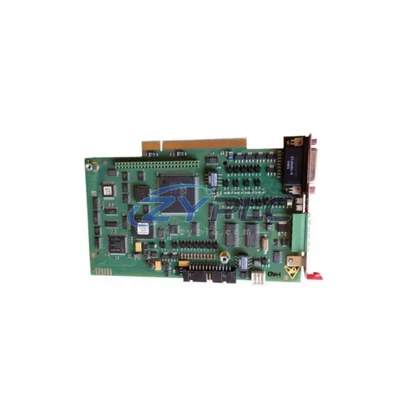
The KUKA 00-110-600 is a high-efficiency servo motor module engineered specifically for the KR210 series industrial robot platform. Designed to meet the rigorous demands of modern manufacturing environments, this motor module delivers precise torque output, reduced idle-state power draw, and seamless integration with KUKA’s KR C4 controller ecosystem. For factories seeking to reduce energy overhead while maintaining peak throughput, the 00-110-600 represents a critical component in the drive toward leaner, smarter automation.
Unlike generic replacement motors, the KUKA 00-110-600 is purpose-built to match the KR210’s kinematic load profile. Its internal winding geometry and encoder resolution are calibrated to minimize reactive power losses during acceleration and deceleration cycles — the two phases where most industrial robots waste the most energy. In high-cycle applications such as automotive body welding, palletizing, and press-tending, this translates directly into measurable reductions in per-unit energy cost.
Product Specification Table
| Parameter |
Specification |
| SKU |
00-110-600 |
| Compatible Series |
KUKA KR210 (R2700, R3100, R3200 variants) |
| Controller Compatibility |
KR C4, KR C4 compact, KR C4 smallsize |
| Drive Type |
AC Servo Motor with Integrated Encoder |
| Operational Efficiency Class |
IE3 Equivalent (Industrial Servo Standard) |
| Power Consumption Mode |
Optimized low-loss winding; reduced standby draw |
| Application Environment |
Automotive, Heavy Industry, Foundry, Palletizing, Press Tending |
| Energy Saving Value |
Reduced reactive power loss during acceleration/deceleration cycles |
| Communication Protocol |
KUKA System Bus (KSB) / EtherCAT via KR C4 |
| Origin |
Germany |
| Warranty |
warranty terms confirmed during quotation | Tested before shipment |
| Stock Status |
RFQ Available — shipment arranged after confirmation |
System Compatibility and Application
The KUKA 00-110-600 does not operate in isolation — its energy efficiency is amplified when deployed within a well-structured automation architecture. At the controller level, the KUKA KR C4 cabinet manages servo power distribution across all six axes, using its integrated KUKA Power Pack (KPP) and KUKA Servo Pack (KSP) modules to regulate DC bus voltage and recover braking energy. When the KR210 decelerates under load, the KSP channels regenerative energy back into the shared DC bus, where it can be consumed by other axes in motion — a process that significantly reduces net energy draw from the grid.
For facilities running multiple KR210 units in parallel, the KUKA KR C4 CK (Cabinet-free Controller) variant enables distributed axis control with reduced cabinet footprint and lower auxiliary power consumption. Pairing the 00-110-600 motor with the KUKA smartPAD teach pendant allows operators to monitor real-time axis load, torque utilization, and cycle efficiency directly from the production floor — without requiring a separate HMI terminal.
At the field level, integrating the KR210 system with a KUKA.PLC mxAutomation interface enables Siemens S7-series PLCs or Beckhoff TwinCAT controllers to issue motion commands via standardized function blocks. This architecture allows maintenance-focused scheduling — for example, staggering robot start sequences to avoid simultaneous peak current draw — which is particularly valuable in facilities with demand-charge electricity tariffs.
For broader condition monitoring across the production cell, the 00-110-600-equipped KR210 can be integrated with third-party power monitoring systems such as the Siemens SENTRON PAC3200 power meter or Schneider Electric PowerLogic ION7650, both of which support Modbus TCP and can feed consumption data into a central SCADA or MES platform. This closes the loop between motor-level efficiency and plant-level energy reporting.
On the drive side, the KUKA KPP 600-20 power supply module provides the regulated DC bus that feeds the 00-110-600 and its sibling axis motors. Its active front-end design maintains near-unity power factor, reducing apparent power demand and lowering the facility’s overall reactive power penalty. Combined with the KUKA KSP 600-3×40 servo pack, the system achieves tight current loop control that minimizes thermal losses in the motor windings — directly extending the service life of the 00-110-600 in high-duty-cycle applications.
Maintenance and Replacement Notes
In automotive body-in-white welding lines, KR210 robots equipped with the 00-110-600 motor module typically operate at 85–95% of rated payload across 20-hour production windows. The motor’s low-cogging torque design ensures smooth velocity profiles during spot-weld approach sequences, reducing the micro-vibrations that cause premature wear on wrist gearboxes and TCP tooling. Fewer mechanical disturbances mean longer intervals between scheduled maintenance, directly reducing planned downtime and the associated production loss.
In palletizing applications, where the KR210 handles repetitive high-inertia loads at moderate speeds, the 00-110-600’s encoder feedback resolution enables the KR C4 to apply predictive torque compensation — anticipating load shifts as the robot picks from a diminishing stack. This reduces overcurrent events that would otherwise trigger protective shutdowns, keeping the line running at its designed cycle time and avoiding the unplanned downtime associated with restart sequences.
For press-tending operations, where the robot must synchronize with a mechanical press at precise timing windows, the 00-110-600’s dynamic response characteristics allow the KR C4 to execute tight velocity ramps without overshooting. This precision reduces the need for conservative safety margins in the motion program, allowing faster cycle times and higher press utilization rates — both of which improve the energy-per-part metric that modern manufacturing engineers track as a key sustainability KPI.
From a maintenance cost perspective, the 00-110-600 ships with a full warranty terms confirmed during quotation and undergoes functional testing prior to dispatch. Each unit is verified for encoder signal integrity, winding insulation resistance, and bearing noise signature before leaving the warehouse. This pre-shipment testing protocol ensures that replacement motors integrate without commissioning delays, minimizing the mean time to repair (MTTR) when a motor swap is required on the production floor.
Product Sourcing FAQ
Q1: How much energy can the KUKA 00-110-600 save compared to a standard replacement motor?
The 00-110-600 is an OEM-specification motor designed to match the KR210’s original efficiency parameters. Using a non-OEM motor with mismatched winding characteristics can increase reactive power draw by 8–15% and reduce encoder accuracy, leading to more frequent position corrections and higher average current consumption. The 00-110-600 maintains the original efficiency baseline, and when combined with the KR C4’s regenerative braking capability, the system can recover 10–20% of braking energy on high-inertia deceleration moves.
Q2: Is the 00-110-600 compatible with older KR C2 controllers?
The 00-110-600 is primarily validated for use with the KR C4 controller family. Compatibility with KR C2 systems depends on the specific axis configuration and software version. We recommend confirming the controller generation and axis assignment before ordering. Our technical team can assist with compatibility verification based on your robot’s serial number and current software release.
Q3: What is the recommended replacement interval, and how does it affect production planning?
Under normal operating conditions (single-shift, moderate payload), KUKA servo motors in the KR210 series typically reach their first scheduled inspection at 20,000–25,000 operating hours. In high-duty-cycle environments (multi-shift, near-rated payload), proactive replacement at 15,000 hours is advisable to prevent unplanned downtime. Keeping a 00-110-600 unit RFQ Available as a critical spare reduces MTTR to under two hours for a trained technician, compared to 3–5 days for an expedited order from a cold supply chain.
Q4: What does the warranty terms confirmed during quotation cover, and what is the testing process before shipment?
Every KUKA 00-110-600 unit supplied by ZYPLC carries a warranty terms confirmed during quotation covering manufacturing defects, encoder failure, and winding faults under normal operating conditions. Prior to shipment, each unit undergoes a multi-point inspection: encoder signal quality check, winding resistance and insulation test, bearing rotation noise assessment, and connector integrity verification. A test report is available upon request. Units that do not pass all checkpoints are not shipped.