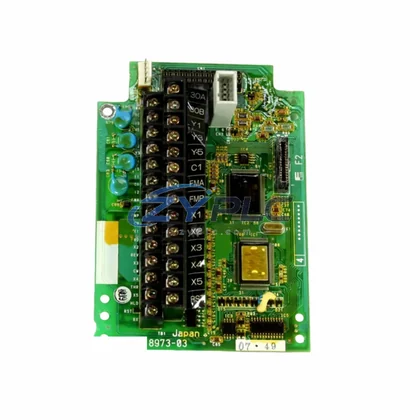
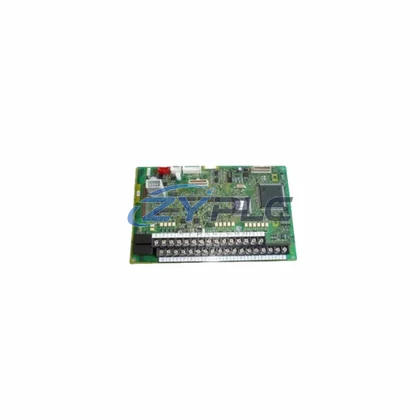
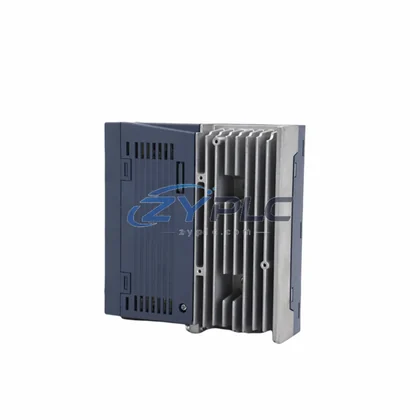
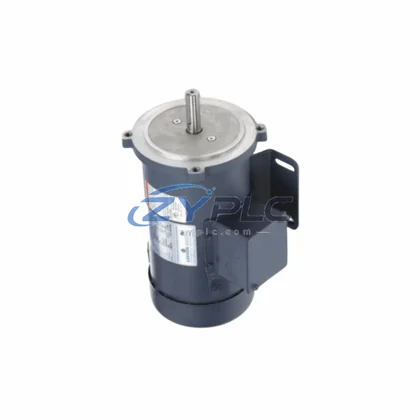
Kollmorgen MMC-SD-1.0-230-D Servo Drive for MMC Automation
In modern manufacturing environments where energy costs and production efficiency are under constant scrutiny, the Kollmorgen MMC-SD-1.0-230-D servo drive module stands out as a precision-engineered solution for optimized motion control. Designed as part of the Kollmorgen MMC (Multi-axis Motion Controller) series, this 1.0 A, 230 V servo drive module delivers tightly regulated torque and velocity control that directly translates into measurable reductions in unplanned downtime, motor heat generation, and mechanical wear across the production line.
Unlike conventional drive systems that operate at fixed output regardless of load demand, the MMC-SD-1.0-230-D dynamically adjusts its power delivery in response to real-time feedback from the connected servo motor. This closed-loop efficiency model ensures that energy is consumed only when and where it is needed — a critical advantage in multi-axis systems where simultaneous motion profiles must be coordinated without overloading the power bus.
Product Specification Table
| Parameter |
Specification |
| SKU |
MMC-SD-1.0-230-D |
| Brand / Series |
Kollmorgen / MMC Series |
| Rated Current |
1.0 A |
| Input Voltage |
230 V AC |
| Drive Type |
Servo Drive Module |
| Control Mode |
Torque / Velocity / Position (Closed-Loop) |
| Maintenance Planning |
Dynamic load-adaptive power delivery |
| Compatible Systems |
Kollmorgen MMC Smart Drive, AKD Series, SERVOSTAR 600 |
| Application Environment |
CNC, Packaging, Assembly, Robotics, Conveyor Systems |
| Communication Interface |
CANopen, EtherCAT (system-dependent) |
| Operating Temperature |
0°C to +45°C |
| Origin |
USA |
| Warranty |
warranty terms confirmed during quotation |
| Stock Status |
RFQ Available — shipment arranged after confirmation |
System Compatibility and Application
The MMC-SD-1.0-230-D is engineered to operate within the broader Kollmorgen MMC Smart Drive architecture, where it functions as a modular slave drive axis under the coordination of the Kollmorgen MMC Smart Drive controller. In a typical multi-axis packaging line, the controller distributes synchronized motion commands to each MMC-SD module, ensuring that acceleration ramps, dwell times, and deceleration profiles are precisely matched to the mechanical load — eliminating the energy spikes that occur when drives operate without coordinated motion planning.
When paired with Kollmorgen AKM series servo motors, the MMC-SD-1.0-230-D achieves high torque-to-inertia ratios that reduce settling time and allow faster cycle rates without increasing power draw. The drive’s regenerative braking capability feeds deceleration energy back into the DC bus, where it can be consumed by other axes in the system — a feature particularly valuable in high-cycle applications such as pick-and-place robotics or rotary indexing tables.
For applications requiring precise position feedback, the drive interfaces seamlessly with Kollmorgen encoders and resolvers, providing sub-millisecond position updates that allow the motion controller to make real-time corrections before positional error accumulates. This level of feedback granularity is essential in CNC machining centers and electronic assembly lines where dimensional tolerances are tight and rework costs are high.
In larger automation cells, the MMC-SD-1.0-230-D coexists with Kollmorgen SERVOSTAR 600 series drives on shared DC bus configurations, enabling energy balancing across axes with different load profiles. A high-inertia axis decelerating can supply energy to a low-inertia axis accelerating simultaneously — reducing peak demand from the mains supply and lowering the required capacity of upstream power conditioning equipment such as line reactors and EMC filters.
At the supervisory level, the system integrates with Siemens SIMATIC S7 PLCs or Beckhoff CX series controllers via CANopen or EtherCAT fieldbus, allowing the plant SCADA system to monitor per-axis operating load, cycle counts, and fault history in real time. This data feeds directly into predictive maintenance algorithms that flag abnormal current draw — often the earliest indicator of bearing wear, coupling misalignment, or encoder degradation — before a failure causes unplanned downtime.
Power quality monitoring at the panel level, typically handled by devices such as Schneider Electric PowerLogic PM series meters, can be correlated with drive-level data to identify inefficiencies in the power distribution network that affect drive performance. When the MMC-SD-1.0-230-D reports elevated thermal derating events, cross-referencing with panel-level voltage sag data allows maintenance engineers to distinguish between drive-side and supply-side root causes — dramatically reducing diagnostic time.
Maintenance and Replacement Notes
On a typical automotive component assembly line running three shifts, uncoordinated servo drives operating at fixed gain settings can account for 15–25% of avoidable unplanned downtime through unnecessary holding torque, overshooting, and thermal losses. The MMC-SD-1.0-230-D addresses this through its adaptive gain scheduling, which automatically adjusts PID parameters based on the detected load inertia at startup and during operation. The result is a drive that is always tuned to the actual mechanical system — not a conservative worst-case setting that wastes energy maintaining stability margins that are not needed.
In conveyor and material handling applications, the drive’s velocity feed-forward control reduces the lag between commanded and actual speed, allowing the line to run at higher throughput rates without increasing motor current. When a downstream sensor signals a jam or blockage, the drive’s torque limiting function prevents mechanical damage while the PLC executes a controlled stop sequence — avoiding the energy-intensive restart cycles that follow uncontrolled trips.
For facilities pursuing ISO 50001 maintenance planning certification, the granular per-axis energy data available from the MMC-SD-1.0-230-D provides the measurement foundation required to establish energy performance indicators (EnPIs) for individual production cells. Over a 12-month baseline period, this data enables engineering teams to quantify the energy impact of process changes, tooling upgrades, and shift scheduling adjustments with a level of precision that aggregate utility meter data cannot provide.
All units supplied by ZYPLC undergo pre-shipment functional testing including no-load run verification, communication interface check, and parameter backup validation. Each MMC-SD-1.0-230-D is shipped with a warranty terms confirmed during quotation covering manufacturing defects and operational failures under normal industrial use conditions.
Product Sourcing FAQ
Q1: How does the MMC-SD-1.0-230-D reduce operating load compared to a standard AC drive?
The MMC-SD-1.0-230-D uses closed-loop servo control with dynamic load adaptation, meaning it delivers only the torque and power required by the actual load at each moment in the motion profile. Unlike open-loop AC drives that maintain fixed V/Hz ratios regardless of load, the servo drive eliminates over-excitation losses and reduces heat generation — typically achieving 10–30% lower operating load in variable-load applications such as packaging and assembly.
Q2: Is the MMC-SD-1.0-230-D compatible with existing Kollmorgen MMC controllers and third-party PLCs?
Yes. The MMC-SD-1.0-230-D is designed as a native module within the Kollmorgen MMC Smart Drive system and communicates directly with the MMC controller over the internal drive bus. For integration with third-party PLCs such as Siemens S7 or Beckhoff TwinCAT systems, the MMC controller acts as the fieldbus master, translating motion commands from the PLC into coordinated axis commands for each MMC-SD module.
Q3: What is the recommended replacement or upgrade path if the MMC-SD-1.0-230-D is being retired from an existing system?
For systems where the MMC platform is being retained, a direct module replacement with a new or refurbished MMC-SD-1.0-230-D is the lowest-risk path, as it requires no parameter re-engineering. For facilities migrating to a newer motion platform, Kollmorgen’s AKD2G series drives offer backward-compatible motor support with enhanced condition monitoring and EtherCAT connectivity. ZYPLC can advise on compatibility and supply both options.
Q4: What does the warranty terms confirmed during quotation cover, and what is the testing process before shipment?
The warranty terms confirmed during quotation covers all manufacturing defects and component failures under normal operating conditions, including power stage faults, communication interface failures, and encoder feedback errors. Prior to shipment, each unit undergoes a pre-delivery inspection that includes power-on functional verification, communication interface testing, and parameter integrity check. A test report is available upon request. For warranty claims, ZYPLC provides direct technical support and replacement coordination.