KUKA 00-181-359 Servo Motor for KR QUANTEC: Control System Integration and Cross-Layer Coordination
The KUKA 00-181-359 (KUKAZH 210/240) is a precision AC servo motor engineered specifically for deployment within the KR QUANTEC robotic control architecture. Rather than functioning as a standalone drive component, this servo motor is designed to operate as an integral node within a multi-layer automation system — coordinating seamlessly across the control layer, I/O layer, drive layer, power distribution layer, and human-machine interface layer to deliver consistent, high-performance motion control in demanding industrial environments.
In modern industrial automation, the reliability of a servo motor is inseparable from the integrity of the system architecture surrounding it. The 00-181-359 is built to support this philosophy: its electrical and mechanical parameters are matched to the KR QUANTEC robot series, ensuring that signal fidelity, torque response, and positional accuracy are maintained across the full operational envelope — from initial commissioning through long-term production cycles.
Product Specification Table
| Parameter |
Specification |
| Part Number |
00-181-359 (KUKAZH 210/240) |
| Brand |
KUKA |
| Series Compatibility |
KR QUANTEC (KR 120 R2700, KR 150 R2700, KR 210 R2700, KR 240 R2100) |
| System Role |
Axis Drive Motor — Primary Motion Actuator |
| Motor Type |
AC Synchronous Servo Motor |
| Rated Voltage |
400–480 V AC (3-phase) |
| Encoder Interface |
Resolver / Absolute Encoder (KUKA-compatible) |
| Communication Compatibility |
KR C4 Controller Bus (EtherCAT / KUKA System Bus) |
| Cooling Method |
Natural Convection / Forced Air (application-dependent) |
| Protection Rating |
IP65 (standard installation) |
| Operating Temperature |
0°C to +45°C ambient |
| Mounting Configuration |
Flange-mount, axis-integrated |
| Country of Origin |
Germany |
| Warranty |
warranty terms confirmed during quotation — covers manufacturing defects and functional failure under normal operating conditions |
System Compatibility Notes
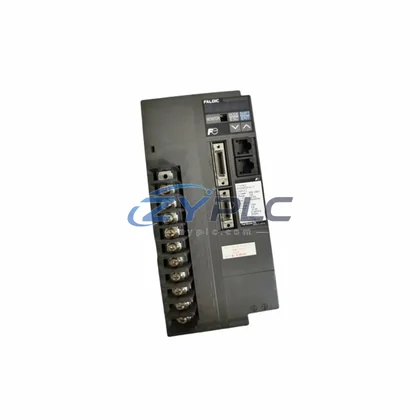
The 00-181-359 servo motor achieves its full performance potential only when integrated within a properly configured KR QUANTEC control architecture. At the control layer, the KUKA KR C4 controller serves as the central processing unit, issuing motion commands via the KUKA System Bus to each axis drive. The servo motor receives these commands through the KUKA KPP 600-20 servo drive (KPP — KUKA Power Pack), which conditions the power supply and translates digital motion profiles into precise current and voltage outputs delivered to the motor windings.
At the power distribution layer, the KUKA KSP 600-3×40 servo pack manages multi-axis power sharing, ensuring that transient load demands from the 00-181-359 during high-acceleration moves do not destabilize adjacent axes. This is particularly critical in heavy-payload configurations such as the KR 210 R2700 and KR 240 R2100, where simultaneous multi-axis motion places significant dynamic demands on the shared DC bus.
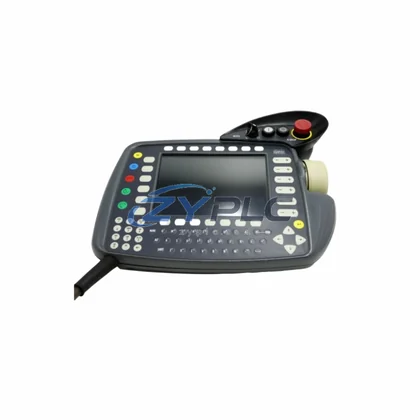
Feedback integrity is maintained through the motor’s integrated resolver or absolute encoder, which communicates positional data back to the KR C4 via the KUKA RDC (Resolver Digital Converter) card. This closed-loop feedback path ensures sub-millimeter repeatability across the robot’s full working envelope. For applications requiring enhanced diagnostic visibility, the KUKA smartPAD teach pendant provides real-time axis status monitoring, allowing engineers to verify motor temperature, load torque, and encoder health without interrupting production.
At the I/O layer, the KUKA KRC4 I/O module and compatible Beckhoff EtherCAT I/O terminals handle peripheral signal routing — including safety interlocks, gripper control, and process sensor inputs — that coordinate with the servo motor’s motion sequences. This integration ensures that the 00-181-359’s motion profiles are synchronized with upstream and downstream process events, eliminating timing errors that could compromise weld quality, assembly precision, or material handling accuracy.
For installations requiring functional safety compliance, the architecture supports integration with the KUKA SafeOperation software module and compatible safety-rated I/O devices, enabling speed and position monitoring functions that operate independently of the standard motion controller — a critical requirement in collaborative and semi-collaborative robot cell designs.
Industrial Application Notes
Automotive Manufacturing: In body-in-white welding lines and assembly stations, the KR QUANTEC series — powered by the 00-181-359 — handles spot welding, arc welding, and component transfer tasks. The servo motor’s high torque density and thermal stability support continuous-duty cycles at rated load, minimizing unplanned downtime in high-volume production environments.
Heavy Industry and Metal Processing: In foundry and forging applications, the 00-181-359 drives KR QUANTEC robots performing hot part extraction, press tending, and die casting operations. The motor’s robust construction and IP65 protection rating ensure reliable operation in environments with elevated ambient temperatures, metal particulate contamination, and mechanical vibration.
Petrochemical and Process Industries: In hazardous area installations, the KR QUANTEC architecture — with appropriate enclosure modifications — supports material handling, valve actuation assistance, and inspection tasks. The servo motor’s deterministic motion control characteristics are essential for maintaining process consistency in batch and continuous production environments.
Logistics and Palletizing: High-throughput palletizing lines rely on the KR QUANTEC’s payload capacity and reach, both of which depend directly on the performance consistency of the 00-181-359 across thousands of daily cycles. The motor’s long service life and predictable wear characteristics reduce maintenance intervention frequency, supporting lean maintenance strategies.
Electronics and Precision Assembly: In applications requiring fine positional control at extended reach, the 00-181-359’s encoder resolution and low cogging torque characteristics support smooth, precise motion profiles that protect delicate components during handling and assembly operations.
Product Compatibility FAQ
Q1: Is the KUKA 00-181-359 compatible with both KR C4 and KR C5 controller generations?
The 00-181-359 is natively designed for the KR C4 control architecture, which uses the KUKA System Bus and KPP/KSP servo drive family. Compatibility with the KR C5 platform depends on the specific robot variant and software configuration. We recommend confirming the controller generation and drive firmware version with your system integrator before ordering. Our technical team can assist with compatibility verification as part of the pre-sales process.
Q2: What is covered under the warranty terms confirmed during quotation, and how does it apply in a multi-robot installation?
The warranty terms confirmed during quotation covers manufacturing defects and functional failures arising under normal operating conditions, including premature bearing failure, winding insulation breakdown, and encoder malfunction not attributable to external mechanical damage or improper installation. In multi-robot installations, each unit carries its own independent warranty period commencing from the date of delivery. Warranty claims are processed with full traceability documentation, and replacement units are dispatched to minimize system downtime.
Q3: How should the 00-181-359 be commissioned and verified within the KR QUANTEC architecture after installation?
After mechanical installation and electrical connection, the motor must be mastered using the KUKA smartPAD teach pendant through the standard EMT (Electronic Mastering Tool) or dial gauge mastering procedure, depending on the axis configuration. Following mastering, a load data verification routine should be performed to confirm that the KR C4’s dynamic model accurately reflects the installed payload and tool center point. Motor temperature, encoder signal quality, and axis-specific load torque values should be logged during the initial run-in period to establish a baseline for predictive maintenance scheduling.