KUKA 00-186-960 KSP 600: Industrial Data Link for Smart Factory Robot Control
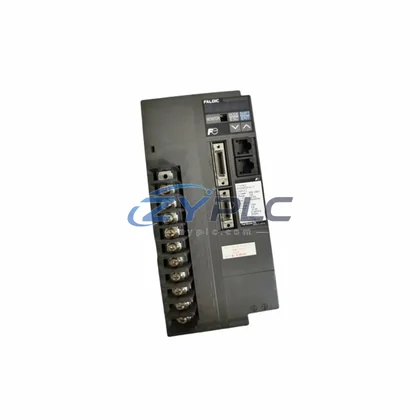
The KUKA 00-186-960 KSP 600 Servo Drive is a precision axis power module engineered for seamless integration within the KUKA KR C2 robot controller platform. As a critical industrial network interface node, the KSP 600 bridges field-level actuator signals and supervisory control systems — enabling real-time data flow across signal acquisition, protocol conversion, network transmission, alarm feedback, and remote diagnostics. Whether deployed in automotive body-in-white welding lines, palletizing cells, or precision assembly stations, the KSP 600 ensures every motion command is executed with sub-millisecond response and full closed-loop feedback integrity across the smart factory data chain.
In modern industrial connectivity architectures, the servo drive is far more than a power amplifier. The KUKA 00-186-960 KSP 600 communicates directly with the KUKA KR C2 DSE-IBS C33 main computer board via the internal KPC backplane bus, transmitting encoder feedback, current loop data, and fault diagnostics upstream to the robot controller CPU. This data is aggregated by the KUKA KPS 600 power supply module, which coordinates DC bus voltage distribution across all KSP 600 axis modules, ensuring synchronized multi-axis motion with shared energy recovery — a foundational requirement for high-throughput smart factory environments.
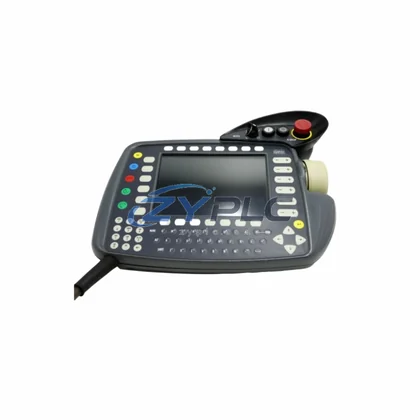
The KSP 600’s diagnostic data is accessible through the KUKA System Software (KSS) running on the KR C2 controller, enabling maintenance engineers to monitor drive temperature, load current, encoder status, and fault codes in real time via the KUKA KCP2 teach pendant. For facilities running SCADA or MES platforms, this data is forwarded through the KR C2’s Ethernet interface to upstream systems such as Siemens WinCC, Rockwell FactoryTalk, or Ignition SCADA — enabling full production line transparency and predictive maintenance workflows that define Industry 4.0 connectivity.
In multi-robot workcells, the KSP 600 operates alongside the KUKA KPS 27 auxiliary power supply, the KUKA DSE 24V power distribution board, and the KUKA RDC (Resolver-to-Digital Converter) card, which processes raw resolver signals from each robot axis motor and converts them into digital position data consumed by the KSP 600’s current controller. This tightly integrated signal chain — from resolver through RDC through KSP 600 through KPS 600 to KSS — forms the backbone of KUKA’s closed-loop motion and communication architecture.
For facilities integrating KUKA robots with external PLCs or safety systems, the KR C2 controller communicates with Siemens S7-300/S7-400 PLCs or Allen-Bradley ControlLogix controllers via PROFIBUS-DP or DeviceNet fieldbus interfaces. The KSP 600’s health and status data can be mapped to PLC I/O tags, allowing the PLC to trigger safe-stop sequences, request axis re-homing, or log drive fault events directly into the plant’s alarm management system — essential for ISO 10218-compliant robot safety architectures where the PLC acts as the safety-rated supervisory controller.
Remote diagnostics and predictive maintenance are increasingly critical in high-uptime manufacturing environments. The KUKA 00-186-960 KSP 600, when paired with the KUKA.RemoteMonitoring software package or third-party edge gateway solutions, streams drive performance metrics — including thermal load cycles, peak current events, and encoder error counts — to cloud-based analytics platforms. This enables maintenance teams to identify degrading servo drives before they cause unplanned downtime, reducing mean time to repair (MTTR) and extending the operational life of the KR C2 robot system across distributed industrial sites.
ZYPLC maintains availability subject to RFQ confirmation of the KUKA 00-186-960 KSP 600 in both 3.2kW and 4.2kW variants (also referenced as part number 00-179-146 in certain KR C2 configurations). All units undergo functional power-on testing and load simulation prior to shipment. Each drive is supplied with a warranty terms confirmed during quotation covering manufacturing defects and premature failure under normal operating conditions. Global DHL/FedEx express shipping is available with same-day dispatch for availability confirmed by RFQ orders.
Compatibility & Integration Notes
| Parameter |
Specification |
| SKU / Part Number |
00-186-960 / 00-179-146 |
| Product Type |
Servo Drive / Axis Power Module |
| Series |
KSP 600 — KUKA KR C2 Controller Platform |
| Output Power |
3.2kW / 4.2kW |
| Communication Protocol |
KPC Internal Backplane Bus (KR C2 Cabinet) |
| Feedback Protocol |
Resolver via RDC Card (Closed-Loop) |
| External Fieldbus / Gateway |
PROFIBUS-DP, DeviceNet (via KR C2 Interface) |
| Network Compatibility |
Industrial Ethernet TCP/IP via KR C2 Controller |
| SCADA / HMI Integration |
OPC-UA, Siemens WinCC, Ignition, FactoryTalk |
| System Application |
Robot Motion Control, Smart Factory, Predictive Maintenance |
| Safety Architecture |
ISO 10218 Compatible, Safe-Stop via PLC Interface |
| Brand / Origin |
KUKA / Germany |
| Warranty |
12 Months |
Connected Automation Data Flow
The KUKA 00-186-960 KSP 600 sits at the heart of a layered industrial automation data flow. At the field level, each robot axis motor generates resolver feedback signals processed by the KUKA RDC card into high-resolution digital position data. This data feeds directly into the KSP 600’s current controller, which executes torque commands issued by the KUKA KR C2 DSE-IBS C33 main computer board. The KUKA KPS 600 power supply module maintains the shared DC bus, distributing regulated power to all KSP 600 axis modules while recovering regenerative braking energy during deceleration phases — a key feature for energy-efficient smart factory operation.
At the supervisory level, the KUKA KCP2 teach pendant provides the human-machine interface for real-time drive monitoring, fault acknowledgment, and manual axis jogging. Drive status data — including axis load, temperature, and error codes — is continuously logged by the KUKA KSS operating system and made available via the KR C2’s Ethernet port to upstream SCADA platforms. In multi-robot lines, individual KR C2 cabinets are networked via industrial Ethernet switches to a central Siemens S7-400 PLC or Rockwell ControlLogix gateway, which coordinates inter-robot sequencing and forwards production data to MES and ERP systems. For remote sites, edge gateway devices running OPC-UA servers publish KSP 600 diagnostic data to cloud analytics platforms, enabling remote diagnostics without VPN access to the plant network — a critical capability for distributed industrial connectivity.
Solving Data Isolation in Industrial Sites
One of the most persistent challenges in aging robot installations is data isolation — KR C2 cabinets running proprietary KUKA internal bus architectures that cannot natively communicate with modern PROFINET or EtherNet/IP plant networks. The KUKA 00-186-960 KSP 600, as a direct replacement for failed or degraded axis modules, restores the full diagnostic data chain within the KR C2 cabinet, enabling the controller’s Ethernet interface to once again publish drive health data to SCADA and MES systems — eliminating the data silos that arise when individual robot controllers go offline due to drive failures.
For facilities undergoing digital transformation, replacing a failed KSP 600 with a verified OEM unit is the first step toward re-establishing production line transparency. Once the drive is operational, integrators can deploy KUKA.OfficeLite simulation environments or third-party OPC-UA gateways to bridge the KR C2’s data output to modern Industry 4.0 platforms. This approach eliminates the need for full robot controller replacement, preserving the existing KR C2 infrastructure investment while enabling remote monitoring, alarm management, and predictive maintenance capabilities that were previously unavailable.
Protocol unification across mixed-vendor environments — where KUKA robots operate alongside Siemens, Fanuc, or ABB equipment — is achieved through PLC-level data aggregation. The KR C2 controller, with a fully functional KSP 600 axis module, reliably reports its status to the plant PLC, which normalizes data formats and forwards unified production metrics to the SCADA layer. This ensures continuous production visibility across the entire manufacturing cell, supporting real-time monitoring, alarm feedback, and system expansion without disrupting existing network architecture.
Industrial Connectivity FAQ
Q1: What communication protocols does the KUKA 00-186-960 KSP 600 support for SCADA and HMI integration?
The KSP 600 communicates internally via the KR C2 cabinet backplane bus. External SCADA and HMI integration is achieved through the KR C2 controller’s Ethernet TCP/IP interface, which supports OPC-UA, PROFIBUS-DP, and DeviceNet connections depending on the installed interface cards. Drive diagnostic data is accessible via KUKA KSS and can be forwarded to Siemens WinCC, Ignition, or FactoryTalk SCADA platforms for real-time monitoring and alarm management.
Q2: How does the KSP 600 maintain network stability in high-cycle robotic applications?
The KSP 600 uses a closed-loop current control architecture with resolver feedback processed by the KUKA RDC card, ensuring deterministic axis response regardless of network load. The KR C2 controller’s internal bus operates independently of the plant Ethernet network, isolating motion control from IT network congestion and maintaining sub-millisecond command execution even during peak SCADA polling cycles — ensuring network stability across high-throughput production environments.
Q3: Can the KUKA 00-186-960 KSP 600 be expanded to support additional robot axes or system extensions?
The KR C2 cabinet supports multiple KSP 600 axis modules installed in parallel on the shared KPS 600 DC bus. Additional axes can be added by installing additional KSP 600 modules within the KPS 600 power budget, making the system scalable for 6-axis robots with external track or positioner axes without requiring a new controller cabinet — supporting flexible system expansion in growing smart factory environments.
Q4: What pre-shipment testing and warranty coverage does ZYPLC provide for the KSP 600?
All KUKA 00-186-960 KSP 600 units supplied by ZYPLC undergo functional power-on testing and load simulation prior to shipment. Each unit is covered by a warranty terms confirmed during quotation against manufacturing defects and premature failure under normal operating conditions. Units are dispatched via DHL or FedEx express with same-day shipping available for availability confirmed by RFQ orders. For volume orders or urgent requirements, contact ZYPLC directly for lead time confirmation.
© 2026 ZYPLC. All rights reserved. | Contact: +86 19859288691 | plc.sales@zyplc.com