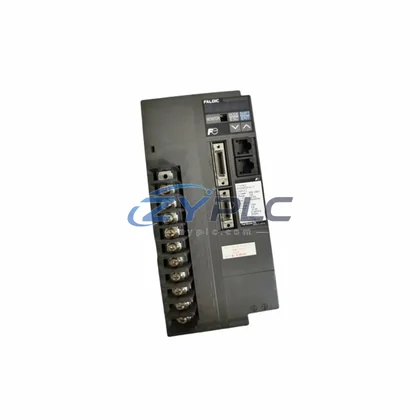
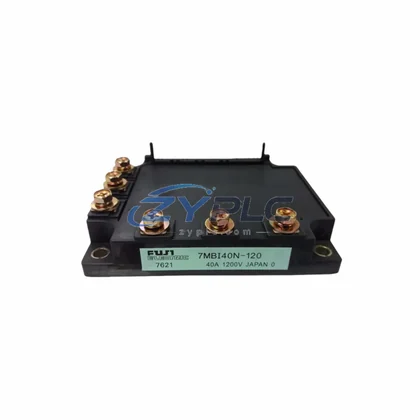
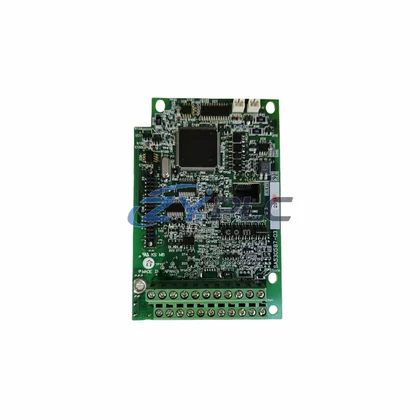
KUKA 00-205-328 Servo Drive for KR Series
The KUKA 00-205-328 is a precision servo drive module engineered to operate as a core motion control component within KUKA KR Series robotic control architectures. Rather than functioning as a standalone unit, this module is designed to integrate seamlessly into the layered automation hierarchy of KUKA’s KRC4 controller platform, where it governs axis-level torque, velocity, and position feedback loops with high determinism and repeatability. In modern industrial automation environments — spanning automotive body-in-white assembly, arc welding cells, palletizing lines, and precision material handling — the reliability of each servo axis directly determines the throughput and uptime of the entire production system. The 00-205-328 addresses this requirement by delivering stable power conversion, closed-loop servo regulation, and robust communication with the KRC4 cabinet’s internal bus infrastructure.
Understanding the role of the 00-205-328 requires viewing it within the full control system stack. At the controller layer, the KRC4 cabinet houses the main computer unit (KPC) and the cabinet control unit (CCU), which coordinate motion planning, safety logic, and fieldbus communication. The servo drive module sits at the power electronics layer, receiving interpolated motion commands from the KRC4 DSE (Drive System Electronics) board and translating them into precise current waveforms delivered to the servo motors on each robot axis. This tight coupling between the DSE board and the 00-205-328 ensures that position feedback from the resolver or encoder on each KR Series motor axis is processed with minimal latency, maintaining the sub-millisecond cycle times required for coordinated multi-axis motion.
Within the KRC4 cabinet, the 00-205-328 operates alongside the KPS 600 power supply unit, which provides the DC bus voltage that feeds the drive’s inverter stage. The KPS 600 and the servo drive share a common DC link, enabling regenerative braking energy from decelerating axes to be redistributed across the bus rather than dissipated as heat — a design that improves energy efficiency and reduces thermal stress on cabinet components. The KSP 600 servo pack modules, which may be installed in parallel configurations for multi-axis robots such as the KR 10 R1100 or KR 6 R900, rely on the same bus architecture, making the 00-205-328 a directly compatible replacement or expansion component within these systems.
At the network and communication layer, the KRC4 platform uses KUKA’s proprietary KCB (KUKA Controller Bus) and KSB (KUKA System Bus) for internal drive coordination, while supporting external fieldbus protocols including PROFINET, EtherNet/IP, and DeviceNet through optional interface modules. The 00-205-328 participates in this communication hierarchy by responding to real-time motion commands distributed by the KRC4’s motion control kernel, ensuring that axis synchronization across a six-axis KR Series robot remains coherent even during high-speed path interpolation. For systems integrated with external PLCs — such as a Siemens S7-1500 or Allen-Bradley ControlLogix — the KRC4 acts as a fieldbus slave, and the servo drive’s performance directly affects the quality of coordinated motion between the robot and peripheral equipment.
From a maintenance and lifecycle perspective, the 00-205-328 is a field-replaceable unit within the KRC4 cabinet. Technicians performing drive replacement benefit from the module’s standardized mounting interface and connector layout, which aligns with KUKA’s cabinet wiring standards across the KR C4 compact, KR C4 smallsize, and standard KR C4 variants. Keeping a verified spare of the 00-205-328 in inventory is a recognized best practice in facilities running continuous production schedules, as unplanned drive failures can halt an entire robot cell. All units supplied by ZYPLC are covered by a warranty terms confirmed during quotation, providing assurance of functional integrity and reducing procurement risk for maintenance teams operating under strict uptime SLAs.
The module is also relevant in redundancy-conscious system designs. In applications where robot availability is critical — such as automotive final assembly or semiconductor handling — engineers may specify hot-standby cabinet configurations or maintain pre-tested drive spares staged at the line. The 00-205-328’s compatibility with the KRC4 platform’s diagnostic software (KUKA WorkVisual and KUKA.SystemSoftware) allows maintenance engineers to perform drive parameter backup, fault log analysis, and commissioning verification without specialized hardware beyond the standard KRC4 service interface.
Product Specification Table
| Parameter |
Specification |
| Part Number |
00-205-328 |
| Brand |
KUKA |
| Series Compatibility |
KR Series (KR 6, KR 10, KR 16 and variants) |
| System Role |
Axis Servo Drive Module — KRC4 Cabinet |
| Controller Platform |
KUKA KRC4 (standard, compact, smallsize) |
| DC Bus Interface |
Compatible with KPS 600 / KSP 600 shared DC link |
| Communication |
KCB / KSB internal bus; PROFINET / EtherNet/IP via KRC4 interface |
| Feedback Interface |
Resolver / Encoder (axis-dependent) |
| Installation Environment |
KRC4 cabinet, DIN rail / panel mount, IP54 cabinet rating |
| Origin |
Germany |
| Warranty |
warranty terms confirmed during quotation (ZYPLC) |
System Compatibility Notes
The 00-205-328 servo drive does not operate in isolation — its performance is inseparable from the components that surround it within the KRC4 control cabinet and the broader robot cell. At the power layer, the KPS 600 main power supply provides the rectified DC bus that feeds the drive’s inverter stage. In multi-axis configurations typical of a six-axis KR 10 R1100 sixx or KR 6 R900 sixx robot, multiple KSP 600 servo pack modules share this bus, and the 00-205-328 functions as one of these axis-level drive units. The DSE (Drive System Electronics) board within the KRC4 cabinet acts as the intermediary between the KPC (KUKA PC unit) and the individual servo drives, distributing interpolated position commands and collecting encoder feedback in real time.
At the I/O layer, the KRC4 cabinet integrates with external I/O systems through the KRC4’s EtherCAT-based I/O interface or through fieldbus-connected remote I/O modules such as Beckhoff EK1100 EtherCAT couplers or Siemens ET 200SP distributed I/O. These I/O nodes handle digital and analog signals from end-of-arm tooling, safety light curtains, and conveyor interlocks, while the servo drive manages the motion response to those signals. The RDC (Resolver Digital Converter) board, mounted on the robot arm, converts resolver signals from each axis motor into digital position data transmitted back to the KRC4 — a critical link in the closed-loop chain that the 00-205-328 depends on for accurate torque control.
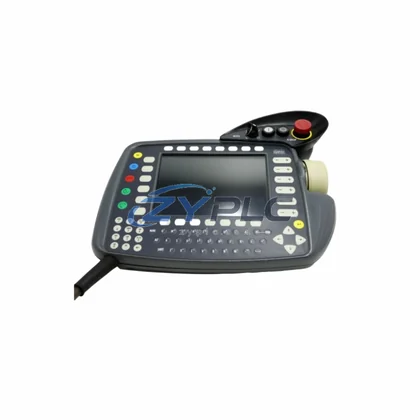
At the human-machine interface layer, KUKA’s KCP (KUKA Control Panel) or the smartPAD teach pendant provides operators with real-time axis status, drive fault codes, and motion program control. When a drive fault is detected on the axis served by the 00-205-328, the smartPAD displays the relevant error code, enabling rapid diagnosis without external instrumentation. For system-level commissioning and parameter management, KUKA WorkVisual software running on an engineering laptop connected via the KRC4’s service Ethernet port allows technicians to back up drive parameters, compare configurations across multiple robots, and restore settings after a drive replacement — significantly reducing recommissioning time in multi-robot installations.
Industrial Application Notes
The KUKA 00-205-328 servo drive finds application across a wide range of industrial sectors where KR Series robots are deployed as primary motion assets. In automotive body-in-white manufacturing, KR 16 and KR 10 robots equipped with this drive module perform spot welding, seam sealing, and component handling tasks within tightly synchronized multi-robot cells coordinated by a central Siemens S7-1500 PLC over PROFINET. The drive’s deterministic response to motion commands ensures that robot path accuracy is maintained even at high cycle rates, which is essential for weld quality and dimensional consistency.
In arc welding applications within heavy equipment and shipbuilding industries, KR 6 R900 robots using the 00-205-328 drive deliver the smooth, low-velocity axis control required for consistent weld bead geometry. The drive’s ability to maintain precise torque regulation at low speeds — where gravitational loading on the robot arm creates variable disturbance torques — is critical for weld quality in these applications. In palletizing and material handling lines within food and beverage or consumer goods manufacturing, KR 10 robots with this drive module operate at high cycle rates with frequent acceleration and deceleration, placing demands on the drive’s thermal management and regenerative braking capability.
In process industries such as petrochemical plants and water treatment facilities, KUKA robots equipped with KRC4 controllers and 00-205-328 drives are used for valve manipulation, sample handling, and inspection tasks in environments where reliability and long service intervals are paramount. The warranty terms confirmed during quotation provided by ZYPLC supports procurement teams in these industries by reducing the financial risk associated with spare parts sourcing, particularly for facilities operating under long-term maintenance contracts where component quality assurance is a contractual requirement.
Product Compatibility FAQ
Q1: Is the KUKA 00-205-328 compatible with both KRC4 standard and KRC4 compact cabinet variants?
The 00-205-328 is designed for use within the KUKA KRC4 platform family. Compatibility with specific cabinet variants — including KRC4 standard, KRC4 compact, and KRC4 smallsize — depends on the axis configuration and power rating of the target robot model. Engineers should verify the drive’s part number against the robot’s electrical documentation (KUKA circuit diagram) and the KRC4 spare parts list for the specific robot serial number before installation. ZYPLC’s technical team can assist with compatibility verification prior to order.
Q2: What is the recommended procedure for replacing the 00-205-328 drive in a production environment to minimize downtime?
Best practice for drive replacement in a production KRC4 system involves backing up the robot’s drive parameters using KUKA WorkVisual before removing the faulty unit. After installing the replacement 00-205-328, the backed-up configuration is restored via WorkVisual, followed by a mastering verification procedure on all robot axes using the KUKA Electronic Mastering Device (EMD) or the smartPAD-guided mastering routine. This process typically requires 2–4 hours for a trained KUKA service technician, and maintaining a pre-configured spare drive can reduce this window further.
Q3: What does the warranty terms confirmed during quotation from ZYPLC cover for the 00-205-328, and how does it support long-term maintenance planning?
The warranty terms confirmed during quotation provided by ZYPLC covers the functional integrity of the 00-205-328 servo drive module against manufacturing defects and premature failure under normal operating conditions. For maintenance teams managing multi-robot installations, this warranty provides a defined support window that can be aligned with annual maintenance budgets and spare parts planning cycles. In the event of a warranty claim, ZYPLC’s support team coordinates replacement logistics to minimize production impact. Contact ZYPLC at plc.sales@zyplc.com or +86 19859288691 for warranty registration and support.