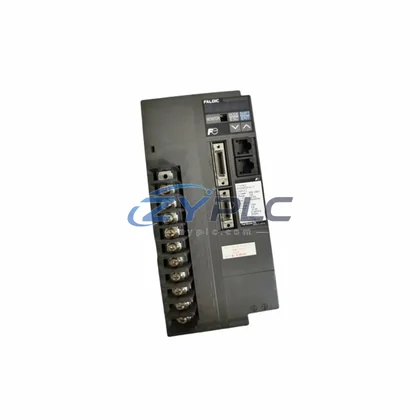
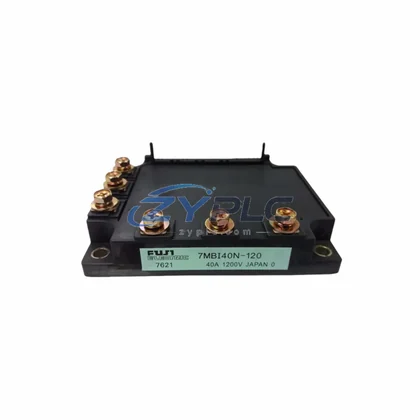
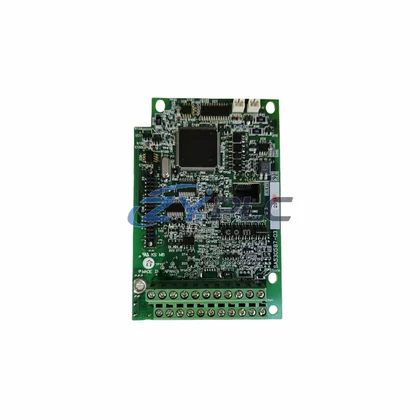
KUKA KSD1-16 00-122-285 Servo Drive for KRC Controller
The KUKA KSD1-16 (part number 00-122-285) is a high-performance servo drive module engineered for seamless integration within the KUKA Robot Controller (KRC) platform. Designed to operate as a core component of the KRC control cabinet architecture, this drive module delivers precise axis-level motion control across a wide range of industrial robotic applications. Rather than functioning as a standalone device, the KSD1-16 is purpose-built to operate within a coordinated multi-axis system, where its performance is directly tied to the coherence of the surrounding control infrastructure — from the central processing unit and power supply module down to the feedback encoders, safety relays, and fieldbus communication layers.
In modern industrial automation, the reliability of a servo drive is inseparable from the architecture it inhabits. The KSD1-16 is rated for 16A continuous output current and is compatible with the KRC2 and KRC2 ed05 controller generations, making it a widely deployed axis drive in automotive body-in-white lines, foundry handling systems, palletizing cells, and precision assembly stations. Its compact DIN-rail-compatible form factor allows dense cabinet integration without compromising thermal management or signal integrity.
Product Specification Table
| System Role |
Axis Servo Drive — KRC Cabinet Layer |
| Part Number |
KSD1-16 / 00-122-285 |
| Compatible Platform |
KUKA KRC2, KRC2 ed05 |
| Continuous Output Current |
16 A |
| Electrical Supply |
DC Bus from KPS (KUKA Power Supply Module) |
| Feedback Interface |
Resolver / Encoder via RDC (Resolver-Digital Converter) |
| Communication |
Internal KRC backplane bus (proprietary KUKA DSE/KSP protocol) |
| Axis Capacity |
Single-axis drive module |
| Installation Environment |
KRC2 control cabinet, IP54 enclosure, 0–45°C operating range |
| Mounting |
Integrated cabinet rail mount, plug-in connector interface |
| Origin |
Germany |
| Warranty |
warranty terms confirmed during quotation — tested, inspected, and verified prior to dispatch |
System Compatibility Notes
The KSD1-16 does not operate in isolation. Its performance and reliability are a direct function of the system architecture surrounding it. Within a standard KRC2 cabinet, the KSD1-16 receives its DC bus power from the KUKA KPS-600 or KPS-1500 power supply module, which conditions incoming three-phase AC supply into the regulated DC bus voltage required by all axis drives in the cabinet. Upstream of the power supply, the KUKA KRC2 main computer board — typically the DSE-IBS C33 or equivalent — coordinates motion trajectories and issues real-time torque and velocity commands to each KSD1-16 axis drive via the internal backplane bus.
Axis feedback is managed through the KUKA RDC (Resolver-Digital Converter) board, which translates resolver signals from each motor into digital position data consumed by the KRC controller. This closed-loop feedback path is essential for maintaining positional accuracy across all six robot axes. In multi-axis configurations, each axis is served by its own KSD1-16 module, with the KSD1-08 (8A variant) used for lighter axes such as wrist joints, while the KSD1-16 handles higher-torque primary axes.
Safety architecture within the KRC2 platform relies on the KUKA ESC (Electronic Safety Circuit) board, which monitors drive enable signals and enforces safe torque-off (STO) conditions during emergency stops or protective stops. The KSD1-16 integrates directly with the ESC safety chain, ensuring that axis motion is immediately inhibited upon any safety event without requiring software intervention. This hardware-level safety integration is a critical requirement for collaborative and semi-collaborative robot cells operating under ISO 10218-1 standards.
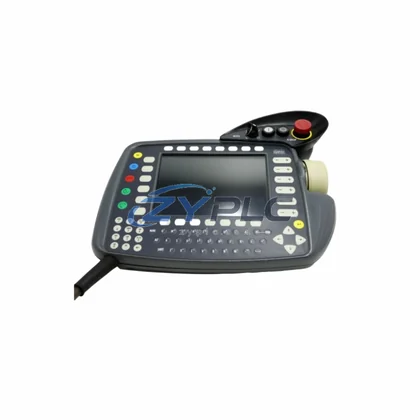
At the human-machine interface layer, the KUKA KCP2 teach pendant provides operators with real-time axis status, drive fault diagnostics, and manual jogging capability. Drive fault codes generated by the KSD1-16 — such as overcurrent, overvoltage, or encoder loss — are surfaced directly on the KCP2 display, enabling rapid fault isolation without external diagnostic tools. For facilities running multiple KRC2 cells, the KUKA.WorkVisual engineering software provides centralized drive configuration, axis parameterization, and firmware management across the entire robot fleet.
In redundant or high-availability architectures, spare KSD1-16 modules are maintained in the control cabinet or in on-site inventory to support rapid hot-swap replacement. The plug-in connector interface of the KSD1-16 allows axis drive replacement in under 30 minutes by a qualified technician, minimizing unplanned downtime in production-critical environments. Pairing the KSD1-16 with a KUKA KMS (Kinematic Measurement System) or mastering reference tool ensures that axis calibration is restored accurately following a drive replacement, preserving robot TCP accuracy without full re-teaching.
Industrial Application Notes
The KSD1-16 servo drive is deployed across a broad spectrum of industrial sectors where KUKA KRC2-based robots form the backbone of automated production. In automotive manufacturing, KRC2 robots equipped with KSD1-16 axis drives perform spot welding, arc welding, sealing, and press-tending operations on body-in-white lines, where cycle time consistency and axis repeatability directly impact throughput and weld quality. The drive’s ability to maintain precise torque control under high-duty-cycle conditions makes it well-suited for continuous multi-shift production environments.
In foundry and heavy industry applications, the KSD1-16 supports robots handling molten metal ladles, die-casting extraction, and forging press loading, where the drive must maintain stable axis control in high-temperature, high-vibration environments. The KRC2 cabinet’s IP54 rating and the KSD1-16’s robust thermal design allow reliable operation in ambient conditions that would compromise less ruggedized drive platforms.
In electronics and precision assembly lines, the KSD1-16 enables the fine positional resolution required for component placement, dispensing, and inspection tasks. The drive’s low-speed torque ripple characteristics, combined with the RDC feedback system, support sub-millimeter repeatability across thousands of cycles per shift. For palletizing and logistics applications, the KSD1-16 drives high-payload KUKA robots in layer-forming, case-packing, and depalletizing cells, where smooth acceleration profiles and consistent axis response reduce product damage and extend mechanical service life.
In process industries including chemical, pharmaceutical, and food processing, KRC2 robots with KSD1-16 axis drives are deployed in hygienic-design cells for filling, capping, and packaging operations. The deterministic motion control provided by the KRC architecture ensures that process parameters — fill volumes, cap torques, label placement — remain within specification across extended production runs, supporting GMP compliance and audit traceability.
Product Compatibility FAQ
Q1: Is the KSD1-16 (00-122-285) compatible with both KRC2 and KRC2 ed05 controller variants, and are there any firmware or configuration differences to consider?
The KSD1-16 is compatible with both the standard KRC2 and the KRC2 ed05 (extended design) cabinet variants. The primary difference between these platforms lies in the cabinet layout and the version of the KRC system software (KSS) installed on the main computer. The KSD1-16 drive module itself does not require firmware changes between these variants; however, axis parameterization stored in the KRC controller — including motor data sets, current limits, and encoder resolution — must match the specific motor connected to the drive. When replacing a KSD1-16 in an existing system, it is recommended to back up the controller configuration via KUKA.WorkVisual before the swap and verify axis parameters post-installation to ensure system integration with the existing motion program.
Q2: What is the recommended procedure for replacing a KSD1-16 in a live production environment, and how does the warranty terms confirmed during quotation apply to replacement units?
Replacement of a KSD1-16 should be performed with the KRC2 cabinet powered down and the main disconnect locked out in accordance with LOTO procedures. After physical installation, the replacement drive requires axis mastering to restore the robot’s reference position — this is typically performed using the KUKA Electronic Mastering Device (EMD) or a mechanical mastering gauge. All replacement KSD1-16 units supplied by ZYPLC are covered by a warranty terms confirmed during quotation from the date of dispatch, and each unit undergoes functional testing and inspection prior to shipment. Warranty coverage includes drive failure under normal operating conditions and excludes damage resulting from incorrect installation, overvoltage events, or contamination ingress.
Q3: Can the KSD1-16 be used in a redundant axis drive architecture, and what inventory strategy is recommended for facilities operating multiple KRC2 cells?
The KRC2 platform does not natively support hot-standby axis drive redundancy at the hardware level; however, facilities operating multiple KRC2 robots can implement a cold-standby redundancy strategy by maintaining one or more spare KSD1-16 modules in on-site inventory. Given the KSD1-16’s widespread deployment across KRC2 installations globally, sourcing replacement units through a reliable supply channel — with guaranteed stock availability and a warranty terms confirmed during quotation — is the most practical approach to minimizing mean time to repair (MTTR). For facilities with five or more KRC2 robots, maintaining a minimum of two spare KSD1-16 units per axis current rating is a commonly adopted maintenance engineering standard.