KUKA KSD1-16 00-122-285: Industrial Data Link and Smart Factory Connectivity for KRC2 Systems
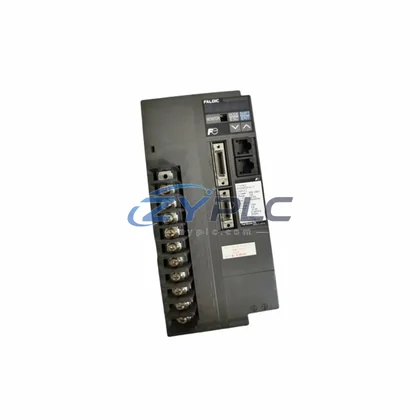
The KUKA KSD1-16 (00-122-285) is a high-performance servo drive amplifier engineered for seamless integration within KUKA KRC2 robot controller architectures. As industrial automation evolves toward fully connected smart factory environments, the KSD1-16 serves as a critical node in the motion control and data communication chain — bridging the gap between field-level actuators and upper-level control, monitoring, and diagnostic systems. Whether deployed in automotive body-in-white lines, precision assembly cells, or heavy-duty material handling systems, this drive amplifier delivers the real-time responsiveness and network stability that modern industrial sites demand.
Compatibility & Integration Notes
| Parameter |
Specification |
| SKU |
KRC2 KSD1-16 00-122-285 |
| Brand |
KUKA |
| Series |
KRC2 |
| Product Type |
Servo Drive Amplifier |
| Communication Protocol |
KUKA KRC2 Proprietary Bus / Interbus / DeviceNet compatible ecosystem |
| Interface Type |
Drive bus interface, encoder feedback, digital I/O |
| Transmission Capability |
Real-time servo loop data, position/velocity/torque feedback |
| Network Compatibility |
KUKA KRC2 controller network, compatible with PROFIBUS gateway integration |
| System Application |
Robot motion control, servo axis management, PLC-coordinated automation cells |
| Origin |
Germany |
| Warranty |
warranty terms confirmed during quotation |
Connected Automation Data Flow
In a fully integrated smart factory, the KUKA KSD1-16 operates at the heart of the motion control data loop. The data flow begins at the sensor and actuator layer: encoders mounted on servo motors feed real-time position and velocity data back through the KSD1-16 drive amplifier, which processes these signals and communicates with the KUKA KRC2 robot controller over the high-speed drive bus. The KRC2 controller — acting as the central motion coordinator — issues torque and velocity commands to the KSD1-16 at millisecond cycle times, ensuring precise, synchronized axis movement across multi-axis robot configurations.
Upstream from the KRC2, a KUKA KPS600 power supply unit provides the regulated DC bus voltage that the KSD1-16 requires for stable drive operation. In multi-robot workcells, the KRC2 network connects to a PROFIBUS DP gateway or DeviceNet communication module, enabling the robot controller to exchange I/O status, program triggers, and fault signals with a Siemens S7-300/S7-400 PLC or Allen-Bradley ControlLogix system managing the broader production line. This PLC layer aggregates data from remote I/O modules — such as Siemens ET 200S distributed I/O or Phoenix Contact Inline I/O stations — and routes it upward to the SCADA layer.
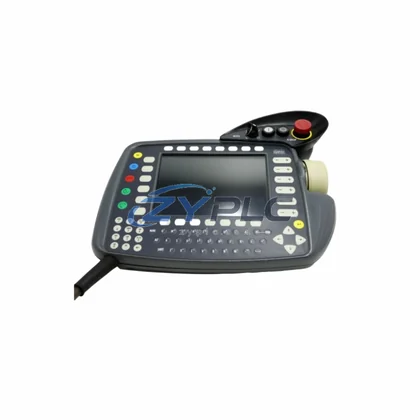
At the SCADA and HMI level, platforms such as Siemens WinCC or Wonderware InTouch receive live drive status, axis load data, and fault codes from the KSD1-16 via the PLC-SCADA data bridge. Operators at the HMI terminal — often a KUKA smartPAD teach pendant or a panel PC running the KRC2 visualization interface — can monitor servo current draw, drive temperature, and encoder integrity in real time. When the KSD1-16 detects an overcurrent condition or encoder signal loss, the fault is immediately propagated through the KRC2 to the SCADA alarm management system, triggering operator notifications and logging the event for predictive maintenance analysis.
For remote diagnostics, an industrial edge gateway — such as a Moxa UC-8100 or Advantech WISE-5000 series — can be deployed to collect drive performance data from the KRC2 network and transmit it securely over Ethernet to cloud-based MES or ERP platforms. This enables maintenance engineers to perform remote health checks on the KSD1-16 without physical access to the robot cell, reducing unplanned downtime and supporting condition-based maintenance strategies. The integration of the KSD1-16 within this end-to-end data architecture — from servo motor encoder to cloud analytics — exemplifies the connectivity value that a properly specified drive amplifier delivers in a modern smart factory.
Solving Data Isolation in Industrial Sites
One of the most persistent challenges in industrial automation is data isolation: servo drives, robot controllers, PLCs, and SCADA systems that cannot communicate effectively, leaving maintenance teams blind to real-time machine health and production managers unable to access accurate OEE data. The KUKA KSD1-16 00-122-285 addresses this challenge directly by operating as a fully integrated component within the KUKA KRC2 ecosystem, which is designed from the ground up for transparent data exchange across the automation hierarchy.
When a production line relies on aging or mismatched drive components, protocol fragmentation becomes a critical bottleneck. Replacing a failed or incompatible servo drive with the correct KSD1-16 restores the native KRC2 communication link, eliminating the data gaps that occur when third-party drives require additional protocol converters or custom firmware. This direct compatibility ensures that servo axis data — position accuracy, load current, thermal status — flows uninterrupted from the drive to the KRC2 controller and onward to the SCADA system.
For sites undergoing digital transformation, the KSD1-16’s role in the KRC2 network supports production line transparency initiatives. By ensuring that every servo axis reports accurate, real-time data to the control layer, plant engineers can implement closed-loop quality monitoring, automated fault isolation, and predictive maintenance scheduling — all of which depend on reliable, low-latency data from the drive level. System expansion is equally straightforward: additional KSD1-16 units can be added to the KRC2 drive bus to support new robot axes or upgraded tooling, without disrupting the existing network architecture or requiring reconfiguration of the SCADA integration.
Industrial Connectivity FAQ
Q1: What communication protocols does the KUKA KSD1-16 support within the KRC2 system?
The KSD1-16 communicates natively over the KUKA KRC2 internal drive bus, which handles real-time servo loop data including position commands, velocity feedback, and torque control signals. For integration with external PLC and SCADA systems, the KRC2 controller supports PROFIBUS DP, DeviceNet, and Ethernet-based gateways, allowing the KSD1-16’s drive data to be surfaced to Siemens, Allen-Bradley, or Schneider Electric control platforms without additional protocol converters at the drive level.
Q2: How does the KSD1-16 ensure network stability and low communication latency in high-speed robot applications?
The KSD1-16 is designed to operate within the KRC2’s deterministic real-time control cycle, typically executing servo loop updates at 1–12 ms intervals depending on the robot configuration. This deterministic communication architecture ensures that axis commands and feedback data are exchanged with consistent, predictable latency — a critical requirement for multi-axis coordinated motion and precision assembly applications. The drive’s hardware design minimizes signal noise and interference on the drive bus, maintaining network stability even in electrically demanding environments.
Q3: Can the KSD1-16 be integrated into an existing SCADA or remote monitoring system?
Yes. While the KSD1-16 itself communicates over the KRC2 drive bus, its operational data — including fault codes, axis load, and drive temperature — is accessible through the KRC2 controller’s network interface. By connecting the KRC2 to a PROFIBUS or Ethernet gateway, this data can be forwarded to SCADA platforms such as Siemens WinCC, Wonderware, or Ignition, enabling real-time monitoring and alarm management from a central control room or remote location.
Q4: What warranty and pre-shipment testing does the KSD1-16 00-122-285 include?
Every KUKA KSD1-16 00-122-285 supplied by ZYPLC is covered by a warranty terms confirmed during quotation and undergoes pre-shipment functional testing to verify drive communication, power stage integrity, and encoder interface operation. Units are shipped via DHL or FedEx with full tracking, and our technical team provides post-delivery support for installation verification and KRC2 integration commissioning.