KUKA KSD1-48C200-105-413 Servo Drive for KSD1 Series: Compatibility and Replacement Notes
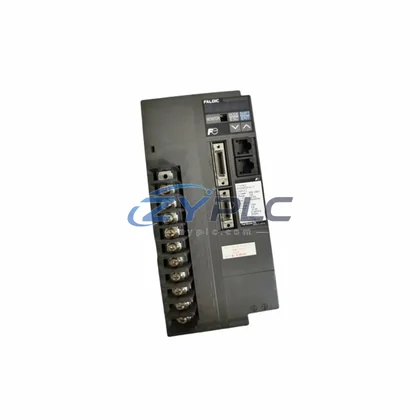
The KUKA KSD1-48C200-105-413 is a high-performance servo drive module purpose-built for integration within the KUKA KSD1 series motion control architecture. Rather than functioning as a standalone component, this drive is engineered to operate as a coordinated node within a layered industrial automation system — interfacing seamlessly across the control layer, I/O layer, network layer, power layer, human-machine interface layer, and execution layer. Its role within the system is to translate digital motion commands from the KUKA KRC controller into precise, high-fidelity electrical signals that govern servo motor behavior, ensuring synchronization, repeatability, and dynamic response across multi-axis robotic and CNC applications.
In a complete KSD1-series control architecture, the KSD1-48C200-105-413 receives trajectory and torque commands from the KUKA KRC2 or KRC4 robot controller via the internal KPC (KUKA Power Cabinet) bus structure. This tight coupling between the controller and drive eliminates latency in command execution and supports real-time closed-loop feedback, which is critical in high-speed assembly, welding, material handling, and precision machining environments. The drive’s 48V DC bus architecture is optimized for the KSD1 cabinet power distribution system, ensuring voltage stability across multi-axis configurations without requiring external conditioning hardware.
System consistency is further reinforced through the drive’s compatibility with KUKA’s standardized cabinet backplane and connector ecosystem. Engineers integrating the KSD1-48C200-105-413 into an existing KSD1 rack benefit from plug-compatible mechanical and electrical interfaces, reducing commissioning time and eliminating the risk of wiring errors that can arise from cross-series substitutions. This design philosophy supports long-term maintenance efficiency — replacement units can be swapped without reconfiguration of surrounding modules, a key advantage in production environments where downtime carries significant operational cost.
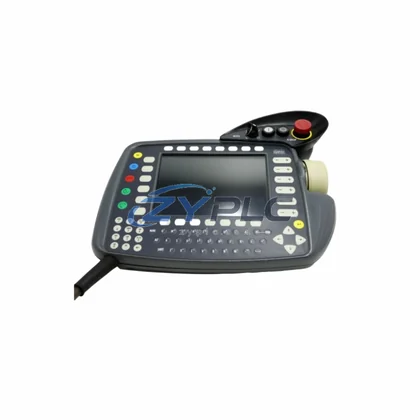
From a redundancy and system resilience perspective, the KSD1-48C200-105-413 supports fault detection and diagnostic reporting through the KRC controller’s integrated monitoring framework. Drive status, overcurrent events, encoder feedback anomalies, and thermal warnings are surfaced in real time to the operator via the KUKA smartPAD or KCP teach pendant, enabling predictive maintenance scheduling rather than reactive repair. This capability is particularly valuable in continuous-process industries such as automotive body-in-white production, where unplanned stoppages cascade across downstream assembly stations.
Signal flow within the KSD1 architecture begins at the KRC controller, passes through the KPC power cabinet bus, enters the KSD1-48C200-105-413 drive module, and terminates at the servo motor encoder and power terminals. Return feedback — including position, velocity, and torque data — travels the reverse path, completing the closed-loop control cycle at update rates that support sub-millisecond interpolation. This architecture ensures that even in multi-robot cells where several KSD1-series drives operate in parallel, inter-axis synchronization remains within the tolerances required for coordinated motion tasks such as seam tracking, spot welding, and collaborative assembly.
Product Specification Table
| Parameter |
Specification |
| Part Number / SKU |
KSD1-48C200-105-413 |
| Brand |
KUKA |
| Series |
KSD1 |
| System Role |
Servo Drive Module — Motion Execution Layer |
| DC Bus Voltage |
48V DC |
| Continuous Output Current |
200A (nominal, per KSD1-48C200 rating) |
| Compatible Controllers |
KUKA KRC2, KRC4 (via KPC cabinet bus) |
| Communication Interface |
Internal KSD1 cabinet bus; KUKA proprietary protocol |
| Feedback Support |
Resolver / Encoder (KUKA-compatible servo motor) |
| Installation Environment |
KUKA KPC power cabinet, KSD1 rack-mount configuration |
| Cooling Method |
Forced air / cabinet-integrated thermal management |
| Origin |
Germany |
| Warranty |
warranty terms confirmed during quotation — Tested, inspected, and shipment arranged after confirmation |
| system integration |
Full KSD1 series architecture compatibility confirmed |
System Compatibility Notes
The KSD1-48C200-105-413 achieves its full performance potential only when deployed within a correctly configured KSD1-series system architecture. At the controller level, the KUKA KRC4 robot controller issues motion commands through the internal cabinet bus to each drive module in the rack. The KUKA KPC (Power Cabinet) provides the regulated 48V DC bus that powers the KSD1-48C200-105-413 and adjacent drive modules, with bus capacitors shared across the rack to support regenerative braking energy recovery during deceleration cycles.
Within the same cabinet, multiple KSD1-series drive modules — such as the KSD1-16, KSD1-40, and KSD1-48 variants — may be installed in parallel to serve different axes of a multi-joint robot arm. Each module communicates with the KRC controller independently, but their motion profiles are synchronized at the controller level to ensure coordinated multi-axis trajectories. The KUKA KPS (Power Supply Module) within the cabinet manages inrush current limiting and bus pre-charge sequencing, protecting the KSD1-48C200-105-413 and co-installed drives during system startup.
At the I/O and safety layer, the KUKA KSI (Safety Interface Module) monitors emergency stop circuits, safety door interlocks, and enabling device signals, feeding safety state information to the KRC controller which in turn commands the KSD1-48C200-105-413 to enter safe torque-off (STO) mode when required. This integration ensures that the drive participates fully in the system’s functional safety architecture without requiring external safety relays or additional wiring. For human-machine interface, the KUKA smartPAD or legacy KCP teach pendant provides operators with real-time drive status, axis load monitoring, and fault history — all sourced from the KSD1-48C200-105-413’s onboard diagnostics via the KRC controller.
In extended system configurations, KUKA.PLC mxAutomation or third-party PROFINET/EtherNet/IP gateways may be used to integrate the robot cell into a broader plant-level SCADA or MES environment, with the KSD1-48C200-105-413 remaining transparent to the upper-level communication while the KRC controller acts as the cell gateway. This layered architecture ensures that the drive’s high-frequency motion control loop is isolated from the slower plant network, preserving determinism and cycle time integrity.
Industrial Application Notes
Automotive Manufacturing: In body-in-white welding lines, the KSD1-48C200-105-413 drives the primary axes of KUKA KR series robots performing resistance spot welding and arc welding operations. The drive’s high continuous current rating supports the torque demands of heavy payload robots operating at maximum reach, while its integration with the KRC4 controller ensures that weld gun force profiles are maintained within specification across thousands of cycles per shift.
Electronics and Precision Assembly: In PCB handling and component placement lines, the KSD1-48C200-105-413 supports high-speed, low-inertia motion profiles where positioning repeatability is critical. The drive’s closed-loop feedback architecture, combined with the KRC controller’s path interpolation algorithms, delivers the sub-millimeter accuracy required for fine-pitch component placement and optical inspection station positioning.
Metal Fabrication and Press Tending: In press tending and stamping line automation, the drive manages the high-dynamic load cycles associated with rapid part transfer between press stations. Its regenerative capability — returning braking energy to the 48V DC bus — reduces net energy consumption across the cell, contributing to sustainability targets in high-volume production environments.
Pharmaceutical and Food Processing: In hygienic automation environments, the KSD1-48C200-105-413 supports pick-and-place and palletizing robots where motion smoothness and repeatability directly affect product integrity. The drive’s deterministic control loop ensures that acceleration and deceleration profiles remain consistent across temperature variations within the production facility.
Warehouse and Intralogistics Automation: In automated storage and retrieval systems (ASRS) and goods-to-person fulfillment cells, the KSD1-48C200-105-413 drives the articulated robot arms responsible for bin picking and order consolidation. Its compatibility with the KRC4 controller’s vision integration framework allows the drive to respond dynamically to updated pick coordinates without interrupting the motion cycle.
Product Compatibility FAQ
Q1: Is the KSD1-48C200-105-413 compatible with both KRC2 and KRC4 controllers, and are there any firmware or cabinet configuration requirements?
The KSD1-48C200-105-413 is designed for use within the KUKA KSD1 cabinet architecture, which is primarily associated with KRC2-generation systems. Compatibility with KRC4 depends on the specific cabinet configuration and KPC power supply variant in use. Before installation, engineers should verify the cabinet bus version and KRC software release to confirm drive compatibility. Our technical team can assist with compatibility verification prior to shipment, and all units are supplied with a warranty terms confirmed during quotation covering functional defects identified during commissioning or operation.
Q2: Can the KSD1-48C200-105-413 be installed alongside different KSD1 current-rated drives in the same rack, and how does the system manage shared bus resources?
Yes, the KSD1 rack architecture supports mixed current-rated drive modules — such as KSD1-16, KSD1-40, and KSD1-48 variants — within the same cabinet, provided that the KPS power supply module is rated for the aggregate continuous and peak current demand of all installed drives. The KRC controller manages bus resource allocation and sequencing at the software level, ensuring that simultaneous axis motion does not exceed the power supply’s rated output. System architects should perform a power budget analysis during the design phase to confirm KPS sizing.
Q3: What is the recommended procedure for replacing a KSD1-48C200-105-413 in a live production environment, and how does the warranty terms confirmed during quotation support long-term maintenance planning?
Replacement of the KSD1-48C200-105-413 follows KUKA’s standard hot-swap procedure for KSD1-series drives: the affected axis is brought to a safe stop via the KRC controller, the cabinet is de-energized at the KPS level, the drive module is extracted from the rack, and the replacement unit is inserted and secured. No axis-specific parameter reconfiguration is required, as drive parameters are stored in the KRC controller rather than the drive module itself. The warranty terms confirmed during quotation on all supplied units provides assurance that replacement modules are fully tested and functional, supporting planned maintenance intervals and reducing the risk of secondary failures during the replacement process. system integration with the existing KSD1 architecture is confirmed prior to shipment.