KUKA KSP 600-3×40: Industrial Data Link and Smart Factory Connectivity for KSP Series Systems
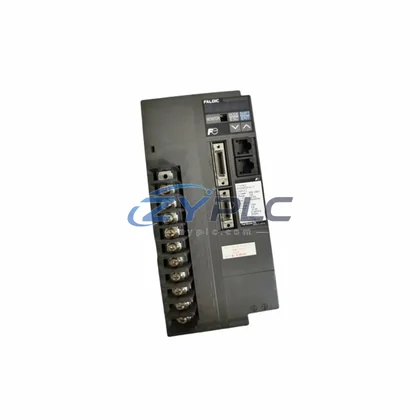
The KUKA KSP 600-3×40 (Part No. 00-160-154) is a high-performance SERCOS-based servo drive controller engineered for demanding industrial automation environments. As a core node in the KSP Series drive architecture, this unit bridges the gap between field-level motion control and upper-level supervisory systems — enabling seamless, real-time data exchange across the full automation stack. Whether deployed in automotive body-in-white lines, precision assembly cells, or multi-axis robotic workcells, the KSP 600-3×40 delivers the network stability, protocol integrity, and diagnostic transparency that modern smart factories demand.
Compatibility & Integration Notes
| Parameter |
Specification |
| Communication Protocol |
SERCOS (Serial Real-time Communication System) |
| Interface Type |
Fiber-optic SERCOS ring interface |
| Transmission Capability |
Real-time cyclic data exchange with deterministic latency |
| Network Compatibility |
KUKA KRC robot controllers, SERCOS-compliant PLCs and motion controllers |
| System Application |
Multi-axis servo coordination, robotic motion control, CNC integration |
| Part Numbers |
KSP 600-3×40: 00-160-154 | KSP 600-3×64 UL: 00-198-269 | KSP 600-3×64: 00-160-155 |
| Output Current |
3 × 40 A continuous per axis |
| Warranty |
warranty terms confirmed during quotation — Verified pre-shipment functional test |
Connected Automation Data Flow
In a fully integrated smart factory, the KUKA KSP 600-3×40 operates as the motion-layer communication hub within the SERCOS ring topology. Signal acquisition begins at the encoder and resolver feedback level, where axis position, velocity, and torque data are captured in real time and transmitted upstream via the fiber-optic SERCOS interface to the KUKA KRC4 robot controller. The KRC4 processes motion commands and distributes synchronized setpoints back to the KSP 600-3×40 and its sibling drives — including the KSP 600-3×64 (00-160-155) for higher-current axes — within a single deterministic communication cycle.
At the cell controller level, the SERCOS network interfaces with Siemens SIMATIC S7-300/S7-1500 PLCs via SERCOS-to-PROFINET gateways, allowing the production management system to receive live axis status, fault codes, and cycle counters without interrupting motion execution. This data is aggregated by SCADA platforms such as Wonderware InTouch or Ignition, where operators monitor drive health, torque utilization, and thermal margins across all axes simultaneously.
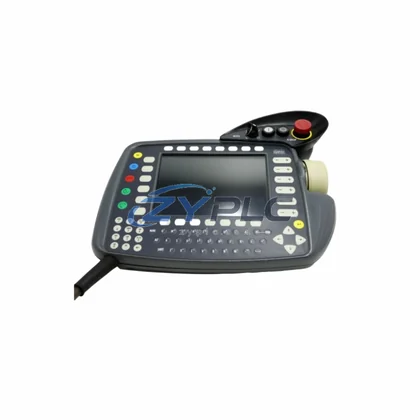
For remote I/O integration, Beckhoff EtherCAT I/O terminals and Phoenix Contact Axioline F modules feed digital and analog process signals into the control layer, while Siemens SINAMICS S120 drive modules on adjacent production lines share network infrastructure through managed industrial Ethernet switches — such as the Hirschmann MACH 100 series — ensuring ring redundancy and sub-50ms failover. HMI panels, including KUKA smartPAD and third-party Weintek cMT Series touchscreens, display real-time axis diagnostics and allow operators to acknowledge faults and initiate homing sequences directly from the shop floor.
Edge gateway devices — such as the Moxa MGate MB3000 series — further extend connectivity by translating SERCOS and PROFIBUS data into MQTT or OPC-UA streams for cloud-based MES and ERP integration, completing the data chain from servo encoder to enterprise dashboard without a single data island.
Solving Data Isolation in Industrial Sites
Legacy servo drive installations frequently suffer from protocol fragmentation: SERCOS drives on one network segment, PROFIBUS sensors on another, and Modbus RTU instruments on a third — with no unified data path to the SCADA layer. The KUKA KSP 600-3×40 addresses this at the motion-control layer by providing a standards-compliant SERCOS interface that integrates natively with KUKA KRC controllers and, through protocol gateways, with broader plant networks running PROFINET, EtherNet/IP, or OPC-UA.
For sites transitioning from older KUKA KSP 600-3×20 or first-generation KSP drives, the KSP 600-3×40 offers a direct form-factor upgrade path, preserving existing cabinet wiring while expanding current capacity and network diagnostic depth. Remote monitoring becomes straightforward: drive temperature, DC bus voltage, axis following error, and fault history are all accessible via the SERCOS data channel, eliminating the need for technicians to physically access control cabinets for routine diagnostics.
Production line transparency improves immediately upon integration. Cycle time data, axis utilization rates, and predictive maintenance indicators flow continuously to the MES layer, enabling data-driven scheduling and reducing unplanned downtime. System expansion is equally simplified — additional KSP 600-3×40 or KSP 600-3×64 UL (00-198-269) nodes can be added to the SERCOS ring without reconfiguring the existing network topology, supporting phased capacity growth aligned with production ramp-up schedules.
Industrial Connectivity FAQ
Q1: What is the communication latency of the SERCOS interface on the KSP 600-3×40?
The SERCOS protocol on the KSP 600-3×40 operates with deterministic, sub-millisecond cycle times (typically 250 µs to 2 ms depending on KRC controller configuration), making it suitable for high-speed, synchronized multi-axis motion applications where jitter tolerance is critical.
Q2: Is the KSP 600-3×40 compatible with non-KUKA SERCOS controllers?
The KSP 600-3×40 implements the SERCOS I/II standard and is primarily validated for use with KUKA KRC2 and KRC4 robot controllers. Integration with third-party SERCOS masters is technically possible but requires compatibility verification against the specific master’s SERCOS profile and timing parameters.
Q3: How is network stability maintained in multi-axis SERCOS ring configurations?
The SERCOS fiber-optic ring topology provides inherent noise immunity and eliminates ground loop interference common in copper-based fieldbus systems. In the event of a single node fault, the KRC controller can isolate the affected drive and maintain operation on remaining axes, depending on the application’s safety configuration.
Q4: What pre-shipment testing and warranty coverage is provided?
Every KUKA KSP 600-3×40 unit supplied by ZYPLC undergoes functional verification prior to dispatch, including power-on testing and communication interface checks. All units are covered by a warranty terms confirmed during quotation against manufacturing defects and operational failure, with global shipping available and availability confirmed by RFQ units ready for same-week dispatch.