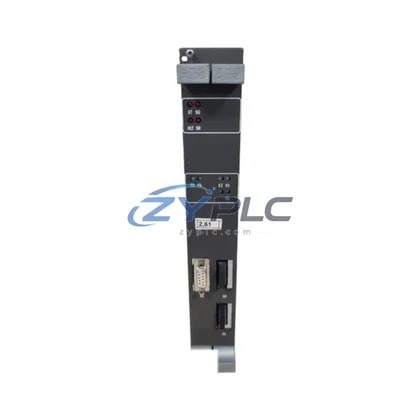
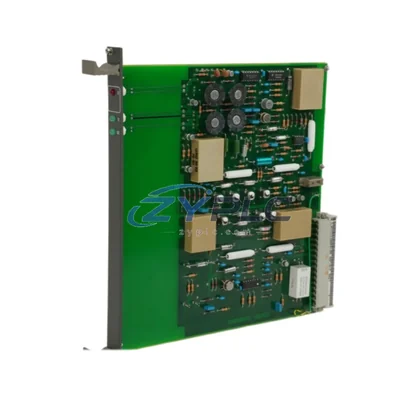
Mitsubishi BN634A233G51 MW621 Circuit Board for CNC
In modern CNC machine tool environments, the reliability of every control layer determines the overall throughput, precision, and uptime of the production line. The Mitsubishi BN634A233G51 — commonly referenced under the MW621 and MW621C part numbers — is a purpose-engineered circuit board designed to serve as a critical functional node within Mitsubishi Electric’s CNC control architecture. Rather than functioning as a standalone component, this board is engineered to operate in close coordination with the surrounding control hierarchy: from the CNC controller at the top of the system, through the servo and spindle drive layer, down to the I/O interface and feedback signal processing level. Understanding its role within this layered architecture is essential for engineers responsible for system integration, preventive maintenance, and long-term operational continuity.
The BN634A233G51 board is designed to support signal routing, logic processing, and interface coordination within Mitsubishi CNC platforms. Its physical and electrical design reflects the demands of high-cycle machining environments where thermal stability, signal integrity, and board-level reliability are non-negotiable. The board is manufactured in Japan, consistent with Mitsubishi Electric’s quality standards for industrial-grade electronics, and is compatible with CNC systems that rely on tightly integrated hardware-software co-design.
Product Specification Table
| Parameter |
Specification |
| Part Number |
BN634A233G51 |
| Compatible Model |
MW621 / MW621C |
| Brand |
Mitsubishi Electric |
| Product Type |
CNC Circuit Board / Control PCB |
| System Role |
Signal processing and interface coordination within CNC control architecture |
| Series |
MW621 Series (Mitsubishi CNC Platform) |
| Origin |
Japan |
| Communication Capability |
Compatible with Mitsubishi CNC internal bus and servo communication protocols |
| Installation Environment |
CNC control cabinet, machine tool electrical enclosure |
| Operating Temperature |
0°C to 55°C (standard industrial CNC environment) |
| Mounting |
PCB slot / rack-mount within CNC controller chassis |
| Warranty |
warranty terms confirmed during quotation |
| Condition |
New / Tested Surplus / Refurbished (as specified at order) |
System Compatibility Notes
The BN634A233G51 board does not operate in isolation. Its value is realized only when it is correctly integrated within a complete Mitsubishi CNC control system. In a typical machine tool architecture, the CNC controller — such as a Mitsubishi M70 or M80 series CNC unit — sits at the top of the control hierarchy, managing part programs, interpolation, and axis coordination. The BN634A233G51 board interfaces with this controller layer, supporting the downstream communication and signal conditioning required for accurate servo and spindle response.
At the drive layer, the board works in conjunction with Mitsubishi MR-J4 or MR-J2S series servo amplifiers, which receive position and velocity commands from the CNC controller and translate them into precise motor torque outputs. The spindle drive — often a Mitsubishi FR-SF or FR-A series inverter — operates in parallel, receiving speed references and feedback signals that pass through the control board’s interface circuitry. Ensuring that the BN634A233G51 is correctly seated and electrically sound is a prerequisite for stable servo loop closure and spindle synchronization.
At the I/O layer, the board coordinates with Mitsubishi CNC I/O units such as the FCU8-DX series or equivalent I/O expansion modules, which handle machine tool signals including limit switches, tool change commands, coolant control, and door interlock logic. The integrity of these signal paths depends on the health of the circuit board, making the BN634A233G51 a key maintenance target during scheduled CNC overhauls.
For systems requiring network connectivity or remote diagnostics, the architecture may also include a Mitsubishi CNC Ethernet interface card or a CC-Link communication module, enabling integration with factory MES systems or SCADA platforms. The BN634A233G51 supports the internal bus architecture that makes this upper-level connectivity possible. Additionally, operator interface panels — such as Mitsubishi GOT2000 series HMI terminals — rely on stable CNC controller operation, which in turn depends on the correct functioning of boards like the BN634A233G51 within the controller chassis.
Power supply integrity is equally critical. The CNC control cabinet typically houses a Mitsubishi CNC dedicated power supply unit (PSU), which provides regulated DC voltages to the controller boards, I/O units, and communication modules. A stable power rail is a prerequisite for reliable board operation, and engineers should verify PSU output quality as part of any BN634A233G51 replacement or commissioning procedure. Terminal blocks and wiring duct systems — such as those from the Mitsubishi A6TBXY36 series or equivalent DIN-rail terminal assemblies — complete the physical wiring layer, ensuring that all field signals are correctly routed to the CNC I/O interface.
Industrial Application Notes
The BN634A233G51 circuit board finds application across a wide range of industries that rely on Mitsubishi CNC-controlled machine tools. In precision manufacturing environments — including aerospace component machining, automotive powertrain production, and mold and die fabrication — the board supports the high-speed, high-accuracy control loops required for tight dimensional tolerances. Any degradation in board performance directly impacts surface finish quality, dimensional repeatability, and cycle time consistency.
In the metalworking and heavy machining sector, CNC lathes, machining centers, and grinding machines equipped with Mitsubishi CNC systems depend on the reliable operation of control boards like the BN634A233G51 to maintain spindle speed accuracy and axis positioning integrity across multi-shift production schedules. The board’s role in signal conditioning ensures that encoder feedback from linear scales and rotary encoders is correctly processed, enabling the CNC controller to maintain closed-loop position accuracy.
For facilities operating in the electronics manufacturing sector — including PCB drilling, precision engraving, and micro-machining — the BN634A233G51 supports the high-frequency control updates required for fine-feature machining. In these applications, the board’s contribution to system latency and signal fidelity is particularly significant, as even minor signal processing delays can result in dimensional errors at the micron level.
Maintenance engineers in all these industries benefit from maintaining a stocked spare of the BN634A233G51 as part of their critical spare parts inventory. Given the lead times associated with OEM procurement channels, having a tested and warranted replacement board available on-site can reduce unplanned downtime from days to hours, directly protecting production output and delivery commitments.
Product Compatibility FAQ
Q1: Is the BN634A233G51 compatible with both MW621 and MW621C CNC systems?
Yes. The BN634A233G51 is the primary board reference for both the MW621 and MW621C variants within the Mitsubishi CNC platform. Engineers should verify the exact system revision and slot position during installation, as minor hardware revisions may affect connector pinout or firmware compatibility. Our technical team can assist with cross-referencing your system’s bill of materials prior to shipment.
Q2: What commissioning steps are required after installing a replacement BN634A233G51 board?
After physical installation, the CNC system should be powered up in diagnostic mode to verify board recognition and internal bus communication. Parameter backup and restore procedures should be followed per the Mitsubishi CNC maintenance manual for the specific controller model. Servo axis initialization, spindle parameter verification, and I/O signal check routines should be completed before returning the machine to production. Our team provides pre-shipment testing documentation to support the commissioning process.
Q3: What does the warranty terms confirmed during quotation cover for the BN634A233G51?
Our warranty terms confirmed during quotation covers manufacturing defects, component failure under normal operating conditions, and board-level functional faults identified during the warranty period. The warranty does not cover damage resulting from incorrect installation, overvoltage events, or environmental contamination beyond the board’s rated operating conditions. Warranty claims are processed with priority support, and replacement or repair is coordinated to minimize system downtime. system integration support — including compatibility verification with your specific CNC architecture — is available throughout the warranty period.