Mitsubishi FX2N-4AD-PT Analog Module FX2N Auto: Precision Temperature Monitoring for Efficient Energy Control
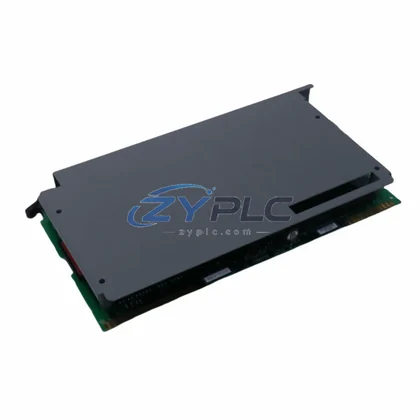
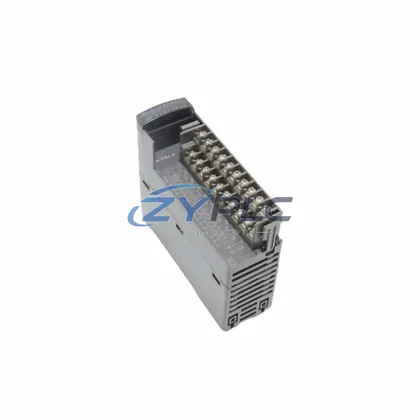
The Mitsubishi FX2N-4AD-PT is a dedicated 4-channel PT100 RTD analog input module engineered for the FX2N series programmable logic controller platform. In modern industrial environments where energy accountability is no longer optional, this module serves as a critical front-end sensor interface that enables real-time thermal data acquisition — the foundation of any credible maintenance planning strategy. By delivering accurate, low-drift temperature readings directly into the FX2N CPU’s data registers, the FX2N-4AD-PT allows control engineers to implement closed-loop thermal management, reduce unnecessary heating or cooling cycles, and eliminate the unplanned downtime that accumulates from imprecise process temperature control.
Unlike generic analog input modules, the FX2N-4AD-PT is factory-calibrated for PT100 resistance temperature detectors, providing a measurement range of -100°C to +600°C with a resolution of 0.1°C. This level of precision is essential in applications such as injection molding barrel temperature control, heat treatment furnace management, food processing pasteurization lines, and HVAC condition monitoring in large industrial facilities. When temperature data is accurate, the PLC can make faster, more confident control decisions — reducing overshoot, shortening stabilization time, and ultimately lowering the energy consumed per production cycle.
The module connects directly to the FX2N main unit or extension base via the standard FX2N bus, consuming only 30 mA from the 5 VDC internal bus — a negligible power draw relative to the control value it delivers. Each of the four input channels can be independently configured, allowing a single FX2N-4AD-PT to simultaneously monitor multiple thermal zones within the same production cell. This multi-zone visibility is what transforms reactive temperature management into proactive energy governance.
Product Specification Table
| Parameter |
Specification / Value |
| Input Channels |
4 channels (PT100 RTD, 3-wire) |
| Measurement Range |
-100°C to +600°C |
| Resolution |
0.1°C |
| Conversion Speed |
15 ms per channel (60 ms total, 4 channels) |
| Internal Bus Current Draw |
30 mA @ 5 VDC |
| Compatible PLC Series |
Mitsubishi FX2N, FX2NC |
| Application Environments |
Injection molding, furnace control, HVAC, food processing, chemical reactors |
| Maintenance Value |
Enables closed-loop thermal control, reduces unplanned downtime from temperature overshoot |
| Warranty |
warranty terms confirmed during quotation — tested before shipment |
| Origin |
Japan |
System Compatibility and Application
The FX2N-4AD-PT does not operate in isolation — its value is fully realized when integrated within a well-designed FX2N automation architecture. The Mitsubishi FX2N-32MR or FX2N-64MR main CPU unit serves as the processing core, executing ladder logic programs that respond to the temperature data fed by the FX2N-4AD-PT. For applications requiring analog output to drive heating elements or proportional control valves, the FX2N-4DA analog output module pairs naturally with the FX2N-4AD-PT, forming a complete closed-loop thermal control subsystem.
In drive-intensive production lines, the temperature data from the FX2N-4AD-PT can be used to modulate the setpoints of a Mitsubishi FR-E740 or FR-D740 inverter drive, adjusting motor speed in response to thermal load conditions. This integration between temperature sensing and variable frequency drive control is one of the most effective methods for reducing motor load — motors run only as fast as thermal conditions demand, rather than at fixed speeds that waste energy during low-load periods.
For facilities requiring expanded I/O without replacing the main CPU, the FX2N-16EX digital input extension and FX2N-16EYR relay output extension modules can be added to the same bus, allowing the FX2N-4AD-PT’s thermal data to trigger discrete control actions — activating cooling fans, opening dampers, or switching heating zones — all coordinated through the FX2N CPU’s unified program. Communication to SCADA systems or maintenance planning platforms is handled via the FX2N-485-BD RS-485 communication board or the FX2N-232-BD RS-232 interface, enabling the temperature data to be logged, trended, and analyzed at the supervisory level.
For operator visibility at the machine level, a Mitsubishi GOT1000 or GOT2000 series HMI panel can display real-time temperature readings from all four FX2N-4AD-PT channels, providing operators with the thermal situational awareness needed to intervene before energy-wasting temperature excursions occur. The FX2N-8AD multi-channel analog input module can complement the FX2N-4AD-PT in systems requiring simultaneous voltage, current, and temperature monitoring across a broader range of process variables.
Maintenance and Replacement Notes
Consider a plastics injection molding facility running six barrel zones per machine across twelve machines. Without precise temperature feedback, each zone’s heater band operates on a fixed duty cycle — consuming full rated power regardless of whether the barrel has already reached setpoint. By deploying the FX2N-4AD-PT across each machine’s FX2N PLC, the control system gains the resolution to implement PID-based heater control. The result is a measurable reduction in heater-on time, lower peak demand charges, and extended heater band service life — all from a single module change.
In heat treatment applications, the FX2N-4AD-PT’s 0.1°C resolution allows the FX2N CPU to maintain furnace temperature within tight metallurgical tolerances. Tighter temperature control means shorter soak times, less fuel or electrical energy consumed per batch, and fewer rejected parts due to under- or over-treatment. The operational stability compound across every production shift.
Predictive maintenance also benefits from continuous thermal monitoring. Abnormal temperature rise in a motor winding, gearbox, or hydraulic power unit — detected via a PT100 sensor connected to the FX2N-4AD-PT — can trigger an early warning alarm through the FX2N CPU before a catastrophic failure occurs. Planned maintenance is always less costly than emergency downtime, both in direct repair costs and in the unplanned downtimed during unplanned restart cycles.
Every FX2N-4AD-PT unit supplied by ZYPLC is tested under load conditions prior to shipment, with functional verification of all four input channels across the full measurement range. This pre-shipment testing protocol ensures that the module performs to Mitsubishi specification from the moment it is installed, eliminating the energy and time cost of commissioning a faulty unit. All units are covered by a warranty terms confirmed during quotation, backed by ZYPLC’s in-house technical support team.
Product Sourcing FAQ
Q1: How much energy can the FX2N-4AD-PT help save in a typical heating application?
A: The operational stability depend on the baseline control method being replaced. In applications where heater bands previously ran on fixed duty cycles, switching to PID-based control using FX2N-4AD-PT feedback typically reduces heater operating load by Actual operating results depend on the installed system, load profile, and commissioning parameters. The savings are most pronounced in processes with long thermal time constants, such as large furnaces or extruder barrels.
Q2: Is the FX2N-4AD-PT compatible with 2-wire PT100 sensors?
A: The FX2N-4AD-PT is designed for 3-wire PT100 RTD connections, which provide lead resistance compensation for improved accuracy. 2-wire PT100 sensors can be connected, but lead resistance will introduce a fixed offset error. For precision control applications, 3-wire sensors are strongly recommended to maintain the module’s rated 0.1°C resolution.
Q3: Can the FX2N-4AD-PT be used as a direct replacement for older FX-4AD-PT modules?
A: The FX2N-4AD-PT is the FX2N-generation successor to the FX-4AD-PT used on original FX series PLCs. While the functional purpose is identical, the bus interface and register mapping differ between FX and FX2N generations. Direct physical substitution is not possible without verifying CPU compatibility. ZYPLC’s technical team can assist with compatibility assessment and migration planning at no charge.
Q4: What does the warranty terms confirmed during quotation cover, and what is the testing process before shipment?
A: The warranty terms confirmed during quotation covers all manufacturing defects and functional failures under normal operating conditions. Prior to shipment, each FX2N-4AD-PT unit undergoes functional testing on a live FX2N system, with all four PT100 input channels verified for correct analog-to-digital conversion across the measurement range. A test report is available upon request. Warranty claims are processed directly through ZYPLC with a target replacement or repair turnaround of 5–7 business days.