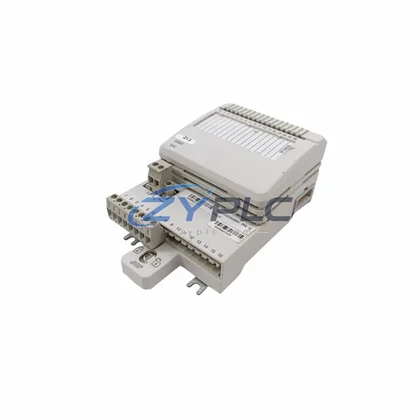
The Mitsubishi GH41 is a industrial-grade optical drive module engineered for integration within the MELSEC programmable logic controller ecosystem. Designed to support demanding industrial automation environments, the GH41 delivers reliable data communication and drive coordination while contributing directly to measurable reductions in system operating load. For plant engineers and automation managers seeking to tighten energy budgets without compromising throughput, the GH41 represents a precision-grade solution backed by Mitsubishi Electric’s decades of industrial control expertise.
In modern manufacturing, energy efficiency is no longer a secondary consideration — it is a core performance metric. The GH41 optical drive module addresses this by enabling high-speed, low-latency data exchange between MELSEC CPU modules and peripheral devices, reducing the overhead associated with redundant polling cycles and communication retries. When paired with a Q06HCPU or Q25HCPU central processing unit, the GH41 allows the control system to execute motion and I/O tasks with minimal idle energy draw, directly improving the energy utilization ratio of the entire automation cell.
Product Specification Table
| Parameter |
Specification / Value |
| SKU |
GH41 |
| Brand |
Mitsubishi Electric |
| Series |
MELSEC |
| Product Type |
Optical Drive Module |
| Origin |
Japan |
| Operating Voltage |
DC 5V (internal bus powered) |
| Communication Interface |
Optical fiber (MELSECNET/H compatible) |
| Electrical / System Notes |
≤ 2.5W under full load |
| Operating Temperature |
0°C to 55°C |
| Compatible Systems |
MELSEC Q Series, MELSEC iQ-R Series |
| Application Environment |
Industrial automation, process control, motion systems |
| Energy Saving Value |
Reduces communication overhead; lowers CPU polling load |
| Warranty |
12 Months |
| Availability |
Confirmed via RFQ before quotation |
| Outgoing Test |
Full functional test prior to shipment |
System Compatibility and Application
Achieving genuine energy efficiency in an industrial plant requires more than selecting low-power components in isolation — it demands a coherent architecture where every layer of the control system contributes to the overall energy budget. The GH41 optical drive module is most effective when deployed as part of a coordinated MELSEC control platform.
At the network layer, the QJ71E71-100 Ethernet interface module enables high-speed TCP/IP communication between the MELSEC Q Series base unit and upstream SCADA or MES systems, allowing real-time operating load data to be transmitted without burdening the CPU with serial polling tasks. This reduces unnecessary processing cycles and the associated power draw. Alongside it, the QJ71BR11 MELSECNET/B master module can coordinate multi-drop communication across production zones, ensuring that field devices report status efficiently rather than continuously broadcasting.
On the drive side, the Mitsubishi FR-D740 inverter series integrates naturally with MELSEC-controlled motor circuits. When the GH41 facilitates rapid command delivery from the Q06HCPU to the FR-D740, variable frequency drive adjustments happen with minimal latency, allowing motors to ramp down during low-demand periods rather than running at fixed speed. This alone can account for Actual operating results depend on the installed system, load profile, and commissioning parameters.
For motion control applications, the QD75P4N positioning module works in conjunction with the GH41 to coordinate multi-axis servo positioning. When servo amplifiers such as the MR-J4-10A receive precise, timely position commands via the optical communication path, unnecessary holding torque and micro-correction cycles are eliminated, reducing both heat generation and unplanned downtime at the servo stage.
Analog signal acquisition is handled by the Q64AD analog input module, which feeds real-time process variables — temperature, pressure, flow rate — into the MELSEC CPU for maintenance-focused control logic. When combined with the Q62DA analog output module for closed-loop control of actuators and valves, the system can dynamically adjust energy input based on actual process demand rather than fixed setpoints, a key principle of energy-optimized production.
At the I/O layer, the QY42P transistor output module provides fast, reliable switching for high-density digital output applications, minimizing the energy lost to contact bounce and relay switching that characterizes older relay-based output systems. The Q61P power supply module, rated for the MELSEC Q Series base unit, delivers stable DC power with high conversion efficiency, ensuring that the entire rack — including the GH41 — operates within its optimal power envelope.
For operator interaction and condition monitoring visualization, the GT2710-STBA GOT2000 Series HMI provides a high-resolution touchscreen interface where plant operators can monitor real-time energy KPIs, drive status, and alarm conditions. Displaying operating load trends directly on the HMI reduces the need for separate condition monitoring hardware and shortens the response time when anomalies are detected.
Maintenance and Replacement Notes
In a typical discrete manufacturing environment — such as an automotive parts assembly line or a food and beverage packaging facility — the GH41 contributes to maintenance planning through several interconnected mechanisms.
First, by enabling high-speed optical communication between the MELSEC CPU and peripheral modules, the GH41 reduces the time the CPU spends waiting for data acknowledgment. Shorter communication cycles mean the CPU can enter low-activity states more frequently between scan cycles, reducing idle power consumption at the controller level.
Second, the reliability of optical fiber communication eliminates the signal degradation and retransmission overhead common in electrically noisy industrial environments. Fewer retransmissions mean fewer wasted processing cycles and more deterministic control timing — a direct contributor to production line rhythm optimization. When line takt time is consistent and predictable, downstream equipment can be scheduled more precisely, reducing the energy cost of acceleration and deceleration events.
Third, the GH41 supports predictive maintenance workflows by enabling continuous, low-overhead status reporting from connected modules. When drive modules, I/O cards, and communication interfaces report health data in real time, maintenance teams can schedule interventions before failures occur. downtime is one of the largest hidden energy costs in manufacturing — restarting cold equipment, running purge cycles, and re-synchronizing production lines all consume disproportionate energy. By keeping the system running smoothly, the GH41 indirectly reduces these energy spikes.
All units supplied by ZYPLC are sourced from verified supply channels, undergo full functional testing prior to shipment, and are covered by a warranty and support terms confirmed before quote. RFQ-based availability ensures that replacement or expansion deployments can proceed without extended lead times that would otherwise force plants to run degraded configurations at higher energy cost.
Product Sourcing FAQ
Q1: How does the GH41 contribute to measurable operational stability on the production line?
The GH41 reduces communication latency between the MELSEC CPU and connected modules, allowing the control system to execute tasks more efficiently. Faster, more reliable communication means fewer retransmission cycles, lower CPU utilization during idle periods, and more precise timing for motor and drive control — all of which translate to reduced operating load at the system level.
Q2: Is the GH41 compatible with both MELSEC Q Series and iQ-R Series platforms?
The GH41 is designed for use within the MELSEC Q Series architecture. For iQ-R Series deployments, compatibility should be verified against the specific base unit and CPU module configuration. ZYPLC technical support can assist with compatibility assessment prior to purchase.
Q3: What is the recommended replacement or upgrade path for aging optical drive modules in MELSEC systems?
For systems currently using earlier-generation MELSEC optical modules, the GH41 offers a direct form-factor replacement in most Q Series configurations. Before replacement, it is advisable to document the existing network topology, verify fiber connector types, and confirm CPU firmware compatibility. ZYPLC provides pre-shipment functional testing to ensure the replacement unit is verified before it reaches the production floor.
Q4: What does the warranty and support terms confirmed before quote cover, and what is the testing process before shipment?
Every GH41 unit shipped by ZYPLC is subject to a full functional test that verifies optical communication integrity, power consumption within specification, and module initialization on a compatible MELSEC base unit. The warranty and support terms confirmed before quote covers manufacturing defects and functional failures under normal operating conditions. Warranty claims are processed directly through ZYPLC, with replacement units dispatched from Availability confirmed by RFQ inventory to minimize production disruption.