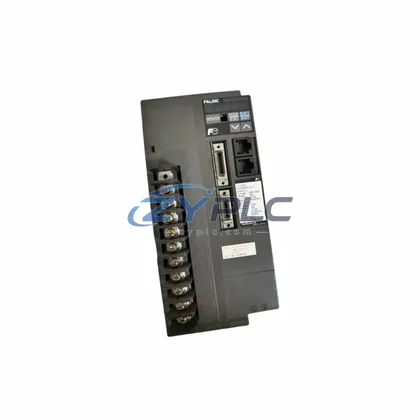
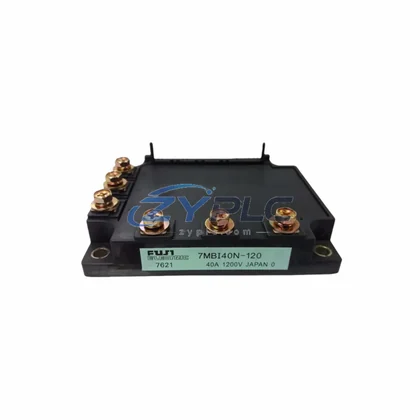
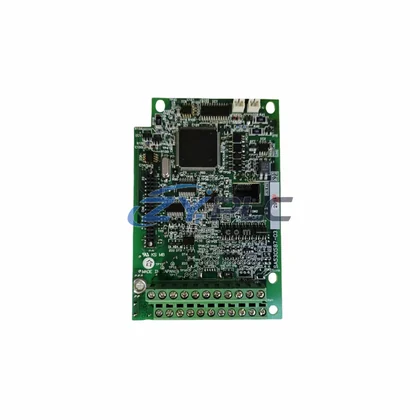
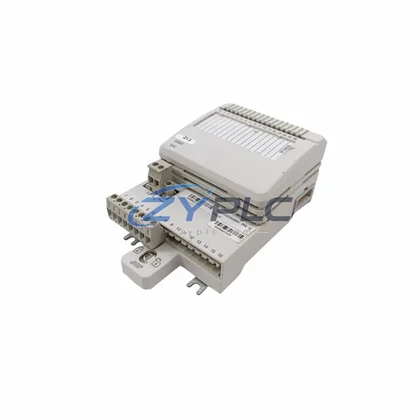
Mitsubishi MR-H100ACN Servo Drive for MR-H Series
The Mitsubishi MR-H100ACN is a 1kW AC servo amplifier engineered as a fully integrated motion control node within the MR-H Series servo architecture. Rather than functioning as a standalone drive, the MR-H100ACN is designed from the ground up to operate as a coordinated element within a layered industrial automation system — connecting the control layer, I/O layer, motion execution layer, and power distribution layer into a unified, high-performance control platform. For system integrators, OEM machine builders, and plant automation engineers, this drive delivers the signal fidelity, communication stability, and architectural compatibility required to sustain complex multi-axis motion sequences across demanding industrial environments.
In a complete Mitsubishi servo system, the MR-H100ACN occupies the execution layer, receiving position, speed, and torque commands from a host controller such as the Mitsubishi Q06HCPU or Q25HCPU programmable logic controller. These CPU modules coordinate motion profiles through the SSCNET (Servo System Controller Network) high-speed optical bus, which eliminates electrical noise interference and ensures deterministic command delivery at microsecond-level cycle times. The MR-H100ACN responds to these commands with closed-loop precision, using encoder feedback from the paired servo motor to continuously correct position error and maintain trajectory accuracy across the full operating speed range.
At the I/O layer, the MR-H100ACN interfaces with digital input/output modules such as the QX40 and QY40P, enabling real-time interlock logic, fault signaling, and sequence coordination with upstream and downstream process equipment. These I/O modules connect to the Q-series base unit — typically a Q33B or Q65B rack — which also houses the CPU, power supply module (Q61P or Q62P), and communication modules. This rack-based architecture ensures that all system components share a common backplane, reducing wiring complexity and improving signal integrity across the entire control cabinet.
Network connectivity is managed through communication gateway modules such as the QJ71LP21 MELSECNET/H module or the QJ71E71-100 Ethernet interface, which allow the MR-H100ACN’s operational data — including torque output, alarm codes, encoder position, and drive temperature — to be transmitted upstream to SCADA systems, MES platforms, or remote HMI terminals. This bidirectional data flow supports real-time process monitoring, predictive maintenance scheduling, and remote diagnostics without interrupting active motion sequences.
The human-machine interface layer typically consists of a Mitsubishi GOT2000 series HMI panel (such as the GT2710-VTBA), which provides operators with live visualization of servo status, axis position, alarm history, and system health indicators. The GOT2000 communicates with the Q-series CPU via the GT11-C30R4-8P cable or Ethernet connection, enabling seamless data exchange between the operator interface and the motion control layer. This integration allows maintenance personnel to acknowledge faults, adjust gain parameters, and initiate homing sequences directly from the panel without requiring laptop-based engineering software during routine operations.
Power distribution to the MR-H100ACN is supplied through a dedicated servo power circuit, typically protected by a Mitsubishi NF250-SEW molded case circuit breaker and filtered through a noise filter to suppress conducted EMI. The drive’s regenerative braking circuit manages deceleration energy, and for applications with frequent high-inertia stops, an external regenerative resistor (MR-RB032 or MR-RB12) can be connected to the drive’s regenerative terminal to prevent DC bus overvoltage faults. This power-layer design ensures stable operation even in high-cycle applications such as packaging lines, press feeders, and rotary indexing tables.
For multi-axis systems, the MR-H100ACN operates alongside other MR-H Series drives — including the MR-H40ACN (400W), MR-H200ACN (2kW), and MR-H350ACN (3.5kW) — all sharing the same SSCNET communication architecture and parameter structure. This uniformity dramatically reduces engineering time during commissioning, as axis parameters, gain settings, and alarm configurations follow a consistent format across all drive sizes. System-wide firmware updates can be applied simultaneously through the MR Configurator2 software, minimizing maintenance windows and ensuring version consistency across the entire servo network.
The MR-H100ACN supports auto-tuning functionality that automatically identifies load inertia and adjusts servo gains to achieve optimal response without manual iteration. This feature is particularly valuable during initial commissioning of multi-axis systems, where individual axis tuning would otherwise require significant engineering time. Combined with the drive’s vibration suppression filters and adaptive notch filter, the auto-tuning system enables stable operation even with mechanically compliant loads such as ball screw assemblies, belt drives, and harmonic gear reducers.
All MR-H100ACN units supplied by ZYPLC are covered by a warranty terms confirmed during quotation and undergo full functional testing prior to shipment, including encoder feedback verification, communication handshake confirmation, and load simulation testing. Inventory is maintained availability confirmed by RFQ for shipment arranged after confirmation, supporting both planned system builds and urgent replacement requirements in active production environments.
Product Specification Table
| Parameter |
Specification |
| System Role |
AC Servo Amplifier — Motion Execution Layer |
| Rated Output |
1.0 kW (1000W) |
| Input Voltage |
200–230V AC, 3-Phase, 50/60Hz |
| Control Mode |
Position / Speed / Torque (switchable) |
| Communication Interface |
SSCNET Optical Serial Bus |
| Encoder Compatibility |
Incremental / Absolute Encoder (17-bit) |
| Max Speed |
Up to 3000 rpm (motor dependent) |
| Regenerative Braking |
Built-in; external resistor compatible (MR-RB032) |
| Protection Class |
IP20 (panel-mount installation) |
| Operating Temperature |
0°C to 55°C (non-condensing) |
| Compatible CPU Modules |
Q06HCPU, Q25HCPU, Q02UCPU (Mitsubishi Q-Series) |
| Compatible Rack |
Q33B, Q65B Backplane |
| Warranty |
warranty terms confirmed during quotation (ZYPLC) |
System Compatibility Notes
The MR-H100ACN achieves its full performance potential when deployed within a coordinated Mitsubishi control architecture. At the controller level, the Q06HCPU or Q25HCPU CPU module manages motion profiles and sequence logic, issuing commands to the MR-H100ACN via the SSCNET optical bus at high-speed synchronous intervals. The Q61P or Q62P power supply module provides stable 5VDC and 24VDC rails to the backplane, ensuring that all rack-mounted modules — including QX40 digital input modules, QY40P digital output modules, and QJ71LP21 MELSECNET/H communication modules — operate within their specified voltage tolerances.
For applications requiring analog process feedback integration, the Q64AD analog input module can be installed in the same Q-series rack to capture signals from pressure transmitters, flow meters, or temperature sensors, allowing the CPU to correlate process variables with servo motion states in real time. Terminal block modules such as the A1SX40 or A1SY40 provide field wiring termination points, simplifying cabinet layout and reducing installation time during system commissioning.
In redundant system architectures, a secondary Q06HCPU can be configured in hot-standby mode using the QJ71LP21 redundancy module, ensuring that a CPU failure does not interrupt servo operation. The MR-H100ACN’s SSCNET interface supports seamless switchover to the backup CPU without requiring drive re-initialization, maintaining axis position data and eliminating the need for a homing cycle after failover. This redundancy capability is essential for continuous-process industries such as petrochemical refining, power generation, and pharmaceutical manufacturing, where unplanned downtime carries significant operational and safety consequences.
Industrial Application Notes
In discrete manufacturing environments — including automotive assembly, electronics production, and precision machining — the MR-H100ACN is deployed in multi-axis gantry systems, rotary indexing tables, and servo press feeders where position repeatability and cycle-time consistency are critical. The drive’s SSCNET communication architecture ensures that all axes receive synchronized motion commands, eliminating the phase lag that can occur in systems using conventional pulse-train or analog command interfaces.
In power generation and electrical substation applications, the MR-H100ACN controls valve actuators, tap changer mechanisms, and circuit breaker positioning systems where precise angular positioning and high torque output at low speeds are required. The drive’s torque control mode allows the system to apply a defined force profile during valve seating operations, preventing mechanical damage while ensuring complete closure confirmation via encoder feedback.
In water treatment and municipal infrastructure systems, the MR-H100ACN drives pump impeller positioning systems, screen rake mechanisms, and sluice gate actuators. The drive’s built-in vibration suppression filters are particularly effective in these applications, where mechanical resonance from long drive shafts and flexible couplings can otherwise cause instability in the servo loop. The warranty terms confirmed during quotation coverage provides plant operators with confidence in long-term reliability, reducing the total cost of ownership over the system’s operational life.
In mining and metallurgical processing, the MR-H100ACN is integrated into conveyor positioning systems, ore sampling mechanisms, and rolling mill gap control systems. The drive’s robust thermal management and wide operating temperature range allow it to function reliably in environments with elevated ambient temperatures and high particulate contamination, provided the control cabinet maintains adequate IP-rated enclosure protection.
Product Compatibility FAQ
Q1: Is the MR-H100ACN compatible with both Q-series and A-series Mitsubishi PLC platforms?
The MR-H100ACN communicates via the SSCNET optical bus, which is natively supported by Mitsubishi Q-series motion controllers (Q172DCPU, Q173DCPU) and compatible Q-series CPU modules with motion function blocks. Direct integration with legacy A-series platforms (such as the A1SJ71QC24N) requires a communication gateway or protocol converter, as the A-series uses a different backplane and communication architecture. For new system designs, ZYPLC recommends pairing the MR-H100ACN with Q-series hardware to ensure full feature compatibility and long-term firmware support.
Q2: Can multiple MR-H100ACN drives be networked on the same SSCNET bus, and what is the maximum axis count?
Yes. The SSCNET architecture supports up to 32 servo axes per motion controller, all connected in a daisy-chain optical fiber topology. Each MR-H100ACN on the network is assigned a unique axis address via the front-panel rotary switch, and the motion CPU polls all axes synchronously at the configured communication cycle time (typically 0.888ms or 1.777ms). Mixed-axis configurations — combining MR-H100ACN (1kW), MR-H200ACN (2kW), and MR-H350ACN (3.5kW) drives on the same bus — are fully supported, provided the total axis count does not exceed the motion controller’s licensed axis limit.
Q3: What does the warranty terms confirmed during quotation cover, and how does ZYPLC support long-term maintenance for the MR-H100ACN?
The warranty terms confirmed during quotation provided by ZYPLC covers manufacturing defects, component failures, and functional performance deviations identified during normal operating conditions. Each unit is tested prior to shipment using load simulation and communication verification procedures. For long-term maintenance, ZYPLC maintains RFQ-confirmed sourcing of MR-H100ACN units and compatible components, enabling rapid replacement dispatch to minimize production downtime. Technical support for installation, parameter configuration, and fault diagnosis is available through ZYPLC’s engineering team, and replacement units can be pre-configured with customer-specific parameter files upon request to reduce on-site commissioning time.