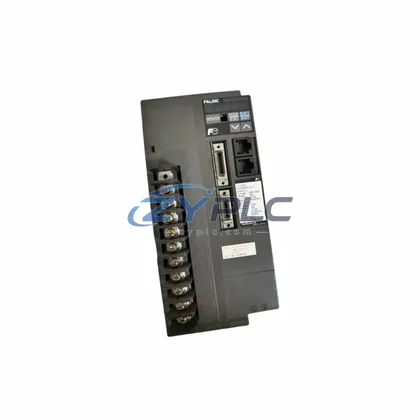
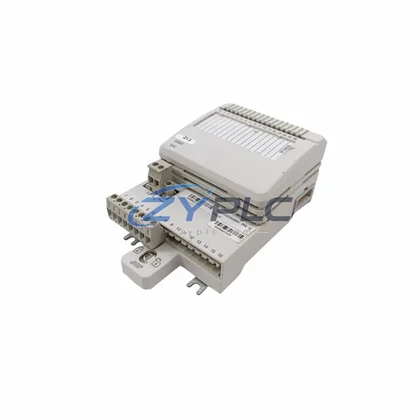
Mitsubishi MR-J3-PFU4 Servo Drive for MR-J3: Compatibility and Replacement Notes
In modern industrial automation, no component operates in isolation. The Mitsubishi MR-J3-PFU4 is a dedicated power factor improvement unit designed to integrate seamlessly within the MR-J3 servo drive architecture, serving a critical role in the power conditioning layer of multi-axis servo systems. Rather than viewing this module as a standalone device, engineers and system integrators must understand its position within the broader control hierarchy — from the programmable logic controller (PLC) at the top of the control layer, through the servo amplifier network, down to the motor and mechanical execution layer.
The MR-J3-PFU4 is engineered to work in conjunction with MR-J3 series servo amplifiers such as the MR-J3-A (analog/pulse command type) and the MR-J3-B (SSCNET III fiber optic network type), providing power factor correction and harmonic suppression at the AC input stage. This reduces reactive power demand, lowers heat generation within the control cabinet, and extends the operational lifespan of connected servo amplifiers. In high-axis-count systems — such as those found in automotive assembly lines, semiconductor packaging equipment, or precision CNC machining centers — the cumulative benefit of power factor improvement across multiple drives is substantial, both in terms of energy efficiency and grid compliance.
At the control layer, the MR-J3-PFU4 supports architectures built around Mitsubishi’s Q-series PLC platform, including CPU modules such as the Q06HCPU and Q12HCPU. These CPUs communicate with servo amplifiers via the SSCNET III high-speed synchronous network, enabling deterministic motion control with cycle times as low as 0.44 ms. The PFU4 unit ensures that the power supply feeding these amplifiers remains stable and within specification, preventing voltage sag or harmonic distortion from propagating into the control network and causing communication errors or unexpected servo faults.
Power supply integrity is further supported by the Q61P and Q62P power supply modules within the Q-series base unit. These modules provide regulated 5 VDC and 24 VDC rails to the CPU and I/O modules, while the MR-J3-PFU4 conditions the three-phase AC input to the servo amplifiers. Together, they form a layered power architecture that isolates sensitive control electronics from the high-current demands of servo motor operation.
At the I/O layer, digital input modules such as the QX42 (32-point DC input) and digital output modules such as the QY42P (32-point transistor output) handle field-level signals — limit switches, proximity sensors, solenoid valves, and safety interlocks. These signals are processed by the Q-series CPU and translated into motion commands distributed via SSCNET III to the MR-J3-B amplifiers. The MR-J3-PFU4 ensures that the power environment supporting this entire signal chain remains clean and stable.
For applications requiring precise multi-axis positioning, the QD75MH positioning module provides independent motion control for up to four axes, interfacing directly with MR-J3-A amplifiers via pulse train commands. In such configurations, the MR-J3-PFU4 is typically installed at the common DC bus or AC input stage of a multi-axis drive cabinet, providing system-wide power conditioning without requiring individual correction units for each amplifier.
Network connectivity is managed through modules such as the QJ71E71-100 Ethernet interface module, which enables remote monitoring, parameter backup, and integration with SCADA systems or MES platforms. In process industries such as petrochemical refining, water treatment, or power generation, this connectivity is essential for predictive maintenance workflows. The MR-J3-PFU4 contributes to system uptime by reducing thermal stress on servo amplifiers, which is one of the leading causes of unplanned downtime in continuous-process environments.
Human-machine interface requirements are addressed by the GOT2000 series HMI, which provides real-time visualization of servo status, alarm history, and axis position data. Operators can monitor power factor correction status and servo health from a single touchscreen interface, reducing the need for manual inspection of individual drive units. This integration is particularly valuable in unmanned or semi-automated facilities where rapid fault diagnosis is critical.
From a cabinet design perspective, the MR-J3-PFU4 is mounted within the servo drive enclosure alongside the MR-J3 amplifiers, sharing the same DIN rail or panel mounting arrangement. Its compact form factor and standardized wiring interface simplify cabinet layout and reduce engineering time during system commissioning. Terminal blocks and wiring accessories compatible with the MR-J3 series further streamline installation and future maintenance access.
All units supplied by ZYPLC are covered by a warranty terms confirmed during quotation, with pre-shipment functional testing and full documentation support. Our inventory of MR-J3-PFU4 modules is maintained to support both immediate replacement needs and planned system expansions, ensuring that your production schedule is never compromised by component availability.
Product Specification Table
| Parameter |
Specification |
| Model |
MR-J3-PFU4 |
| Brand |
Mitsubishi Electric |
| Series |
MR-J3 |
| System Role |
Power Factor Improvement Unit for MR-J3 Servo Amplifiers |
| Compatible Amplifiers |
MR-J3-A, MR-J3-B series servo amplifiers |
| Input Voltage |
Three-phase 200–230 VAC, 50/60 Hz |
| Power Factor Correction |
Harmonic suppression and reactive power reduction at AC input stage |
| Communication Compatibility |
SSCNET III (via connected MR-J3-B amplifiers) |
| Mounting |
Panel mount / DIN rail compatible within servo drive enclosure |
| Operating Temperature |
0°C to 55°C (ambient, with adequate ventilation) |
| Storage Temperature |
-20°C to 65°C |
| Protection Class |
IP20 (panel-mounted installation) |
| Country of Origin |
Japan |
| Warranty |
warranty terms confirmed during quotation (ZYPLC) |
| system integration |
Fully compatible with Q-series PLC, SSCNET III network, and MR-J3 multi-axis architectures |
System Compatibility Notes
A complete MR-J3-based servo system integrates multiple layers of hardware, each contributing to overall system performance and reliability. The MR-J3-PFU4 anchors the power conditioning layer, working in coordination with:
- MR-J3-A / MR-J3-B Servo Amplifiers: The primary motion control devices, receiving commands from the PLC or positioning module and driving servo motors with high precision.
- Q06HCPU / Q12HCPU PLC CPU Modules: The intelligence layer, executing motion programs and distributing commands via SSCNET III.
- QD75MH Positioning Module: Provides independent multi-axis positioning for pulse-command servo configurations.
- Q61P / Q62P Power Supply Modules: Supply regulated DC power to the Q-series base unit and I/O modules.
- QX42 / QY42P I/O Modules: Handle field-level digital signals for interlocks, sensors, and actuators.
- QJ71E71-100 Ethernet Module: Enables network connectivity for remote monitoring and SCADA integration.
- GOT2000 HMI: Provides operator interface for real-time system visualization and alarm management.
This coordinated architecture ensures that every layer — from power input to mechanical execution — operates within its design envelope, maximizing system availability and minimizing unplanned downtime.
Industrial Application Notes
The MR-J3-PFU4 finds application across a wide range of industrial sectors where multi-axis servo systems are deployed:
Automotive Manufacturing: Body welding lines, transfer presses, and robotic assembly cells rely on synchronized multi-axis motion. Power factor correction reduces energy costs and prevents harmonic interference with sensitive welding control electronics.
Semiconductor and Electronics: Die bonding, wafer handling, and PCB assembly equipment demand ultra-precise positioning with minimal electrical noise. The MR-J3-PFU4 suppresses harmonics that could otherwise affect encoder signal integrity.
Petrochemical and Process Industries: Pump and compressor drive systems benefit from reduced reactive power demand, lowering utility penalties and improving power quality at the plant distribution level.
Water Treatment and Utilities: Variable-speed drive applications in water treatment plants require stable power environments. The MR-J3-PFU4 supports long-term, low-maintenance operation in these critical infrastructure settings.
Packaging and Material Handling: High-speed pick-and-place systems, palletizers, and conveyor drives operate continuously in demanding environments. Power factor improvement extends drive service life and reduces cooling requirements within control cabinets.
Mining and Metallurgy: Heavy-duty servo applications in rolling mills, continuous casting lines, and ore processing equipment benefit from the harmonic suppression capabilities of the MR-J3-PFU4, protecting sensitive control electronics from the harsh electrical environment typical of these facilities.
Product Compatibility FAQ
Q1: Is the MR-J3-PFU4 compatible with all MR-J3 series servo amplifiers?
The MR-J3-PFU4 is designed for use with MR-J3 series servo amplifiers, including the MR-J3-A (analog/pulse command) and MR-J3-B (SSCNET III) variants. It is installed at the AC input stage of the servo drive cabinet and does not require individual pairing with each amplifier. Always verify the total rated current of the connected amplifiers against the PFU4 capacity rating before installation. For system configurations involving mixed amplifier types or non-standard cabinet layouts, consult the MR-J3-PFU4 installation manual or contact ZYPLC technical support.
Q2: How does the MR-J3-PFU4 affect system commissioning and parameter configuration?
The MR-J3-PFU4 is a passive power conditioning unit and does not require parameter configuration within the servo amplifier or PLC software. It is wired into the AC input circuit of the servo drive cabinet according to the installation diagram in the MR-J3-PFU4 hardware manual. Commissioning involves verifying correct wiring, confirming input voltage compatibility, and checking that the unit’s rated capacity matches the total connected servo amplifier load. No changes to SSCNET III network configuration or PLC program are required.
Q3: What does the warranty terms confirmed during quotation cover, and what support is available for long-term maintenance?
All MR-J3-PFU4 units supplied by ZYPLC are covered by a warranty terms confirmed during quotation against manufacturing defects and functional failures under normal operating conditions. The warranty period begins from the date of shipment. ZYPLC provides pre-shipment functional testing, full documentation, and technical support for installation and commissioning queries. For long-term maintenance, we recommend maintaining a spare MR-J3-PFU4 unit in your critical spares inventory, particularly for high-utilization production environments. Replacement units are available from ZYPLC stock with short lead times to minimize production disruption.