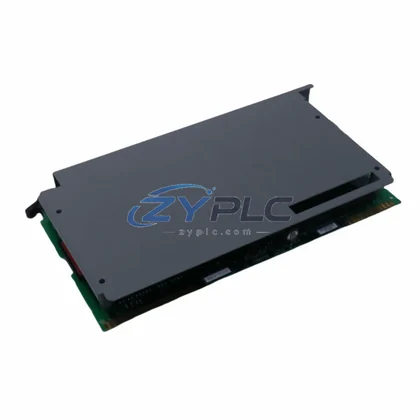
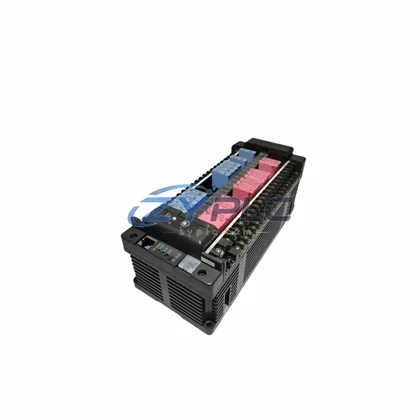
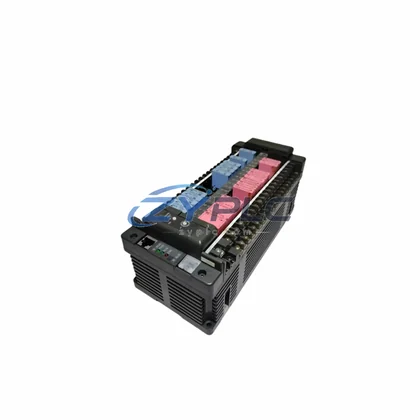
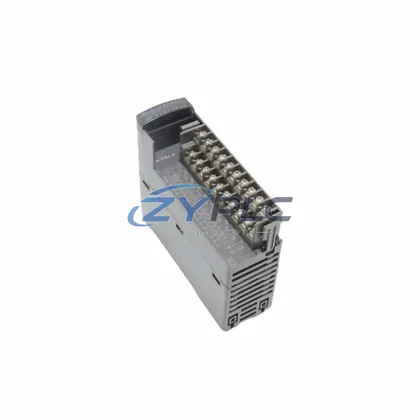
In modern industrial automation, the reliability of a control system is determined not by any single component, but by the coherence of the entire architecture. The Moeller PS416-INP-401 Digital Input Module is engineered to serve as a foundational signal acquisition layer within the PS416 modular PLC platform — a system designed by Moeller (now part of Eaton) for demanding process control, discrete manufacturing, and infrastructure automation environments. Rather than evaluating this module in isolation, engineers and procurement specialists must understand how the PS416-INP-401 integrates across the control layer, I/O layer, network layer, power layer, HMI layer, and execution layer to deliver consistent, scalable, and maintainable automation solutions.
The PS416-INP-401 provides 16 digital input channels, accepting 24 VDC signals from field devices such as proximity sensors, limit switches, pushbuttons, and safety interlocks. Its role within the PS416 rack architecture is to translate physical process states into structured data that the central processing unit can act upon in real time. When mounted alongside the PS416-CPU-400 central processing unit on a PS416-BGT-410 backplane, the module communicates via the internal high-speed I/O bus, ensuring deterministic scan cycle performance even under high-density I/O configurations. This tight coupling between the CPU and input module eliminates the latency and protocol overhead associated with distributed I/O solutions, making the PS416-INP-401 ideal for time-critical control loops in packaging lines, conveyor systems, and process interlocking applications.
System architects designing redundant or high-availability installations will find that the PS416-INP-401 supports structured integration with the PS416-POW-400 power supply module, which provides regulated 24 VDC bus power to the entire rack. Proper power architecture — including the use of redundant power feeds and appropriate fusing at the field wiring level — ensures that the digital input channels maintain signal integrity even during transient load events. For applications requiring expanded I/O capacity beyond a single rack, the PS416-RIO-400 remote I/O coupler enables the PS416-INP-401 to be deployed in distributed rack configurations, extending the control system’s physical reach without compromising scan cycle consistency or diagnostic transparency.
On the output side, the PS416-INP-401 works in close coordination with the PS416-OUT-400 digital output module, which drives actuators, solenoid valves, motor starters, and relay coils based on the logic processed by the CPU. Together, these I/O modules form the signal acquisition and command execution backbone of the PS416 system. For analog process variables — such as temperature, pressure, flow, and level — the PS416-AIN-400 analog input module complements the PS416-INP-401 by providing 12-bit resolution signal conditioning for 4–20 mA and 0–10 V transducers, enabling unified process monitoring within a single rack environment.
Network connectivity and remote diagnostics are handled through the PS416-NET-400 communication gateway, which supports PROFIBUS DP, Modbus RTU, and Ethernet-based protocols depending on configuration. This gateway allows the PS416 system — including the status and diagnostic data from the PS416-INP-401 — to be integrated into SCADA platforms, DCS supervisory layers, and MES data acquisition systems. For operator interaction at the machine or panel level, the XV-440 HMI terminal from Eaton’s Moeller range provides a compatible human-machine interface that can display real-time input channel states, alarm conditions, and system diagnostics sourced directly from the PS416 CPU.
From a maintenance and lifecycle perspective, the PS416-INP-401 is designed for hot-swap-capable rack architectures, allowing field engineers to replace or inspect individual I/O modules without requiring a full system shutdown in appropriately configured installations. Channel-level LED diagnostics provide immediate visual feedback on signal states and wiring faults, reducing mean time to repair (MTTR) in production environments. The module’s compact DIN-rail-compatible form factor and standardized terminal wiring conventions simplify panel integration and reduce commissioning time for both new installations and system expansions.
All PS416-INP-401 units supplied by ZYPLC are covered by a , ensuring that procurement teams and maintenance engineers can plan system expansions and spare parts strategies with confidence. Each unit undergoes functional verification prior to dispatch, and our technical team provides pre-sales architecture consultation to confirm module compatibility within your specific PS416 system configuration. This commitment to system integration means that every component we supply is evaluated not as a standalone part, but as a functional element within your broader control system architecture.
Product Specification Table
| Parameter |
Specification |
| System Role |
Digital Signal Acquisition — I/O Layer |
| Compatible Platform |
Moeller PS416 Modular PLC System |
| Number of Input Channels |
16 x Digital Input |
| Input Voltage |
24 VDC (IEC 61131-2 Type 1/3) |
| Input Current per Channel |
Approx. 7 mA at 24 VDC |
| Signal Delay (Filter) |
Configurable: 0.1 ms – 32 ms |
| Backplane Interface |
PS416 Internal I/O Bus (PS416-BGT-410) |
| Communication Capability |
Via PS416-NET-400 (PROFIBUS DP / Modbus / Ethernet) |
| Power Supply |
Via PS416-POW-400 rack power bus |
| Operating Temperature |
0°C to +55°C |
| Protection Rating |
IP20 (panel/enclosure mounting required) |
| Mounting |
PS416 Backplane Rack (PS416-BGT-410) |
| Country of Origin |
Germany (DE) |
| Warranty |
(ZYPLC) |
System Compatibility Notes
The PS416-INP-401 achieves its full operational value when deployed as part of a coordinated PS416 system architecture. A typical installation integrates the following components across the control hierarchy:
At the control layer, the PS416-CPU-400 executes the user program and manages all I/O data exchange with the PS416-INP-401 via the backplane bus. The CPU’s deterministic scan cycle ensures that all 16 digital input channels are polled and processed within the configured program cycle time, supporting both event-driven and cyclic control strategies.
At the power layer, the PS416-POW-400 power supply module delivers stable 24 VDC bus power to the rack, supporting the PS416-INP-401 and all co-installed modules. Redundant power configurations using dual PS416-POW-400 units are recommended for high-availability applications in water treatment, power distribution, and continuous process industries.
At the I/O layer, the PS416-OUT-400 digital output module and PS416-AIN-400 analog input module complement the PS416-INP-401 to form a complete signal interface layer. For installations requiring additional input capacity, the PS416-INP-400 (8-channel variant) can be co-mounted on the same backplane to expand discrete signal acquisition without requiring additional racks.
At the network layer, the PS416-NET-400 communication gateway bridges the PS416 system to plant-level networks, enabling the PS416-INP-401’s channel data to be accessed by SCADA systems, historian platforms, and remote diagnostic tools. For distributed rack configurations, the PS416-RIO-400 remote I/O coupler extends the PS416 I/O bus to satellite panels located up to several hundred meters from the main control cabinet.
At the HMI layer, the XV-440 operator terminal provides real-time visualization of input channel states, system alarms, and process trends, enabling operators to monitor field device status without requiring direct access to the control cabinet. For compact installations, the PS4-341-MM1 compact PLC from the Moeller PS4 range offers an alternative platform for smaller-scale applications where the full PS416 rack architecture is not required.
At the mechanical layer, the PS416-BGT-410 backplane provides the physical and electrical interconnect for all PS416 modules, including the PS416-INP-401. Correct backplane slot assignment and module seating are critical for reliable bus communication and must be verified during initial commissioning and after any module replacement.
Industrial Application Notes
The PS416-INP-401 is deployed across a wide range of industrial sectors where reliable digital signal acquisition is essential to process integrity and operational safety.
In discrete manufacturing environments — including automotive assembly, electronics production, and metal fabrication — the PS416-INP-401 monitors tooling position, part presence, and safety gate status, providing the PS416 CPU with the real-time field data required for sequence control and fault detection. Its configurable input filter delay allows engineers to suppress contact bounce from mechanical switches without introducing excessive signal latency.
In power distribution and electrical infrastructure applications, the PS416-INP-401 acquires status signals from circuit breakers, isolators, and protection relays, enabling the PS416 system to implement automated switching sequences, load shedding logic, and fault isolation routines. The module’s 24 VDC input compatibility aligns with standard substation auxiliary voltage levels, simplifying field wiring design.
In water and wastewater treatment facilities, the PS416-INP-401 monitors pump run/fault signals, valve position feedback, and level switch states across multiple treatment stages. Its integration with the PS416-NET-400 gateway enables remote monitoring via SCADA, supporting unmanned operation and centralized alarm management across geographically distributed pump stations.
In petrochemical and oil & gas process plants, the PS416-INP-401 is used within safety-instrumented system (SIS) architectures to acquire discrete process signals that feed into emergency shutdown (ESD) logic executed by the PS416 CPU. Proper documentation of input channel assignments, signal sources, and functional test intervals is essential for compliance with IEC 61511 functional safety requirements.
In mining and metallurgical operations, the PS416-INP-401 supports conveyor belt monitoring, crusher interlock systems, and ventilation control by providing reliable signal acquisition in environments characterized by high vibration, dust, and electrical noise. Panel-mounted installation within IP54 or higher-rated enclosures is recommended for these applications.
Product Compatibility FAQ
Q1: Is the PS416-INP-401 compatible with all PS416 backplane configurations, and can it be mixed with other PS416 I/O modules on the same rack?
A: Yes. The PS416-INP-401 is fully compatible with the PS416-BGT-410 backplane and can be freely mixed with other PS416 I/O modules — including the PS416-OUT-400, PS416-AIN-400, and PS416-INP-400 — on the same rack, subject to the total power budget of the PS416-POW-400 supply and the maximum I/O point count supported by the PS416-CPU-400 firmware version in use. Module slot assignment is flexible, and the CPU automatically identifies all installed modules during startup via the backplane bus enumeration process.
Q2: What commissioning steps are required when integrating the PS416-INP-401 into an existing PS416 system, and how is channel addressing configured?
A: Integration of the PS416-INP-401 into an existing PS416 system requires updating the hardware configuration in the PS416 programming environment (Sucosoft S40 or equivalent) to reflect the new module’s slot position and I/O address range. Channel addresses are assigned automatically based on slot position and module type, and the updated configuration must be downloaded to the PS416-CPU-400 before the new input channels become available in the user program. Field wiring should be verified against the module’s terminal assignment diagram, and input filter delay settings should be configured to match the signal characteristics of the connected field devices.
Q3: What does the cover for the PS416-INP-401, and what support is available for long-term spare parts planning?
A: The provided by ZYPLC covers manufacturing defects and functional failures under normal operating conditions for a period of 12 months from the date of dispatch. Units that fail within the warranty period are eligible for replacement or repair at no additional cost, subject to inspection. For long-term spare parts planning, ZYPLC supports RFQ sourcing for PS416-INP-401 and related PS416 system components — including the PS416-CPU-400, PS416-POW-400, PS416-OUT-400, and PS416-BGT-410 — to support ongoing maintenance requirements. Our technical team is available to assist with obsolescence management, cross-reference verification, and system upgrade planning for aging PS416 installations.