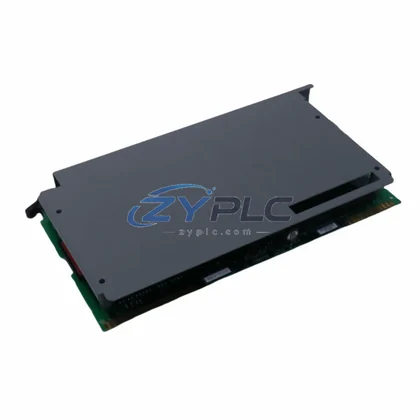
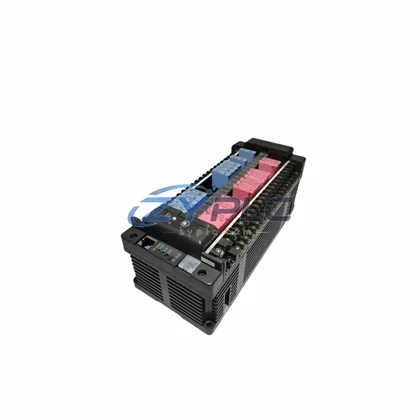
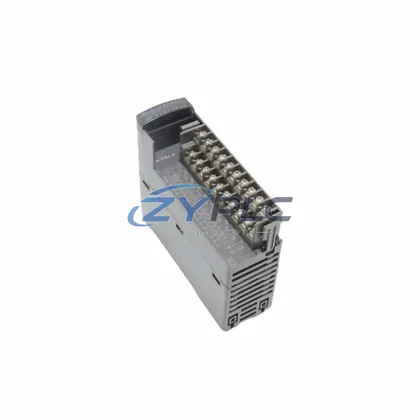
In modern industrial automation, no component operates in isolation. The ODOT CT-121F Digital Input Module is engineered as a system-compatible I/O node within the ODOT CT-Series distributed control architecture, designed to deliver reliable signal acquisition, seamless system integration, and long-term operational stability across multi-layer automation environments. Whether deployed in discrete manufacturing, power distribution, petrochemical processing, or water treatment facilities, the CT-121F serves as a critical link between field-level sensing devices and the supervisory control layer.
The CT-121F provides 12 channels of 24VDC digital input, supporting both NPN and PNP signal types to accommodate diverse field wiring configurations. Its compact DIN-rail form factor and tool-free bus connection via the CT-BUS backplane connector allow rapid installation and hot-swap maintenance without disrupting adjacent modules. This design philosophy reflects ODOT’s commitment to minimizing engineering downtime and maximizing system uptime across the full lifecycle of an automation project.
Product Specification Table
| Parameter |
Specification |
| System Role |
Distributed Digital Input Node — CT-Series I/O Layer |
| Input Channels |
12 x 24VDC Digital Input (NPN/PNP selectable) |
| Input Voltage Range |
20.4 – 28.8 VDC |
| Signal Logic Level (ON) |
≥ 15 VDC |
| Signal Logic Level (OFF) |
≤ 5 VDC |
| Input Current per Channel |
Approx. 4 mA @ 24 VDC |
| Isolation |
Optical isolation, 500 VAC |
| Communication Interface |
CT-Series internal bus (CT-BUS) |
| Bus Cycle Time |
< 1 ms (typical) |
| Operating Temperature |
-20°C to +60°C |
| Storage Temperature |
-40°C to +85°C |
| Humidity |
5% – 95% RH, non-condensing |
| Protection Rating |
IP20 |
| Mounting |
DIN Rail (EN 60715) |
| Dimensions (W×H×D) |
12.5 mm × 100 mm × 70 mm (approx.) |
| Weight |
Approx. 85 g |
| Certifications |
CE, RoHS |
| Warranty |
— Covered by ZYPLC |
System Compatibility Notes
The CT-121F is most effective when understood as part of a coordinated control system rather than a standalone device. In a typical CT-Series deployment, the CT-5171 CPU Module acts as the central processing unit, executing the control logic and managing all I/O communication via the internal CT-BUS. The CT-121F connects directly to this bus, delivering real-time digital input status to the CPU with sub-millisecond latency — a critical requirement for time-sensitive interlock and safety logic.
Power integrity across the rack is maintained by the CT-PSU24 Power Supply Module, which provides stable 24VDC bus power to all connected I/O modules including the CT-121F. For applications requiring expanded analog signal acquisition alongside digital inputs, the CT-4158 Analog Input Module (8-channel, 4–20 mA / 0–10 V) can be installed in adjacent slots on the same backplane, sharing the same bus infrastructure without additional gateways or converters.
Digital output control is typically handled by the CT-132S Digital Output Module (12-channel, 24VDC transistor output) or the CT-232S Relay Output Module for applications requiring dry-contact switching of higher-voltage loads. Together with the CT-121F, these modules form a complete I/O layer capable of handling the full signal range of a production line or process unit.
For distributed architectures spanning multiple control cabinets or remote I/O stations, the CT-3714 PROFIBUS-DP Communication Module or the CT-ETH Ethernet Communication Gateway enables the CT-Series rack to participate in plant-wide fieldbus networks, integrating seamlessly with SCADA systems, DCS platforms, and third-party PLCs. This system integration capability ensures that the CT-121F’s input data is available at every level of the automation hierarchy — from local HMI displays to enterprise MES systems.
Operator interaction is facilitated through ODOT-compatible HMI panels, which connect to the CT-5171 CPU via RS-485 or Ethernet, providing real-time visualization of all digital input states captured by the CT-121F. For redundancy-critical applications, a secondary CT-5171 CPU can be configured in hot-standby mode, with the CT-121F input data mirrored across both processors to ensure zero-interruption failover.
Terminal wiring is simplified through the use of CT-121F-compatible spring-clamp terminal blocks, which accept wire gauges from 0.2 mm² to 2.5 mm² and provide vibration-resistant connections suitable for harsh industrial environments. All modules in the CT-Series are designed for tool-free insertion and extraction from the CT-BUS backplane, reducing maintenance time and eliminating the risk of connector damage during field servicing.
Industrial Application Notes
The CT-121F is deployed across a wide range of industrial sectors where reliable digital signal acquisition is fundamental to process safety and operational efficiency.
In discrete manufacturing environments — such as automotive assembly, electronics production, and packaging lines — the CT-121F captures signals from proximity sensors, limit switches, photoelectric barriers, and push-button stations. Its 12-channel density allows a single module to monitor an entire machine cell, reducing cabinet footprint and wiring complexity.
In power distribution and electrical substation applications, the CT-121F monitors breaker status, relay feedback, and alarm contacts, providing the control system with accurate real-time knowledge of the electrical network state. Its optical isolation ensures that high-voltage transients on the field side do not propagate into the control bus, protecting the CPU and communication infrastructure.
In petrochemical and oil & gas facilities, the CT-121F is used to monitor valve position feedback, pump run/stop status, and emergency shutdown (ESD) system inputs. Its wide operating temperature range and robust optical isolation make it suitable for installation in control rooms adjacent to process areas.
In water and wastewater treatment plants, the CT-121F tracks the status of pumps, blowers, level switches, and flow indicators across multiple treatment stages. Its integration with the CT-5171 CPU and CT-ETH gateway enables remote monitoring via SCADA, reducing the need for on-site operator rounds.
In mining and metallurgical operations, where conveyor systems, crushers, and material handling equipment generate high volumes of discrete signals, the CT-121F’s fast bus cycle time ensures that the control system responds to equipment status changes within the required safety margins.
Product Compatibility FAQ
Q1: Is the CT-121F compatible with both the CT-5171 CPU and older CT-Series processors?
The CT-121F is designed for the ODOT CT-Series backplane and is compatible with all CT-Series CPU modules that support the standard CT-BUS protocol, including the CT-5171 and its predecessors. Configuration is performed via ODOT’s engineering software, which automatically recognizes the module type and channel count upon rack scan. No additional drivers or firmware updates are required for standard deployments.
Q2: Can the CT-121F be used in a redundant control architecture, and how is failover managed?
Yes. In a redundant CT-Series configuration, two CPU modules (primary and standby) share the same I/O backplane. The CT-121F’s input data is continuously synchronized between both CPUs via the CT-BUS. In the event of a primary CPU failure, the standby CPU assumes control within milliseconds, with no loss of input state data. This architecture is particularly important for applications with safety interlocks or continuous process requirements where any control interruption is unacceptable.
Q3: What does the cover, and how is technical support provided by ZYPLC?
All CT-121F modules supplied by ZYPLC are covered by a from the date of shipment, covering manufacturing defects, premature component failure, and communication faults attributable to the module itself. Warranty claims are processed directly through ZYPLC’s technical support team. In addition to warranty service, ZYPLC provides pre-sales architecture consultation, installation guidance, and long-term spare parts supply to ensure that your CT-Series system remains operational throughout its full service life. For urgent requirements, expedited shipping and priority technical support are available upon request.