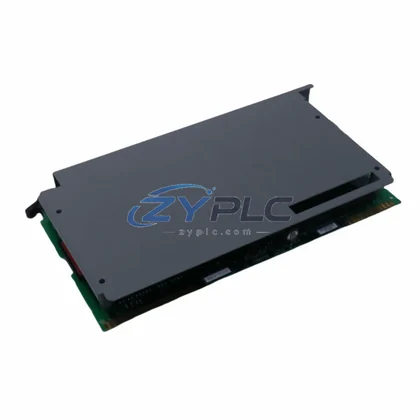
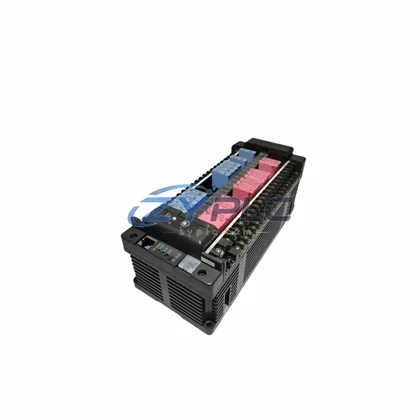
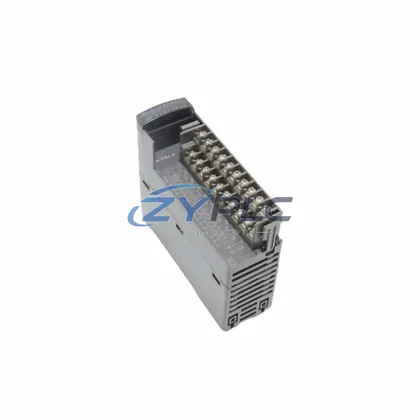
In a fully integrated industrial control system, every module must perform not only its primary function but also contribute to the coherence, scalability, and long-term reliability of the entire architecture. The Omron CS1W-AD041-V1 is a 4-channel analog input module engineered specifically for the Omron CS1 Series PLC platform, designed to occupy a precise and critical role within the control layer of process automation systems. Whether deployed in continuous manufacturing, power distribution, water treatment, or petrochemical processing, this module delivers stable, high-resolution analog signal acquisition that feeds directly into the CPU’s decision-making logic.
The CS1W-AD041-V1 accepts voltage and current signals from field instruments — including pressure transmitters, flow meters, temperature sensors, and level transducers — and converts them into digital values that the CS1 CPU can process in real time. With 12-bit resolution across four independent input channels, the module supports both 0–10 V and 4–20 mA signal ranges, making it compatible with the vast majority of industrial field devices used in process control environments.
Product Specification Table
| Parameter |
Specification |
| System Role |
Analog Signal Acquisition — Control Layer I/O |
| Compatible Platform |
Omron CS1 Series PLC (CS1H, CS1G, CS1D) |
| Number of Input Channels |
4 Channels (independent) |
| Input Signal Range |
0–10 V DC / 4–20 mA (selectable per channel) |
| Resolution |
12-bit (1/4096) |
| Conversion Speed |
1 ms per channel (4 ms total cycle) |
| Isolation |
Photocoupler isolation between channels and backplane |
| Power Consumption |
5 VDC, 150 mA (from backplane bus) |
| Installation |
CS1 Series backplane (CS1W-BC023, CS1W-BC053, CS1W-BC103) |
| Communication |
Internal CS1 I/O bus; compatible with Controller Link and Ethernet units |
| Operating Temperature |
0–55°C, 10–90% RH (non-condensing) |
| Warranty |
warranty terms confirmed during quotation — all units tested prior to dispatch |
System Compatibility Notes
The CS1W-AD041-V1 does not operate in isolation — its value is fully realized when integrated into a coherent CS1 system architecture. At the CPU layer, the CS1H-CPU67H provides the processing backbone, executing ladder logic and function block programs that consume the analog data delivered by the AD041-V1. The CPU communicates with all I/O modules through the CS1 backplane bus, and the CS1W-BC103 ten-slot backplane provides the physical mounting and electrical interconnection for the entire rack assembly.
Power integrity is maintained by the CS1W-PA210 AC power supply unit, which delivers regulated 5 VDC and 26 VDC rails to all modules in the rack. For applications requiring redundant power, a secondary CS1W-PA210 can be configured in parallel, ensuring that a single power supply failure does not interrupt analog signal acquisition or CPU operation.
On the digital I/O side, the CS1W-ID211 16-point DC input module and CS1W-OD211 16-point transistor output module complement the analog acquisition function of the AD041-V1, handling discrete signals from limit switches, solenoid valves, and motor starters. This combination of analog and digital I/O within a single rack creates a unified signal environment that simplifies both programming and commissioning.
Network connectivity is provided by the CS1W-ETN21 Ethernet unit, which enables the CS1 system to communicate with SCADA platforms, MES systems, and remote engineering workstations over standard TCP/IP infrastructure. For facilities using Omron’s proprietary Controller Link network, the CS1W-CLK21-V1 Controller Link unit supports peer-to-peer data exchange between multiple CS1 racks at high speed and with deterministic timing.
At the human-machine interface layer, the NS12-TS01B-V2 touchscreen HMI connects to the CS1 CPU via serial or Ethernet, displaying real-time analog values, trend graphs, and alarm states derived from the CS1W-AD041-V1’s channel data. Operators can monitor process variables, acknowledge alarms, and adjust setpoints without requiring access to the engineering workstation.
For applications requiring analog output — such as control valve positioning or variable speed drive reference signals — the CJ1W-DA041 analog output module (used in CJ-series expansion or via SYSMAC BUS) can be paired with the AD041-V1 to create a complete closed-loop control architecture. The serial communications module CS1W-SCB21-V1 further extends the system’s connectivity to legacy field devices using RS-232C and RS-422/485 protocols.
Industrial Application Notes
In manufacturing and process industries, the CS1W-AD041-V1 is commonly deployed in continuous process lines where analog signals from flow transmitters, pressure sensors, and temperature probes must be acquired simultaneously and processed in real time. In power generation and distribution facilities, the module monitors analog feedback from generator excitation systems, transformer tap changers, and bus voltage sensors, feeding data to the CS1 CPU for automatic voltage regulation and load balancing.
In petrochemical and refinery applications, the AD041-V1 handles 4–20 mA signals from HART-compatible field transmitters, integrating seamlessly into safety instrumented systems where signal integrity and channel isolation are mandatory. Water and wastewater treatment plants use the module to monitor flow rates, pH levels, dissolved oxygen, and turbidity — all critical parameters for regulatory compliance and process optimization.
In mining and metallurgical operations, the module’s wide operating temperature range and robust photocoupler isolation make it suitable for harsh environments where electrical noise from large motors and variable frequency drives can corrupt analog signals. Packaging and material handling lines use the CS1W-AD041-V1 to monitor tension, weight, and position feedback from servo systems, enabling precise product handling and quality control.
Product Compatibility FAQ
Q1: Is the CS1W-AD041-V1 compatible with all CS1 Series backplanes and CPU units?
The CS1W-AD041-V1 is compatible with all standard CS1 Series backplanes, including the CS1W-BC023, CS1W-BC053, and CS1W-BC103, and operates with all CS1H, CS1G, and CS1D CPU units. It occupies one I/O slot and is recognized automatically by the CPU during rack initialization. No special configuration is required beyond channel signal-type selection via the module’s DIP switches.
Q2: Can the CS1W-AD041-V1 be used in a redundant CPU architecture?
Yes. In CS1D duplex CPU configurations, the CS1W-AD041-V1 functions as a standard I/O module accessible to both the active and standby CPUs through the duplex I/O bus. During a CPU switchover event, analog data acquisition continues without interruption, ensuring that process control loops remain closed and field signals are not lost during the transition.
Q3: What does the warranty terms confirmed during quotation cover, and how is long-term maintenance supported?
All CS1W-AD041-V1 units supplied by ZYPLC are covered by a warranty terms confirmed during quotation against manufacturing defects and functional failures under normal operating conditions. Each unit undergoes functional testing prior to dispatch. For long-term maintenance, ZYPLC maintains availability subject to RFQ confirmation of CS1 Series modules to support spare-parts programs, planned maintenance shutdowns, and emergency replacements — minimizing system downtime and protecting the continuity of your control architecture.