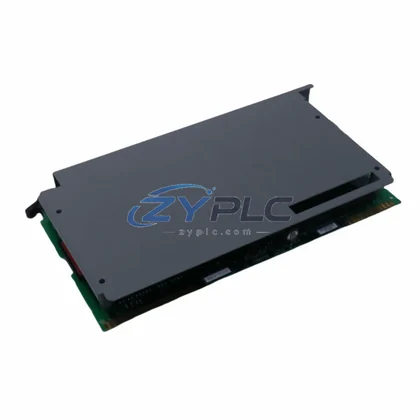
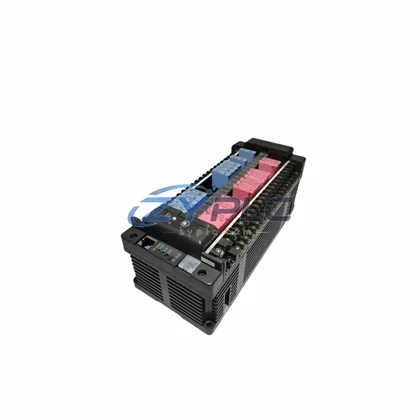
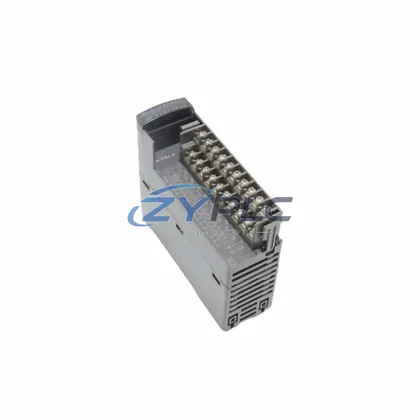
Omron G9D-301 Safety Relay for G9D Series: Control System Coordination and system integration
In modern industrial automation, no component operates in isolation. The Omron G9D-301 Safety Relay Unit is engineered as a system-compatible module designed to function as a critical safety layer within the G9D Series architecture. Whether deployed in a discrete manufacturing line, a process control environment, or a power distribution system, the G9D-301 delivers reliable safety circuit management that integrates seamlessly across control layers — from the field device level up through the supervisory control and data acquisition (SCADA) tier.
Understanding the G9D-301 requires viewing it not as a standalone relay, but as a coordinated element within a broader safety and control architecture. Its role spans the intersection of the control layer, the I/O layer, and the safety execution layer, ensuring that emergency stop circuits, light curtain signals, two-hand control inputs, and safety gate interlock signals are processed with the deterministic response times demanded by IEC 62061 and ISO 13849 safety standards.
Product Specification Table
| Parameter |
Specification |
| System Role |
Safety Relay Unit — G9D Series Safety Architecture |
| Safety Category |
Category 4 / PLe (ISO 13849-1), SIL 3 (IEC 62061) |
| Input Voltage |
24 VDC (±15%) |
| Output Configuration |
3 Safety (N.O.) + 1 Auxiliary (N.C.) relay outputs |
| Response Time |
≤ 20 ms (input to output) |
| Operating Temperature |
-10°C to +55°C |
| Mounting |
DIN Rail (35 mm) |
| Communication Capability |
Hardwired safety circuit; compatible with G9D Series expansion modules |
| Enclosure Rating |
IP20 (panel-mount installation) |
| Certifications |
CE, UL, TÜV Rheinland |
| Country of Origin |
Japan |
| Warranty |
warranty terms confirmed during quotation — Covered by ZYPLC quality assurance program |
System Compatibility Notes
The G9D-301 achieves its full value when positioned within a coordinated Omron control system. In a typical G9D Series safety architecture, the relay unit interfaces directly with the Omron CJ2M CPU Unit or CS1D Duplex CPU as the primary logic controller, receiving safety status signals and enabling or disabling downstream actuator circuits based on machine state. The CPU communicates system-wide status via EtherNet/IP or DeviceNet fieldbus, ensuring that safety events are logged and visible at the supervisory level without additional gateway hardware.
On the power supply side, the G9D-301 is typically paired with the Omron S8VK-G Switch Mode Power Supply, which provides stable 24 VDC with active power factor correction — a critical requirement in safety circuits where voltage fluctuation can cause nuisance tripping. For installations requiring redundant power, the Omron S8BA UPS Module can be integrated to maintain safety relay continuity during momentary power interruptions.
At the I/O layer, the G9D-301 works in conjunction with Omron GRT1 Series Safety I/O Terminals or NX-series Safety I/O Units, which distribute safety signals across the machine frame without requiring individual hardwired runs from each safety device back to the control cabinet. This distributed I/O approach reduces wiring complexity, shortens commissioning time, and simplifies future modifications to the safety zone layout.
For human-machine interface integration, the G9D-301 safety status outputs are mapped to the Omron NA Series HMI or NB Series Programmable Terminal, providing operators with real-time visibility into safety circuit states, fault history, and reset requirements. This system integration between the safety relay and the HMI layer is essential for rapid fault diagnosis and minimizing unplanned downtime.
In applications requiring safety network communication, the G9D-301 can be coordinated with the Omron GW-series Safety Network Controller or integrated into a CIP Safety network topology, enabling centralized safety management across multiple machine cells or production zones. The Omron NX-SL3300 Safety CPU Unit can serve as the safety logic solver in larger architectures, with the G9D-301 acting as a hardwired output relay for final actuator control — combining the flexibility of programmable safety logic with the deterministic response of hardwired relay technology.
Industrial Application Notes
The G9D-301 is deployed across a wide range of industrial sectors where functional safety is a regulatory and operational requirement.
In automotive manufacturing and general discrete manufacturing, the G9D-301 manages safety gates, light curtains, and emergency stop circuits on robotic welding cells, press lines, and assembly conveyors. Its Category 4 / PLe rating satisfies the most stringent machine safety requirements under the EU Machinery Directive.
In electric power generation and distribution, the relay unit is used in switchgear control panels and transformer protection circuits, where its fast response time and dual-channel input monitoring ensure that fault conditions are isolated before equipment damage occurs.
In petrochemical and oil & gas processing, the G9D-301 is integrated into emergency shutdown (ESD) systems, where it provides the final hardwired safety barrier between the process control system and critical isolation valves or pump shutdown circuits. Its SIL 3 capability makes it suitable for high-demand safety instrumented functions (SIF).
In water and wastewater treatment, the relay unit monitors pump motor protection circuits and chemical dosing system interlocks, ensuring that process upsets do not result in equipment damage or environmental incidents.
In mining and metallurgy, the G9D-301 is used in conveyor belt safety systems, crusher interlock circuits, and hoisting equipment emergency stop chains, where reliable operation under vibration, dust, and temperature extremes is essential.
In packaging and food processing, the relay unit manages guard door interlocks and two-hand control stations on filling, sealing, and labeling machines, ensuring operator safety during product changeovers and maintenance access.
Product Compatibility FAQ
Q1: Is the Omron G9D-301 compatible with both CJ-series and CS-series Omron PLC platforms?
A: Yes. The G9D-301 operates as a hardwired safety relay and is platform-independent at the electrical interface level. It can be integrated with Omron CJ2M, CS1D, NJ, and NX series controllers by mapping its auxiliary output contacts to standard digital input modules. For tighter integration with safety-rated I/O, pairing with NX-series Safety I/O Units is recommended to maintain SIL 3 / PLe architecture integrity.
Q2: Can the G9D-301 be used in a redundant safety architecture, and what additional components are required?
A: The G9D-301 supports dual-channel input monitoring, which is the foundation of redundant safety input architectures. For full system-level redundancy, it is typically paired with a redundant 24 VDC power supply (such as the Omron S8BA or S8VK-G with redundancy module), a redundant CPU platform (such as the CS1D Duplex system), and cross-monitored safety I/O. The relay’s N.C. auxiliary output provides feedback to the controller for automatic monitoring of relay contact welding — a requirement for Category 4 architectures.
Q3: What warranty terms are confirmed during quotation, and how does ZYPLC support long-term maintenance of the G9D-301?
A: All G9D-301 units supplied by ZYPLC are covered by a warranty terms confirmed during quotation against manufacturing defects and functional failures under normal operating conditions. ZYPLC supports RFQ sourcing for G9D-301 and related G9D Series components to support rapid replacement in the event of a warranty claim or unplanned failure. Our technical team provides pre-sales architecture consultation, commissioning support, and post-sales troubleshooting to ensure that your safety system maintains its designed integrity throughout its operational lifecycle.