Parker HPD2S5N Industrial Network Interface for HPD Systems: Precision Data Links for Smart Factory Hydraulic Control
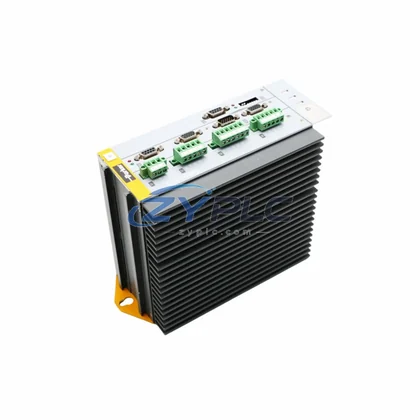
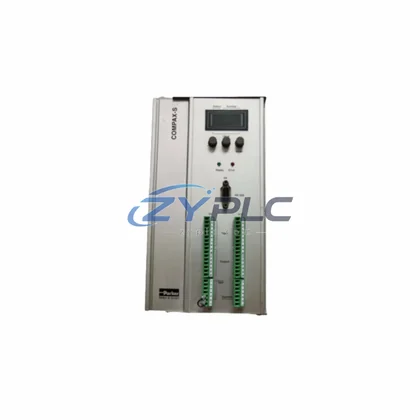
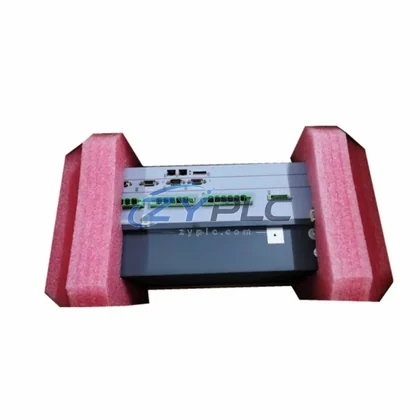
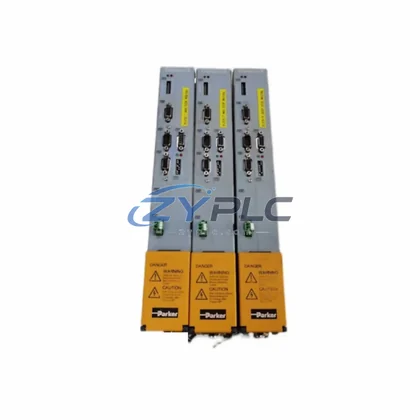
The Parker HPD2S5N is a high-performance proportional valve driver engineered for the HPD Series hydraulic control platform. Designed to bridge the gap between field-level hydraulic actuators and upper-level automation systems, the HPD2S5N delivers stable, low-latency analog signal conditioning and command transmission across complex industrial networks. Whether deployed in press lines, injection molding machines, steel rolling mills, or offshore hydraulic power units, this driver module serves as a critical communication node — translating PLC output commands into precise proportional valve positioning with sub-millisecond response fidelity.
In modern smart factory architectures, the HPD2S5N functions as an intelligent interface between the physical process layer and the digital control layer. Its analog ±10V and 4–20mA signal compatibility ensures seamless integration with a broad range of industrial controllers, SCADA platforms, and HMI systems, eliminating protocol barriers that traditionally cause data isolation on the plant floor.
Compatibility & Integration Notes
| Parameter |
Specification |
| SKU |
HPD2S5N |
| Series |
Parker HPD Series |
| Signal Protocol |
Analog ±10V / 4–20mA |
| Interface Type |
Analog Command Input, Enable/Disable Digital I/O |
| Communication Compatibility |
PLC Analog Output Modules, SCADA Analog I/O Cards, HMI Analog Signal Interfaces |
| Network Architecture |
Field Device Layer — compatible with centralized and distributed control topologies |
| System Application |
Hydraulic Press, Injection Molding, Steel Mill, Marine Hydraulics, Test Bench Automation |
| Transmission Capability |
Real-time proportional valve positioning, ramp control, dither frequency adjustment |
| Diagnostic Output |
Enable status, fault feedback, current monitor output |
| Warranty |
warranty terms confirmed during quotation | Tested before shipment |
Connected Automation Data Flow
The HPD2S5N sits at the heart of a layered industrial data flow. At the field level, pressure transducers and position sensors — such as Parker SensoControl SCJN series pressure sensors — feed real-time process values back through analog signal loops. These signals are acquired by remote I/O modules or directly by PLC analog input cards, where they are processed against setpoints defined in the control program.
The PLC — commonly a Parker PAC120 or PAC360 programmable automation controller — issues proportional command signals via its analog output module. The HPD2S5N receives these commands and drives the Parker D1FP or D3FP series proportional directional control valves with precision current regulation, ensuring that cylinder velocity, pressure ramp, and force output match the programmed profile exactly.
At the supervisory level, SCADA systems such as those built on Parker’s InControl platform or third-party systems like Wonderware and IgnitionSCADA connect to the PLC via Ethernet/IP or Modbus TCP. Operators monitor valve command signals, driver enable status, and fault codes in real time through HMI panels — including Parker’s own IHM series touch panels — mounted at the machine or in the control room. Any deviation from the target operating window triggers an alarm that propagates through the data chain from the HPD2S5N fault output, through the PLC input module, to the SCADA alarm management system.
For multi-axis hydraulic systems, the HPD2S5N can be deployed in parallel with additional driver modules such as the Parker HPD2S10N or HPD4S5N, each managing an independent proportional valve axis. These modules share a common power rail and communicate their status back to the PLC through discrete I/O, enabling coordinated multi-axis motion sequences. In distributed architectures, Parker IQAN-MD4 or IQAN-XC23 mobile control modules can serve as the master controller, issuing CAN-based commands that are converted to analog signals by gateway modules before reaching the HPD2S5N.
Edge gateways — such as the Parker hannifin IIoT-ready communication bridges — aggregate driver status data and push it to cloud-based MES or ERP platforms, enabling production managers to track hydraulic system performance, energy consumption, and predictive maintenance indicators without leaving the enterprise dashboard. Variable frequency drives controlling hydraulic pump motors, such as Parker AC30 series drives, are also integrated into this data loop, with their speed references coordinated by the same PLC that commands the HPD2S5N, ensuring that pump flow and valve opening are always synchronized for energy-efficient operation.
Solving Data Isolation in Industrial Sites
One of the most persistent challenges in industrial hydraulic automation is the fragmentation of control data across incompatible systems. Legacy proportional valve amplifiers often operate as standalone analog devices with no feedback path to the digital control layer, creating data islands where valve performance is invisible to SCADA, MES, and remote diagnostic tools.
The Parker HPD2S5N addresses this directly. Its fault output and current monitor signals provide a real-time window into valve driver health that can be wired into PLC digital input modules and surfaced on HMI screens. Maintenance teams no longer need to physically inspect the driver card to determine whether a valve is receiving the correct command current — the data is available at the SCADA workstation and can be logged for trend analysis.
For plants undergoing digital transformation, the HPD2S5N serves as a bridge technology. It preserves compatibility with existing analog valve infrastructure while enabling the PLC and SCADA layer to gain full visibility over proportional valve behavior. This eliminates the need for costly valve replacement programs and allows factories to achieve production line transparency incrementally, axis by axis, machine by machine.
Remote diagnostics are further enhanced when the HPD2S5N is paired with Parker ServiceMaster diagnostic tools, which can read driver parameters, adjust dither frequency, and verify ramp settings without interrupting production. This capability is especially valuable for geographically distributed facilities where on-site service visits are expensive and time-consuming. System expansion is equally straightforward — additional HPD2S5N modules can be added to existing control panels with minimal wiring changes, and the PLC program can be extended to manage new axes without architectural redesign.
All units supplied by ZYPLC are covered by a warranty terms confirmed during quotation and undergo full functional testing prior to shipment, including command signal response verification, enable/disable logic check, and output current calibration. Availability confirmed by RFQ inventory ensures short lead times for urgent replacement and new project requirements.
Industrial Connectivity FAQ
Q1: What is the communication latency of the HPD2S5N in a PLC-controlled system?
The HPD2S5N responds to analog command signal changes within milliseconds, making it suitable for closed-loop pressure and position control applications where fast valve response is critical. The overall system latency depends on the PLC scan cycle and analog output update rate, typically 1–10ms for modern PAC controllers.
Q2: Is the HPD2S5N compatible with both Modbus and Ethernet/IP SCADA systems?
The HPD2S5N itself uses analog signal interfaces, so it is inherently protocol-agnostic at the field level. SCADA integration is achieved through the PLC, which handles Modbus TCP, Ethernet/IP, or PROFINET communication. The driver’s status outputs are wired to PLC I/O and exposed to SCADA through the controller’s communication stack.
Q3: Can the HPD2S5N be used in a distributed remote I/O architecture?
Yes. When paired with remote I/O modules that include analog output channels — such as Parker or third-party EtherNet/IP or PROFIBUS remote I/O stations — the HPD2S5N can be controlled from a central PLC over a fieldbus network. The analog command signal is generated locally at the remote I/O node and transmitted to the driver over short-distance wiring, minimizing signal degradation.
Q4: What warranty and pre-shipment testing does ZYPLC provide for the HPD2S5N?
Every HPD2S5N unit supplied by ZYPLC carries a warranty terms confirmed during quotation covering manufacturing defects and functional failures under normal operating conditions. Prior to dispatch, each unit is tested for command signal response, output current accuracy, enable logic, and fault output functionality. Expedited shipping and availability confirmed by RFQ availability support urgent project timelines.