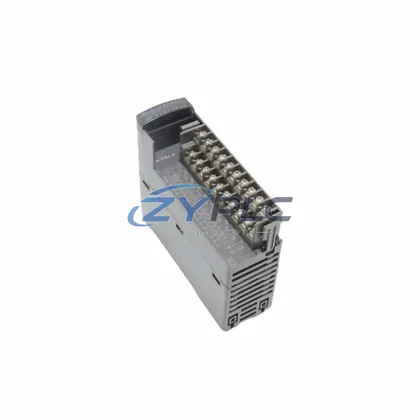
PILZ 774086 PNOZ 11 Safety Relay for PNOZ: Control System Integration and Contextual Coordination
In modern industrial automation, safety is not an isolated function — it is a structural layer woven into every tier of the control architecture. The PILZ 774086 PNOZ 11 safety relay is engineered to serve as a dependable, standards-compliant safety switching element within PNOZ-series control systems, delivering reliable emergency-stop monitoring, safety gate supervision, and two-hand control evaluation across a wide range of industrial environments. Rather than functioning as a standalone device, the PNOZ 11 is designed for system integration within layered automation architectures, where its outputs coordinate directly with upstream controllers, downstream actuators, and adjacent I/O modules to maintain system-wide safety integrity.
The PNOZ 11 occupies a critical position in the safety layer of a distributed control system. Its role is to evaluate safety-relevant input signals — such as emergency-stop buttons, light curtain outputs, or door interlock contacts — and translate those signals into controlled, monitored switching actions that protect personnel and equipment. When deployed alongside a PILZ PNOZmulti 2 PNOZ m B0 configurable safety controller or a PNOZ m B1 expansion module, the PNOZ 11 extends the safety switching capacity of the system without requiring additional programming infrastructure, making it an efficient choice for both new installations and retrofit projects.
System architects integrating the PNOZ 11 into a broader PILZ PNOZ platform benefit from the relay’s compatibility with the established PNOZ wiring philosophy, which simplifies cabinet layout, reduces commissioning time, and supports long-term maintenance by field technicians familiar with the PNOZ ecosystem. The relay’s forced-guided contacts and cross-circuit detection capabilities align with the requirements of IEC 62061 and ISO 13849-1, enabling system designers to achieve Safety Integrity Level 3 (SIL 3) or Performance Level e (PLe) when configured correctly within a validated safety circuit.
Product Specification Table
| Parameter |
Specification |
| Part Number / SKU |
774086 / PNOZ 11 |
| Brand |
PILZ |
| Series |
PNOZ Classic |
| Product Type |
Safety Relay Module |
| System Role |
Safety switching element — emergency stop, safety gate, two-hand control |
| Safety Standard Compliance |
IEC 62061 (SIL 3), ISO 13849-1 (PLe, Cat. 4) |
| Supply Voltage |
24 VDC / 24–240 VAC (model-dependent) |
| Output Contacts |
3 NO safety contacts + 1 NC auxiliary contact (forced-guided) |
| Input Channels |
Dual-channel monitored input |
| Cross-Circuit Detection |
Yes |
| Reset Mode |
Manual monitored / automatic (configurable) |
| Response Time |
≤ 20 ms |
| Operating Temperature |
-10 °C to +55 °C |
| Mounting |
DIN rail (EN 60715) |
| Housing Width |
22.5 mm |
| Protection Rating |
IP40 (front panel) |
| Country of Origin |
Germany |
| Communication |
Hardwired safety circuit; compatible with PNOZ m B0 / B1 expansion architecture |
| Warranty |
— all units tested prior to shipment |
System Compatibility Notes
The PILZ 774086 PNOZ 11 achieves its full value when considered as part of a coordinated control system rather than a discrete component. In a typical PILZ-based safety architecture, the PNOZ 11 interfaces with the PNOZ m B0 base unit, which serves as the central configurable safety controller managing logic evaluation across multiple safety functions. Expansion of I/O capacity is handled through PNOZ m B1 modules, which connect to the base unit via the internal PNOZ m bus, allowing the safety system to scale with the machine’s complexity without redesigning the core architecture.
On the field device side, the PNOZ 11’s dual-channel inputs connect directly to safety-rated sensors and actuators — including light curtains, two-hand control panels, and interlocked access doors — ensuring that all safety-relevant signals are evaluated with the redundancy required by Category 4 architectures. The relay’s forced-guided output contacts then feed into the power layer, where they control contactors, motor starters, or servo drive enable circuits. In applications using PILZ PMCprotego D servo safety modules, the PNOZ 11 can provide the external safe torque off (STO) enable signal, creating a coherent safety chain from the operator interface to the drive level.
For distributed I/O architectures, the PNOZ 11 complements PILZ PSSu E F 4DI safety I/O modules deployed in remote field cabinets, where local safety switching is required before signals are transmitted back to the central controller via PROFINET or EtherNet/IP. In installations using the PILZ PDP67 F 12 DI 4 field module, the PNOZ 11 can serve as the local safety relay for zone-specific emergency stop circuits, while the PDP67 handles digital I/O aggregation for the broader machine segment.
Human-machine interface integration is equally important in layered architectures. Operators monitoring system status through a PILZ-compatible HMI panel rely on the PNOZ 11’s auxiliary NC contact to provide real-time feedback on safety relay state — whether the relay is energized, tripped, or awaiting manual reset. This feedback loop supports both operator awareness and maintenance diagnostics, reducing mean time to repair (MTTR) in the event of a safety event. The PILZ PITreader safety access control system can further integrate with the PNOZ 11 to enforce role-based access to hazardous zones, adding an additional layer of personnel protection at the architecture level.
For applications requiring higher-level safety logic, the PNOZ 11 works alongside the PILZ PSS 3006 programmable safety system, where complex multi-zone safety functions are managed centrally while the PNOZ 11 handles local, hardwired switching for individual machine cells. The PNOZ s4 safety relay from the PNOZsigma series can also be deployed in parallel for applications requiring time-delayed safety outputs, providing complementary functionality within the same control cabinet without protocol conflicts or wiring incompatibilities.
Industrial Application Notes
The PILZ 774086 PNOZ 11 is deployed across a broad spectrum of industrial sectors where functional safety is a regulatory and operational requirement. In automotive manufacturing, the relay is commonly installed in robotic cell safety circuits, where it monitors perimeter guarding and enables controlled robot stop sequences in response to access events. Its fast response time and forced-guided contacts ensure that the safety function is executed before personnel can reach the hazardous zone, meeting the requirements of ISO 10218-2 for collaborative and industrial robot installations.
In the power generation and electrical utility sector, the PNOZ 11 is used in switchgear control panels and transformer protection circuits, where its dual-channel input monitoring provides reliable detection of interlock conditions before high-voltage switching operations are permitted. The relay’s wide supply voltage range accommodates both 24 VDC control circuits and 110/230 VAC panel environments, making it adaptable to legacy and modern substation designs alike.
Petrochemical and oil and gas processing facilities deploy the PNOZ 11 in emergency shutdown (ESD) systems, where it serves as the final switching element in safety instrumented functions (SIFs) evaluated against IEC 61511. Its SIL 3 capability ensures that the relay can be incorporated into high-demand safety loops without requiring additional redundancy measures at the relay level, simplifying the overall SIS architecture and reducing installed component count.
Water and wastewater treatment plants use the PNOZ 11 in pump station control panels and chemical dosing systems, where it monitors access interlocks on chemical storage areas and provides safe isolation of pump drives during maintenance. Mining and mineral processing operations rely on the relay in conveyor belt safety systems, where it evaluates pull-wire emergency stop signals along extended conveyor runs and provides zone-specific shutdown capability without affecting adjacent conveyor segments.
In packaging and food processing lines, the PNOZ 11 is integrated into machine guarding circuits for high-speed filling, sealing, and labeling equipment, where its compact 22.5 mm housing allows multiple relays to be installed in space-constrained control cabinets. The relay’s compatibility with the broader PILZ PNOZ ecosystem ensures that spare parts, replacement units, and technical documentation are consistently available, supporting the long-term maintainability of production lines with extended operational lifespans.
Product Compatibility FAQ
Q1: Is the PILZ 774086 PNOZ 11 compatible with the PNOZmulti 2 configurable safety controller architecture?
Yes. The PNOZ 11 is fully compatible with PNOZmulti 2 architectures, including the PNOZ m B0 base unit and PNOZ m B1 expansion modules. It can be wired as an output-side safety switching element controlled by the PNOZmulti 2’s safety outputs, or as an independent hardwired safety relay for local emergency stop circuits that feed status signals back to the configurable controller. This dual-mode integration allows system architects to balance centralized logic management with distributed hardwired safety switching, optimizing both system flexibility and safety integrity.
Q2: What installation and commissioning considerations apply when integrating the PNOZ 11 into an existing PNOZ-series control cabinet?
The PNOZ 11 mounts on standard EN 60715 DIN rail and requires no special tools for installation. Commissioning involves verifying dual-channel input wiring integrity, confirming cross-circuit detection is active, and performing a functional test of the manual monitored reset circuit before the machine is released for production. When replacing an existing PNOZ relay in a validated safety circuit, the replacement unit should be verified against the original circuit diagram to confirm contact configuration and reset mode compatibility. All PNOZ 11 units supplied by ZYPLC are tested prior to shipment, and the covers functional defects identified during commissioning or normal operation.
Q3: How does the apply, and what support is available for long-term maintenance planning?
All PILZ 774086 PNOZ 11 units supplied by ZYPLC are covered by a from the date of shipment, covering manufacturing defects and functional failures under normal operating conditions. For long-term maintenance planning, ZYPLC supports RFQ sourcing for PNOZ-series relays to support planned replacement programs and unplanned emergency repairs, minimizing production downtime. Technical support for installation, wiring verification, and compatibility questions is available directly through ZYPLC’s engineering team. Contact us at +86 19859288691 or plc.sales@zyplc.com for availability confirmation, lead time, and volume quotation.