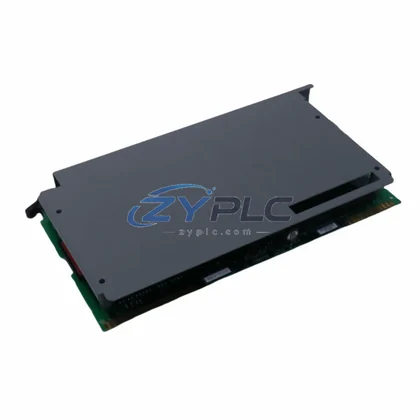
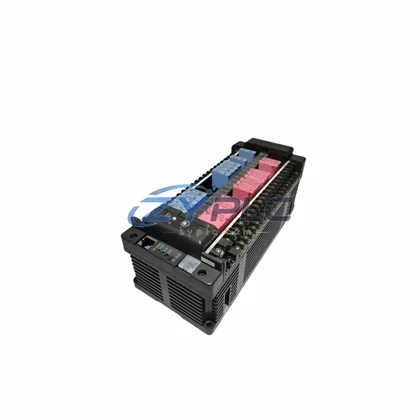
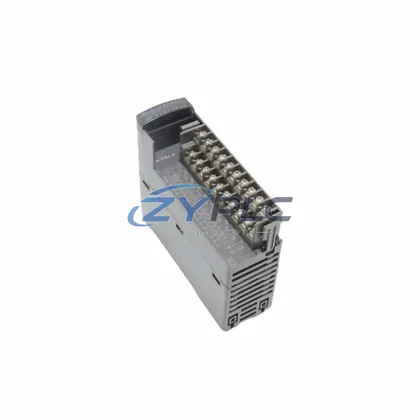
The Reliance Electric 57C410A is a high-performance digital output module engineered for the AutoMax distributed control platform. Designed to deliver reliable, low-latency signal switching across demanding industrial environments, the 57C410A plays a central role in reducing unnecessary energy consumption at the field device level — where most industrial unplanned downtime originates. By ensuring precise, deterministic output control, this module helps production engineers eliminate idle-state power draw, reduce actuator cycling losses, and maintain tighter synchronization between control commands and mechanical response.
Every unit is sourced from verified supply channels, subjected to full functional testing prior to shipment, and backed by a warranty terms confirmed during quotation. Stock is available for shipment arranged after confirmation, supporting both emergency replacement and planned maintenance schedules.
Product Specification Table
| Parameter |
Specification / Value |
| SKU / Part Number |
57C410A |
| Brand |
Reliance Electric |
| Series / Platform |
AutoMax Distributed Control System |
| Module Type |
Digital Output Module |
| Electrical / System Notes |
Low-draw design; minimizes backplane bus load |
| Output Channels |
Multi-channel discrete output (field-side switching) |
| Compatible Systems |
Reliance Electric AutoMax DCS, AutoMax Rack Controllers |
| Application Environment |
Industrial automation, motor control centers, process lines |
| Maintenance Value |
Eliminates idle-state switching losses; supports load-matched output scheduling |
| Origin |
USA |
| Warranty |
warranty terms confirmed during quotation — tested before shipment |
System Compatibility and Application
In a fully optimized AutoMax control architecture, the 57C410A output module operates as the final execution layer between the controller’s logic decisions and the physical plant. Its role becomes especially critical when paired with upstream components that feed it accurate, real-time process data.
At the controller level, the Reliance Electric 57C401A and 57C402A processor modules handle scan-cycle management and inter-module communication across the AutoMax backplane. When these processors are tuned for minimal scan overhead, the 57C410A receives output commands with reduced latency — translating directly into faster actuator response and fewer energy-wasting transition states. Similarly, the Reliance 57C405A communication interface module enables the AutoMax rack to exchange real-time data with supervisory SCADA systems, allowing maintenance planning software to dynamically adjust output schedules based on production demand signals.
On the input side, the Reliance 57C411A digital input module captures field-level feedback — limit switch states, proximity sensor signals, and interlock confirmations — that the controller uses to determine when the 57C410A should activate or deactivate specific output channels. This closed-loop architecture prevents unnecessary output energization, a common source of hidden unplanned downtime in legacy PLC systems.
For drive-level energy control, the AutoMax platform integrates with Reliance Electric GV3000 AC drives and SP500 variable frequency drives, both of which respond to speed reference commands issued through the output and analog modules. When the 57C410A coordinates output switching in sync with drive ramp profiles, motor acceleration losses are minimized and regenerative braking energy can be more effectively captured. The Reliance 57C416A analog output module complements this by providing smooth, continuous speed reference signals to connected drives — avoiding the stepped transitions that cause motor heating and excess current draw.
Power quality monitoring is handled upstream by Reliance Electric power monitor modules within the AutoMax rack, which track real-time kW demand, power factor, and harmonic distortion. When these readings are fed back into the control logic, the 57C410A’s output scheduling can be adjusted to stagger high-inrush loads — reducing peak demand charges and improving overall plant power factor without requiring external power factor correction hardware.
For facilities running mixed automation environments, the Reliance 57C406A network interface module bridges the AutoMax system to broader plant networks, enabling the 57C410A’s output states to be monitored and logged by maintenance planning systems. This data visibility is foundational to predictive maintenance strategies: by correlating output switching frequency with motor runtime logs, maintenance teams can identify components approaching end-of-life before they cause unplanned downtime.
Maintenance and Replacement Notes
In continuous process industries — paper mills, chemical plants, food processing lines, and metal fabrication facilities — the Reliance Electric 57C410A contributes to energy efficiency in ways that compound over time. Consider a motor control center managing 20 conveyor drives: without precise output control, drives may remain energized during product gaps, changeovers, or upstream stoppages. The 57C410A, executing logic from the AutoMax controller, can issue de-energization commands within milliseconds of a stop condition being confirmed by the input module — eliminating the minutes of idle motor runtime that accumulate into significant kWh waste across a shift.
Line synchronization is another area where the 57C410A delivers measurable value. In multi-zone conveyor systems, output timing mismatches between zones cause product accumulation, jam events, and the associated energy cost of restart cycles. By maintaining deterministic output switching aligned with the AutoMax controller’s scan cycle, the 57C410A helps production engineers achieve tighter line balance — reducing both mechanical stress and the energy overhead of frequent start-stop sequences.
Predictive maintenance integration further extends the module’s energy impact. When output channel activity logs are analyzed alongside vibration data from connected motor monitoring systems, anomalies in switching patterns can indicate developing faults in contactors, solenoids, or actuators. Catching these faults early — before they cause extended downtime — preserves the energy efficiency of the entire line, since restart sequences and catch-up production runs are among the most energy-intensive events in any manufacturing facility.
All units supplied by ZYPLC undergo pre-shipment functional testing to verify output channel integrity, backplane communication, and signal isolation. This ensures that replacement modules restore full system performance immediately upon installation, without the energy-wasting diagnostic cycles that accompany untested surplus parts.
Product Sourcing FAQ
Q1: How does the Reliance Electric 57C410A contribute to reducing energy consumption on the production line?
The 57C410A enables precise, millisecond-level output switching that eliminates idle-state energization of field devices. When integrated with AutoMax controller logic and real-time input feedback, it ensures that motors, solenoids, and actuators are only powered when process conditions require it — directly reducing unnecessary kWh consumption across shifts.
Q2: Is the 57C410A compatible with current AutoMax rack configurations and communication modules?
Yes. The 57C410A is designed for the Reliance Electric AutoMax distributed control platform and is compatible with standard AutoMax rack backplanes, processor modules such as the 57C401A and 57C402A, and communication interfaces including the 57C405A and 57C406A. It can be installed as a direct replacement in existing rack positions without requiring controller reconfiguration in most applications.
Q3: What is the recommended replacement and testing process when substituting a 57C410A in a live system?
For planned replacements, the recommended process is: (1) verify the replacement unit’s output channel function on a bench test rig before installation, (2) confirm backplane slot compatibility and module addressing in the AutoMax configuration software, (3) perform a controlled hot-swap or scheduled downtime installation, and (4) validate output channel response against known-good input conditions before returning the line to production. All ZYPLC-supplied units are pre-tested and include documentation of test results.
Q4: What warranty coverage is provided, and what does it include?
Every Reliance Electric 57C410A supplied by ZYPLC is covered by a warranty terms confirmed during quotation from the date of shipment. The warranty covers functional defects in output channel performance, backplane communication integrity, and signal isolation. Units that fail to perform to specification within the warranty period are replaced or refunded. For warranty claims or technical support, contact ZYPLC directly.