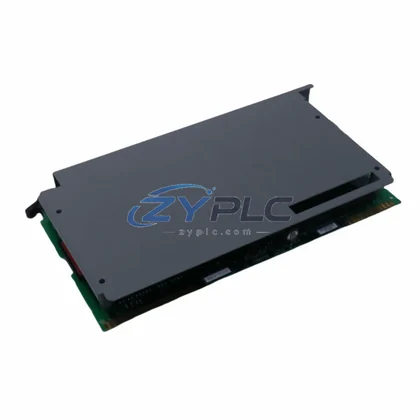
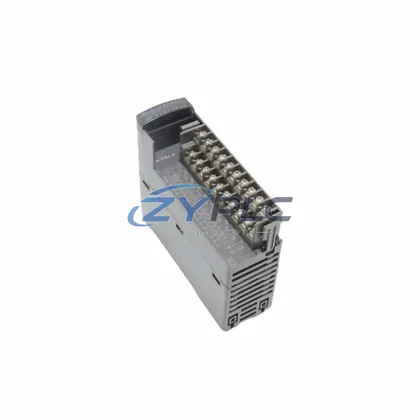
SAIA PCD4.B900 Digital I/O Module for PCD4
The SAIA PCD4.B900 is a high-density digital I/O module engineered for seamless integration within the SAIA PCD4 programmable controller architecture. Designed by SAIA-Burgess Controls, this module occupies a critical position in the I/O layer of layered industrial automation systems, bridging field-level signal acquisition with the control layer managed by the PCD4 CPU modules. Its robust electrical design, deterministic signal processing, and native compatibility with the PCD4 backplane bus make it an indispensable component for engineers building scalable, redundant, and maintainable control systems across demanding industrial environments.
In a complete PCD4 control architecture, the PCD4.B900 works in close coordination with the PCD4.M170 or PCD4.M480 CPU modules, which handle program execution and system orchestration. The module slots directly into the PCD4 rack system, sharing the internal backplane bus for high-speed, low-latency data exchange. Power distribution to the I/O layer is managed through the PCD4 power supply modules, ensuring stable voltage rails even under high channel-count configurations. This tight integration eliminates the need for external signal conditioning in most standard digital applications, reducing panel footprint and wiring complexity.
From a network and communications perspective, the PCD4.B900 benefits from the PCD4 system’s support for PROFIBUS DP, Modbus RTU/TCP, and S-Bus protocols, enabling the I/O data it collects to be transparently forwarded to supervisory SCADA systems or distributed control nodes. When paired with PCD4 communication gateway modules, the digital signals processed by the PCD4.B900 can be made available across Ethernet-based industrial networks, supporting system integration with higher-level MES or DCS platforms. This system integration capability is essential for modern smart manufacturing architectures where real-time field data must be correlated with production scheduling and quality management systems.
The module’s architecture also supports redundant system designs. In high-availability applications, the PCD4.B900 can be deployed within redundant rack configurations alongside PCD4 redundancy modules, ensuring that a single point of failure in the I/O layer does not interrupt process control. This is particularly valuable in continuous process industries such as petrochemical refining, power generation, and water treatment, where unplanned downtime carries significant operational and safety consequences.
For human-machine interface integration, the PCD4.B900’s I/O data is natively accessible to SAIA PCD HMI panels and third-party SCADA terminals connected via the PCD4 communication infrastructure. Operators can monitor individual channel states, configure input filtering parameters, and receive diagnostic alerts directly on the HMI, supporting efficient commissioning and ongoing maintenance workflows. Terminal modules and marshalling components compatible with the PCD4 system further simplify field wiring, allowing maintenance teams to replace or reconfigure I/O modules without disturbing field cable terminations.
The execution layer benefits directly from the PCD4.B900’s fast input scan times and output response characteristics. Actuators, solenoid valves, motor starters, and relay-driven loads connected to the module’s output channels receive deterministic control signals synchronized with the PCD4 CPU’s scan cycle, ensuring precise timing in sequencing and interlock applications. This determinism is critical in packaging lines, conveyor systems, and batch process control where output timing directly affects product quality and throughput.
Product Specification Table
| Parameter |
Specification |
| System Role |
Digital I/O Module – I/O Layer, PCD4 Architecture |
| Compatible Platform |
SAIA PCD4 Programmable Controller Series |
| Module Type |
Digital Input / Output (Mixed or Dedicated, per configuration) |
| Backplane Interface |
PCD4 Internal Bus (rack-mounted, direct slot integration) |
| Supply Voltage |
24 V DC (via PCD4 rack power supply) |
| Input Signal Level |
24 V DC, IEC 61131-2 Type 1/3 compatible |
| Output Type |
Transistor (sourcing/sinking) or relay, application-dependent |
| Communication Support |
S-Bus, PROFIBUS DP, Modbus RTU/TCP (via PCD4 CPU/gateway) |
| Operating Temperature |
0 °C to +55 °C |
| Protection Class |
IP20 (panel/cabinet installation) |
| Certifications |
CE, UL (subject to variant) |
| Country of Origin |
Switzerland |
| Warranty |
warranty terms confirmed during quotation – Tested, verified, and globally shipped |
System Compatibility Notes
The PCD4.B900 achieves its full potential when deployed as part of a coordinated PCD4 system architecture. A typical installation integrates the following components across the control hierarchy:
At the control layer, the PCD4.M170 or PCD4.M480 CPU module serves as the system master, executing the IEC 61131-3 control program and managing all I/O data exchange via the backplane bus. The CPU’s fast scan cycle ensures that digital signals processed by the PCD4.B900 are acted upon within deterministic time windows, which is essential for interlock and sequencing logic.
Power integrity is maintained by the PCD4 power supply module, which provides regulated 24 V DC to the rack and all installed modules. In redundant configurations, dual power supply modules with automatic switchover protect against power-related failures without interrupting I/O operations.
For distributed I/O expansion beyond the local rack, PCD4 remote I/O expansion modules and PCD4 communication gateway modules extend the system’s reach to remote field panels, enabling large-scale installations to maintain a single, unified control architecture. The PCD4.B900 can serve as both a local and remote I/O node depending on the system topology.
At the network layer, PROFIBUS DP interface modules and Modbus TCP gateway modules connect the PCD4 system to plant-wide networks, making the digital I/O data from the PCD4.B900 available to SCADA systems, historian servers, and MES platforms. This supports system integration across the full automation pyramid.
Field wiring is simplified through PCD4-compatible terminal modules and marshalling blocks, which allow field cables to remain connected during module replacement — a significant advantage for maintenance efficiency in live production environments. SAIA PCD HMI panels provide operator-level visibility into I/O channel states, diagnostic information, and system alarms, completing the human-machine interface layer of the architecture.
Industrial Application Notes
The SAIA PCD4.B900 is deployed across a wide range of industrial sectors where reliable digital I/O performance and system-level integration are non-negotiable requirements.
In manufacturing and assembly automation, the module manages discrete signals from proximity sensors, limit switches, and photoelectric barriers, feeding real-time position and presence data to the PCD4 CPU for sequencing control of robotic arms, conveyors, and pneumatic actuators. Its fast response time supports high-throughput packaging lines and automotive assembly processes.
In power generation and electrical distribution, the PCD4.B900 handles status signals from circuit breakers, isolators, and protection relays, providing the control system with accurate switchgear state information for automated load management and fault response. Its compatibility with redundant PCD4 architectures makes it suitable for substation automation applications where continuous availability is mandatory.
In petrochemical and process industries, the module integrates with emergency shutdown (ESD) systems and safety instrumented systems (SIS), processing digital signals from field instruments and transmitting control outputs to solenoid valves and motor starters. Its deterministic behavior and robust electrical isolation support the stringent reliability requirements of SIL-rated applications.
In water and wastewater treatment, the PCD4.B900 monitors pump run/fault signals, valve open/close feedback, and level switch states across distributed pump stations, enabling centralized SCADA supervision and automated process control. Its wide operating temperature range and IP20 protection class suit both indoor control room and field panel installations.
In mining and metallurgical processing, the module controls conveyor interlocks, crusher status monitoring, and ventilation system management, where reliable digital I/O performance under harsh electrical noise conditions is essential. The PCD4 system’s noise immunity and the module’s robust input filtering ensure signal integrity in electromagnetically challenging environments.
Product Compatibility FAQ
Q1: Is the PCD4.B900 compatible with both new PCD4 system builds and existing PCD4 installations requiring expansion?
Yes. The PCD4.B900 is fully compatible with the PCD4 rack and backplane bus architecture, making it suitable for both greenfield system builds and brownfield expansions. It can be added to existing PCD4 racks without requiring CPU firmware upgrades in most configurations, provided the rack has available slots and the CPU’s I/O address space accommodates the additional module. Engineers should verify slot addressing and I/O configuration in the SAIA PG5 programming environment before installation.
Q2: How does the PCD4.B900 support redundant architecture designs, and what additional components are required?
In redundant PCD4 configurations, the PCD4.B900 operates within a rack that includes a PCD4 redundancy module and dual CPU modules configured in hot-standby mode. The redundancy module manages automatic CPU switchover, ensuring that I/O operations — including those handled by the PCD4.B900 — continue without interruption during a CPU failure event. Dual power supply modules are also recommended to eliminate power as a single point of failure. This architecture is particularly suited to continuous process control applications in power, petrochemical, and water treatment sectors.
Q3: What does the warranty terms confirmed during quotation cover, and how is long-term spare parts availability managed for PCD4.B900 modules?
The warranty terms confirmed during quotation covers the PCD4.B900 against manufacturing defects and functional failures under normal operating conditions, including electrical parameter compliance and backplane communication integrity. For long-term maintenance planning, we recommend holding a defined quantity of PCD4.B900 modules as critical spares, particularly in installations where the module controls safety-critical or production-critical I/O points. Our global supply chain supports ongoing availability of PCD4 series components, and our technical team can assist with module testing, configuration verification, and system compatibility assessment prior to deployment.