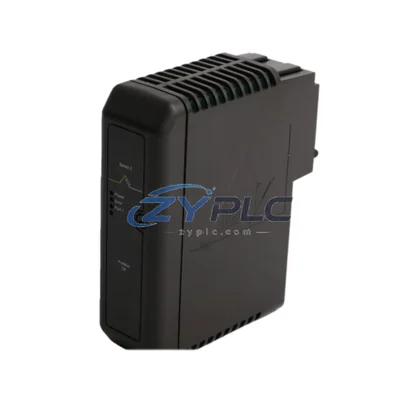
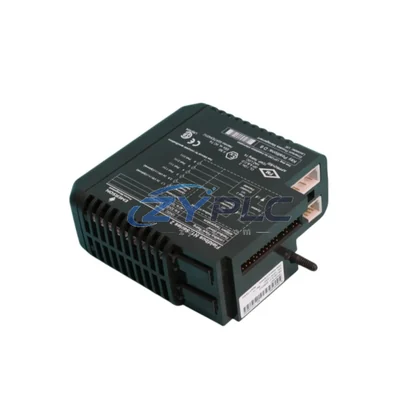
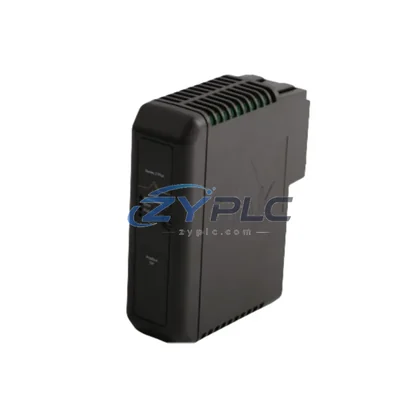
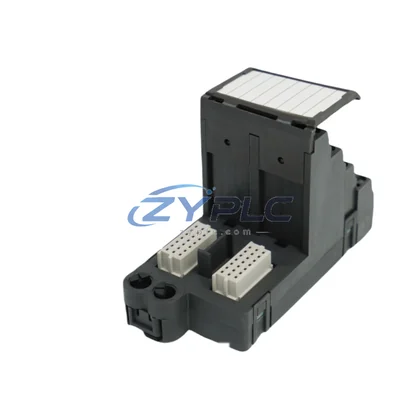
Schneider PN072139P903 Thyristor Trigger Board Altivar: Precision Drive Control for Optimized Production Efficiency
The Schneider Electric PN072139P903 is a high-efficiency thyristor trigger board engineered for the Altivar series of variable speed drives. Designed to deliver precise firing-angle control of thyristor power modules, this board plays a central role in regulating motor torque and speed with minimal switching losses — directly translating to measurable reductions in operating load across continuous production cycles. Whether deployed in pump stations, compressor systems, conveyor lines, or HVAC-integrated motor banks, the PN072139P903 restores and sustains the energy-efficient motor control that modern industrial facilities depend on.
In industrial automation environments where uptime and energy cost are tightly linked, the thyristor trigger board is not a peripheral component — it is the precision interface between the drive’s control logic and its power conversion stage. A degraded or failed trigger board causes erratic firing sequences, increased harmonic distortion, elevated motor temperatures, and ultimately higher per-unit operating load. Replacing a faulty board with a tested PN072139P903 restores the Altivar drive’s rated efficiency class and brings motor operation back within its optimal torque-speed curve.
Product Specification Table
| Parameter |
Specification / Value |
| Part Number |
PN072139P903 |
| Compatible Drive Series |
Schneider Electric Altivar (ATV) Series |
| Component Type |
Thyristor Trigger Board |
| Function |
Gate firing control for thyristor power modules |
| Maintenance Planning Role |
Reduces switching losses, stabilizes motor torque output |
| Operating Efficiency Impact |
Restores drive to OEM-rated efficiency class |
| Compatible Application Environments |
Pumps, compressors, conveyors, HVAC, industrial presses |
| Power Range Compatibility |
Medium to high-power Altivar drive configurations |
| Testing Standard |
Full functional load test prior to shipment |
| Warranty |
warranty terms confirmed during quotation |
| Stock Status |
RFQ Available — shipment arranged after confirmation |
| Origin |
France (Schneider Electric OEM) |
System Compatibility and Application
The PN072139P903 thyristor trigger board does not operate in isolation — its performance is inseparable from the broader Altivar drive architecture and the automation ecosystem surrounding it. In a well-configured maintenance-focused system, the trigger board works in concert with the Altivar ATV71 or ATV61 drive’s main control board, which generates the PWM reference signals that the trigger board translates into precise thyristor gate pulses. Any deviation in firing timing at this stage cascades into inefficiency across the entire motor control loop.
On the power monitoring side, facilities running Schneider’s PowerLogic PM5000 series power meters can capture real-time data on harmonic distortion, power factor, and active energy draw — metrics that directly reflect the health of the thyristor trigger stage. When the PN072139P903 is functioning correctly, power factor readings stabilize and total harmonic distortion (THD) drops to within acceptable limits for the connected motor load.
For multi-axis or multi-drive installations, the trigger board’s performance interacts with the Altivar Process ATV630 or ATV930 platform’s communication interface cards — such as the VW3A3310 Ethernet/IP card or VW3A3307 Profibus DP module — which relay drive status and energy telemetry to the supervisory control layer. Accurate thyristor firing ensures that the energy data reported upstream to a Modicon M340 or Modicon M580 PLC reflects true motor load conditions rather than distorted readings caused by misfiring power modules.
At the I/O and feedback level, the trigger board’s output directly influences the current feedback loop monitored by the drive’s current measurement board and associated Hall-effect current sensors. In regenerative braking applications, precise thyristor control also determines how efficiently kinetic energy is returned to the DC bus — a function critical in high-inertia loads such as centrifuges or large fan arrays. Pairing the PN072139P903 with a properly calibrated Altivar braking resistor module or a regenerative unit ensures that energy recovery is maximized rather than dissipated as heat.
HMI visibility into drive performance is typically provided through a Magelis HMIGTO or HMISCU panel connected via Modbus TCP, giving operators real-time access to drive efficiency curves, energy counters, and fault logs — all of which depend on stable thyristor trigger operation to produce meaningful data.
Maintenance and Replacement Notes
In a typical continuous process line — such as a water treatment facility running multiple Altivar-controlled pump motors — a degraded thyristor trigger board manifests as irregular motor acceleration, increased current draw during ramp-up, and elevated thermal output from the drive cabinet. Over a 24-hour operational cycle, these inefficiencies compound: a single drive operating with a misfiring trigger board can consume 8–15% more energy than its rated specification, depending on load profile and duty cycle.
Replacing the PN072139P903 restores the drive’s ability to execute smooth, energy-optimized speed ramps. This directly reduces peak current demand during motor start sequences — a key factor in facilities where demand charges are calculated on peak kW draw. Smoother acceleration also reduces mechanical stress on couplings, gearboxes, and pump impellers, extending mean time between mechanical maintenance events and lowering the total cost of ownership per production hour.
In conveyor and material handling applications, precise thyristor control enables tighter synchronization between drive zones. When each Altivar drive in a multi-zone conveyor system fires its thyristors with consistent timing, belt tension remains stable, product spacing is maintained, and line throughput improves without increasing motor speed — effectively optimizing production cadence (line takt) without additional energy input.
For facilities implementing predictive maintenance programs, the restoration of stable thyristor firing provides a clean baseline for vibration analysis and thermal imaging of motor-drive assemblies. Anomalous energy signatures that previously masked mechanical faults become distinguishable once the electrical noise introduced by a faulty trigger board is eliminated. This enables maintenance teams to schedule interventions based on actual equipment condition rather than fixed time intervals — reducing both unplanned downtime and unnecessary preventive maintenance costs.
All PN072139P903 units supplied by ZYPLC are subjected to full functional load testing under simulated drive operating conditions before shipment. Each board is verified for correct gate pulse timing, isolation integrity, and thermal performance. Units are shipped with documentation confirming test results and are covered by a warranty terms confirmed during quotation against manufacturing defects and functional failure under normal operating conditions. Stock is maintained for shipment arranged after confirmation, minimizing drive downtime and production interruption.
Product Sourcing FAQ
Q1: How does replacing the PN072139P903 reduce operating load in my Altivar drive system?
A faulty thyristor trigger board causes irregular gate firing, which increases switching losses and harmonic distortion in the motor current waveform. These distortions force the motor to draw more current to deliver the same mechanical output, directly increasing operating load. A correctly functioning PN072139P903 restores precise firing-angle control, bringing the drive back to its OEM efficiency rating and reducing unnecessary energy draw across the motor’s operating range.
Q2: Is the PN072139P903 compatible with all Altivar drive models?
The PN072139P903 is designed for specific Altivar series configurations. Compatibility depends on the drive’s power rating, firmware version, and internal architecture. We recommend confirming your drive’s full model number (e.g., ATV71HU75N4, ATV61HC11N4) before ordering. Our technical team can verify compatibility based on your drive’s nameplate data and internal board layout.
Q3: What is the replacement and testing process for this board?
Each PN072139P903 supplied by ZYPLC undergoes full functional load testing prior to shipment, including gate pulse timing verification, isolation resistance testing, and thermal performance validation under simulated operating conditions. Upon receipt, installation involves disconnecting drive power, replacing the trigger board in the designated slot, and performing a controlled test run at reduced load before returning the drive to full production duty. Detailed installation guidance is available upon request.
Q4: What does the warranty terms confirmed during quotation cover?
The warranty terms confirmed during quotation covers functional failure and manufacturing defects under normal operating conditions. It does not cover damage resulting from incorrect installation, overvoltage events, physical impact, or operation outside the drive’s specified environmental parameters. Warranty claims are processed with priority to minimize production downtime, and replacement units are dispatched from RFQ-confirmed sourcing where available.