Schneider VME-PROF-M Industrial Network Interface for Quantum Systems: Bridging the Industrial Data Link in Smart Factory Environments
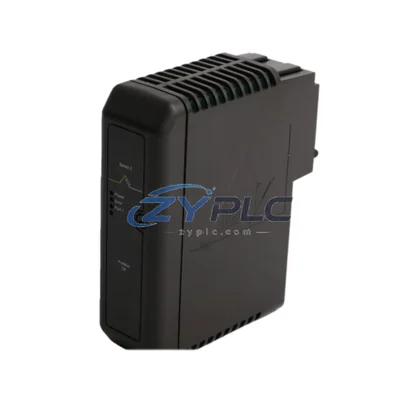
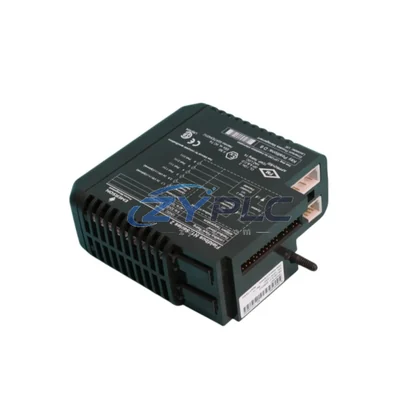
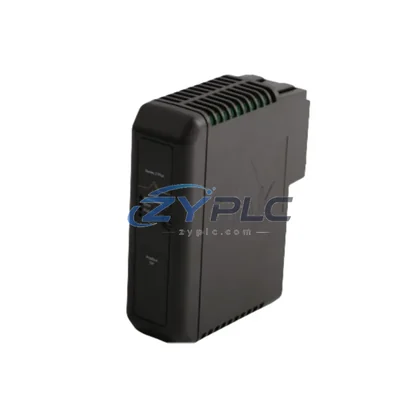
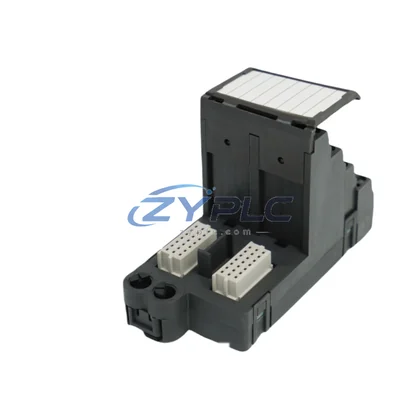
The Schneider Electric VME-PROF-M is a high-performance Profibus DP Master Communication Module engineered for the NAUTIBUS Quantum VME platform. Designed to serve as the backbone of industrial network communication, the VME-PROF-M enables seamless, real-time data exchange between field-level devices and upper-level control and supervisory systems. In modern smart factory deployments where data latency, protocol compatibility, and network stability are mission-critical, this module delivers the connectivity infrastructure that keeps production lines transparent, responsive, and fully integrated.
As industrial sites evolve from isolated control islands toward unified, data-driven architectures, the VME-PROF-M stands at the center of that transformation — connecting PLCs, remote I/O stations, HMI panels, SCADA platforms, variable frequency drives, and intelligent sensors into a single, coherent automation network.
Compatibility & Integration Notes
| Parameter |
Specification |
| SKU / Part Number |
VME-PROF-M |
| Brand |
Schneider Electric |
| Series |
NAUTIBUS Quantum VME |
| Communication Protocol |
Profibus DP (Master) |
| Interface Type |
VME Bus Interface |
| Network Role |
DP Master (Class 1) |
| Transmission Speed |
Up to 12 Mbit/s |
| Max Slave Devices |
Up to 125 Profibus DP Slaves |
| Network Compatibility |
Profibus DP, Profibus FMS (via gateway), IEC 61158 |
| System Application |
Quantum PLC, SCADA, DCS, HMI Integration |
| Operating Temperature |
0°C to 60°C |
| Origin |
France |
| Warranty |
warranty terms confirmed during quotation |
| Availability |
RFQ Available — shipment arranged after confirmation |
Connected Automation Data Flow
In a typical Quantum-based automation architecture, the VME-PROF-M acts as the Profibus DP Master, orchestrating cyclic data exchange with all connected slave devices across the fieldbus network. The data flow begins at the sensor and actuator layer — where pressure transmitters, flow meters, temperature sensors, and proximity switches transmit process values via Profibus DP — and travels upward through the VME-PROF-M into the Schneider Quantum 140CPU series processors for real-time logic execution.
Remote I/O expansion is handled through Schneider Quantum 140CRA remote I/O adapter modules, which communicate back to the VME-PROF-M as Profibus DP slaves, extending the control reach across large plant floors without additional cabling infrastructure. For motion control integration, Schneider Altivar ATV71 and ATV61 variable frequency drives — equipped with Profibus DP communication cards — connect directly to the VME-PROF-M network, enabling the PLC to monitor drive speed, torque, fault status, and energy consumption in real time.
At the HMI layer, Schneider Magelis XBTGT and XBTGK operator panels interface with the Quantum CPU over Modbus TCP/IP or Ethernet, while the VME-PROF-M ensures that all field device data collected via Profibus DP is available to the HMI for live process visualization and operator intervention. SCADA integration is achieved through Schneider Vijeo Citect or EcoStruxure SCADA Expert, which poll the Quantum CPU via OPC-DA or Modbus TCP, receiving aggregated field data originally sourced from the VME-PROF-M’s Profibus DP network.
For distributed control architectures, the Schneider 140NOE771x1 Ethernet communication module works alongside the VME-PROF-M within the same Quantum VME rack, enabling simultaneous Profibus DP fieldbus communication and Ethernet-based supervisory connectivity. Edge gateway devices — such as the Schneider EcoStruxure Machine Advisor edge box — can further aggregate data from the Quantum CPU for cloud-based analytics, predictive maintenance, and remote diagnostics, completing the data chain from field sensor to enterprise dashboard.
In safety-critical zones, the VME-PROF-M’s deterministic Profibus DP communication ensures that cyclic data exchange with Schneider Preventa XPSMC safety relay modules and emergency stop circuits meets the timing requirements of IEC 61508 SIL-rated applications, maintaining both operational efficiency and personnel safety.
Solving Data Isolation in Industrial Sites
One of the most persistent challenges in legacy and hybrid industrial environments is data isolation — where field devices, PLCs, drives, and supervisory systems operate in disconnected silos, making plant-wide visibility impossible and reactive maintenance the norm. The VME-PROF-M directly addresses this challenge by providing a standardized, high-speed Profibus DP Master interface that unifies heterogeneous field devices under a single, deterministic communication protocol.
Protocol fragmentation is eliminated as the VME-PROF-M consolidates data from Profibus DP-compatible devices — regardless of manufacturer — into the Quantum CPU’s unified data model. This means that Siemens ET200 remote I/O, ABB drives with Profibus adapters, and Pepperl+Fuchs field barriers can all coexist on the same VME-PROF-M network segment, with the Quantum PLC serving as the single source of truth for all process data.
Remote monitoring and diagnostics are transformed through the VME-PROF-M’s support for Profibus DP extended diagnostics (DPV1), which allows the Quantum CPU to query individual slave device health, detect communication faults, and trigger alarm notifications in the SCADA system — all without requiring a technician to physically inspect field equipment. This capability is particularly valuable in hazardous areas, remote substations, and multi-building plant layouts where on-site inspection is costly and time-consuming.
Production line transparency is achieved as the VME-PROF-M feeds real-time process data — cycle times, throughput rates, energy consumption, fault codes — into the SCADA historian, enabling OEE (Overall Equipment Effectiveness) calculation, shift reporting, and continuous improvement initiatives. Plant managers gain a live, accurate picture of production performance without relying on manual data collection or paper-based reporting.
System scalability is built into the VME-PROF-M’s architecture: with support for up to 125 Profibus DP slave devices per network segment and the ability to add additional VME-PROF-M modules in multi-master configurations, the Quantum platform can grow alongside the plant’s automation requirements — from a single production cell to a multi-line, multi-zone factory network — without requiring a complete system redesign.
Every VME-PROF-M unit supplied by ZYPLC undergoes pre-shipment functional testing, including Profibus DP communication verification, VME bus interface integrity checks, and firmware version confirmation, ensuring that the module arrives ready for immediate installation and commissioning. All units are backed by a warranty terms confirmed during quotation and supported by RFQ-confirmed sourcing for fast global dispatch.
Industrial Connectivity FAQ
Q1: What is the maximum communication speed supported by the VME-PROF-M on a Profibus DP network?
The VME-PROF-M supports Profibus DP transmission speeds from 9.6 kbit/s up to 12 Mbit/s. The actual operating speed is automatically negotiated based on the cable length and the capabilities of the connected slave devices. For most industrial applications with cable runs under 100 meters, 12 Mbit/s operation is achievable, providing sub-millisecond cycle times for time-critical control loops.
Q2: Is the VME-PROF-M compatible with third-party Profibus DP slave devices from other manufacturers?
Yes. The VME-PROF-M complies with the IEC 61158 Profibus DP standard and is compatible with any certified Profibus DP slave device, regardless of manufacturer. This includes remote I/O modules, variable frequency drives, servo amplifiers, intelligent sensors, and safety devices from Siemens, ABB, Phoenix Contact, Pepperl+Fuchs, and other major industrial automation vendors. GSD (General Station Description) files are used to configure each slave device within the Quantum programming environment.
Q3: How does the VME-PROF-M ensure network stability in electrically noisy industrial environments?
The VME-PROF-M is designed to operate reliably in the electromagnetic interference (EMI) conditions typical of industrial plants, including environments with large motor drives, welding equipment, and high-voltage switchgear. The Profibus DP physical layer uses RS-485 differential signaling with shielded twisted-pair cable, providing inherent noise immunity. The module also supports Profibus DP redundancy configurations when used with compatible Quantum CPU firmware, enabling automatic failover in the event of a communication fault.
Q4: What warranty and pre-shipment testing does ZYPLC provide for the VME-PROF-M?
Every VME-PROF-M unit shipped by ZYPLC is covered by a warranty terms confirmed during quotation against manufacturing defects and functional failures. Prior to dispatch, each unit undergoes a structured pre-shipment test protocol that includes Profibus DP master communication verification, VME bus slot interface testing, and firmware version confirmation. Units are shipped in anti-static protective packaging with full traceability documentation. Availability is confirmed via RFQ for same-day or next-business-day dispatch to global destinations.