Siemens A5E03932845 Digital Output for ET 200S: Compatibility and Replacement Notes
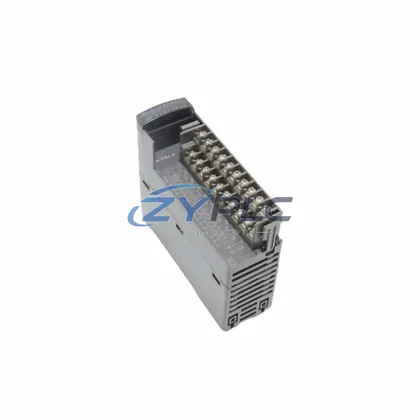
The Siemens A5E03932845 is a digital output module engineered for deployment within the ET 200S distributed I/O station — a modular, rail-mounted peripheral system that forms the I/O layer of Siemens SIMATIC S7 control architectures. In modern industrial automation, no module operates in isolation. The A5E03932845 occupies a precise position within a layered control hierarchy, interfacing upward with CPU logic and downward with field-level actuators, drives, and switching devices. Understanding its role within the full system architecture is essential for engineers designing reliable, scalable, and maintainable automation solutions.
The ET 200S platform, to which the A5E03932845 belongs, is designed for distributed installation close to the process — in control cabinets, junction boxes, or directly on the machine frame. This proximity reduces wiring complexity, shortens signal paths, and improves response times for time-critical output commands. The module connects to the PROFIBUS DP or PROFINET network via the IM 151 interface module, which serves as the communication gateway between the field I/O station and the central controller. In a typical S7-300 or S7-400 architecture, the CPU — such as a CPU 315-2 DP or CPU 414-3 PN/DP — issues output commands that travel through the network interface, are decoded by the IM 151, and are then executed by the A5E03932845 at the channel level.
Within the control layer, the A5E03932845 receives its switching commands from the SIMATIC S7 CPU via cyclic PROFIBUS or PROFINET data exchange. The module’s output channels are mapped directly to the CPU’s process image output (PIO), ensuring deterministic, scan-cycle-synchronized actuation. This tight integration with the CPU’s program execution model is fundamental to achieving precise timing in applications such as conveyor sequencing, valve control, motor starter switching, and solenoid actuation.
At the I/O layer, the A5E03932845 works in close coordination with complementary ET 200S modules. Digital input modules — such as the 2DI DC24V HF or 4DI DC24V — feed process status signals back to the CPU, completing the closed-loop control cycle. Analog input and output modules handle continuous process variables such as temperature, pressure, and flow, while the A5E03932845 manages discrete switching actions. The modular architecture of the ET 200S allows engineers to combine these module types on a single terminal module base, sharing a common power bus and communication backplane without additional wiring between modules.
Power distribution within the ET 200S station is managed through PM-E power modules, which segment the station into independently switchable power zones. This design enables selective de-energization of output groups for maintenance or safety purposes without shutting down the entire I/O station. The A5E03932845 benefits directly from this architecture: its load voltage supply can be isolated via the adjacent PM-E module, allowing safe intervention on connected actuators while the CPU and communication interface remain fully operational.
At the network layer, the IM 151 interface module provides the PROFIBUS DP or PROFINET connection that links the ET 200S station to the plant-wide automation network. In larger installations, multiple ET 200S stations — each hosting modules like the A5E03932845 — are distributed across the production floor and connected to a central S7-400 CPU or a redundant CPU 414H / CPU 417H pair. This distributed topology reduces the volume of field wiring, simplifies cabinet layouts, and enables modular expansion of the I/O infrastructure without modifying the central control panel.
Redundancy design is a critical consideration in high-availability applications such as power generation, petrochemical processing, and water treatment. In redundant S7 architectures using the S7-400H system, the ET 200S station can be configured with dual IM 151 interface modules connected to both CPUs via separate PROFIBUS segments. This configuration ensures that a single network or CPU failure does not interrupt output actuation, maintaining process continuity during fault conditions. The A5E03932845, as part of such a redundant station, contributes directly to the overall system availability target.
From a human-machine interface perspective, the output states driven by the A5E03932845 are typically visualized on SIMATIC HMI panels — such as the TP700 Comfort or KP900 Comfort — connected to the S7 CPU via PROFINET. Operators can monitor actuator states, acknowledge alarms triggered by output faults, and initiate manual override commands through the HMI, all of which are reflected in the CPU’s data blocks and ultimately executed through the A5E03932845’s output channels.
At the execution layer, the A5E03932845 drives field devices including solenoid valves, contactors, indicator lamps, motor starters, and relay coils. Its output channels are designed to switch DC or AC loads within specified current and voltage ratings, providing the electrical interface between the digital control world and the physical process. Proper selection of terminal modules and load feeders ensures that the connected actuators receive clean, reliable switching signals with appropriate overcurrent protection.
For long-term maintenance and spare parts management, the A5E03932845 is supplied with a Warranty and support terms confirmed before quote, supporting procurement planning and reducing the risk of unplanned downtime due to module failure. Its compatibility with the standard ET 200S terminal module base means that field replacement requires no rewiring — the module can be swapped without disturbing the existing cable connections, minimizing maintenance time and the risk of wiring errors during servicing.
Product Specification Table
| Parameter |
Specification |
| System Role |
Digital Output Module — ET 200S Distributed I/O Station |
| Compatible Platform |
SIMATIC ET 200S (S7-300 / S7-400 / S7-400H architectures) |
| Communication Interface |
Via IM 151 — PROFIBUS DP / PROFINET |
| Output Type |
Digital (discrete) switching outputs |
| Load Voltage |
DC 24V (nominal, supplied via PM-E power module) |
| Installation |
DIN rail, ET 200S terminal module base |
| Country of Origin |
Germany |
| Operating Temperature |
0°C to +60°C (standard industrial environment) |
| Protection Class |
IP20 (cabinet installation) |
| Warranty |
Warranty and support terms confirmed before quote — system integration supported |
System Compatibility Notes
The A5E03932845 achieves its full operational value when integrated within a coherent system architecture. A representative ET 200S station supporting this module would typically include the IM 151-1 Standard interface module for PROFIBUS DP connectivity, paired with PM-E DC24V power modules to supply and segment the load voltage across output groups. Digital input modules such as the 2DI DC24V Standard complement the A5E03932845 by returning field status signals to the CPU, enabling closed-loop control logic.
At the controller level, a SIMATIC S7-315-2 DP CPU or S7-414-3 PN/DP CPU manages the cyclic data exchange with the ET 200S station, executing the ladder logic or function block programs that determine the switching state of each output channel. In high-availability configurations, a CPU 414H redundant controller pair replaces the standard CPU, with dual PROFIBUS segments connecting to redundant IM 151 interface modules on the ET 200S station.
For applications requiring analog process control alongside discrete switching, analog output modules such as the 2AO I 4.20mA ST are installed on the same ET 200S backplane, sharing the communication infrastructure managed by the IM 151. SIMATIC HMI panels connected via PROFINET provide the operator interface layer, displaying output states and enabling manual control during commissioning and maintenance. Frequency inverters and soft starters connected to the output channels of the A5E03932845 complete the execution layer, translating digital switching commands into controlled motor actuation.
Industrial Application Notes
The A5E03932845 is deployed across a wide range of industrial sectors where distributed digital output capability is required within a structured control architecture. In automotive manufacturing, ET 200S stations hosting this module are installed at each assembly station along the production line, controlling pneumatic actuators, clamping cylinders, and indicator towers under the supervision of a central S7-400 CPU. The distributed architecture minimizes inter-panel wiring and supports rapid reconfiguration when production variants change.
In power generation and electrical substation automation, the module’s reliable switching capability supports breaker control, alarm annunciation, and auxiliary relay actuation within PROFIBUS-based protection and control systems. The Warranty and support terms confirmed before quote and availability of replacement units through ZYPLC ensure that critical infrastructure projects maintain spare parts continuity throughout the system lifecycle.
In petrochemical and process industries, the A5E03932845 operates within SIL-capable architectures where output modules are selected and validated as part of the overall safety instrumented system design. Water treatment facilities use ET 200S distributed stations to control pump starters, valve actuators, and dosing systems across geographically dispersed process areas, with PROFIBUS DP providing the communication backbone. Mining and metallurgical applications benefit from the module’s robust industrial design, which supports operation in environments with elevated vibration, dust, and temperature variation when installed within appropriately rated enclosures.
Product Compatibility FAQ
Q1: Is the A5E03932845 compatible with both S7-300 and S7-400 CPU platforms?
Yes. The A5E03932845 is an ET 200S digital output module that communicates with the CPU via the IM 151 interface module over PROFIBUS DP or PROFINET. It is fully compatible with any SIMATIC S7 CPU that supports these communication protocols, including S7-300, S7-400, and S7-400H redundant systems. The module’s hardware configuration is managed within SIMATIC STEP 7 or TIA Portal, where it is assigned to the ET 200S station in the hardware catalog.
Q2: Can the A5E03932845 be replaced in the field without rewiring the terminal connections?
Yes. The ET 200S system uses a terminal module base that retains all field wiring independently of the electronic module. The A5E03932845 plugs into the terminal module, and replacement requires only the removal of the electronic module — the terminal connections remain undisturbed. This design significantly reduces maintenance time and eliminates the risk of wiring errors during module exchange, supporting the Warranty and support terms confirmed before quote service process.
Q3: How does the A5E03932845 support long-term system maintenance and spare parts planning?
ZYPLC supplies the A5E03932845 with a Warranty and support terms confirmed before quote and maintains stock availability to support both planned maintenance schedules and emergency replacement requirements. The module’s standardized form factor and compatibility with the ET 200S terminal module base ensure that a single spare unit can serve as a replacement across multiple stations within the same installation, simplifying inventory management. Engineers are advised to maintain at least one spare module per ET 200S station in critical applications to minimize mean time to repair (MTTR) in the event of module failure.