Product identification and sourcing context
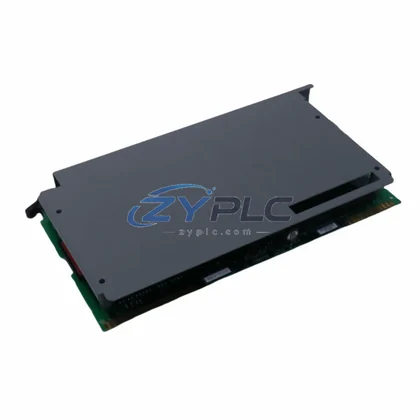
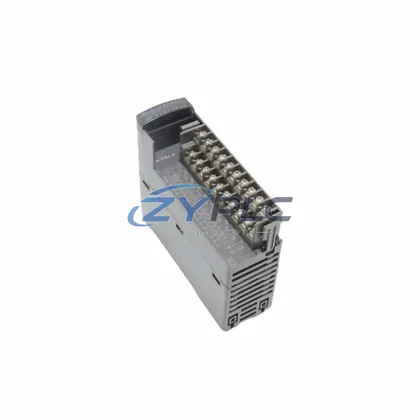
Yokogawa A2EE2A-T S1 DI Module for CENTUM is handled as a quote-based CENTUM DCS spare part for DCS maintenance, process automation, and legacy-system replacement projects. ZYPLC checks the exact model suffix, installed Yokogawa platform, required condition, quantity, and destination country before quotation.
| Brand |
Yokogawa |
| Model / SKU |
A2EE2A-T S1 |
| Series context |
CENTUM VP |
| Part type |
Sensors & I/O |
| RFQ basis |
Availability, condition, lead time, and export shipment options are confirmed before quote. |
Where this part is typically used
This item is requested for CENTUM VP / CS3000 process-control maintenance, field-control station support, and installed-base replacement sourcing. Yokogawa CENTUM VP, CENTUM CS3000, ProSafe, field-control unit, ESB bus node, and DCS I/O installations often require exact suffix and cabinet-context checks before a replacement can be sourced.
RFQ information for maintenance teams
- Exact part number, suffix, and Yokogawa platform or cabinet context.
- Installed system such as CENTUM VP, CENTUM CS3000, ProSafe, Vnet/IP, or ESB bus where applicable.
- Quantity, urgency, required condition, and destination country.
- Photos of module labels, terminal bases, bus-node nameplates, or existing spare packaging.
Browse related Yokogawa spare parts, review the CENTUM VP series, or compare similar Sensors & I/O records. If the exact suffix is not shown, send the model and photos so the RFQ can be checked manually.
Request quote for this model
Yokogawa A2EE2A-T S1 DI Module for CENTUM: Control System Integration and Upstream–Downstream Coordination
The Yokogawa A2EE2A-T S1 is a Digital Input (DI) module engineered for seamless deployment within the CENTUM VP and CENTUM CS 3000 Distributed Control System (DCS) platforms. Rather than functioning as a standalone component, this module is designed from the ground up to operate as an integral node within a layered automation architecture — coordinating signal acquisition at the field I/O layer while maintaining synchronised communication with the control layer, network infrastructure, power distribution, and human-machine interface (HMI) systems above it.
In modern industrial control environments — spanning petrochemical refining, power generation, water treatment, metallurgical processing, and continuous manufacturing — the reliability of digital input acquisition is foundational. The A2EE2A-T S1 addresses this requirement by providing stable, noise-resistant DI signal conditioning that feeds directly into the CENTUM VP controller’s process execution engine. Its architecture-native design ensures that engineering teams can integrate it without custom mapping or protocol bridging, reducing commissioning time and eliminating compatibility risk across the full system lifecycle.
Product Specification Table
| Parameter |
Specification |
| System Role |
Field I/O Layer — Digital Input Acquisition |
| Compatible Platform |
Yokogawa CENTUM VP, CENTUM CS 3000 |
| Module Type |
Digital Input (DI) Module |
| SKU / Part Number |
A2EE2A-T S1 |
| Brand / Manufacturer |
Yokogawa Electric Corporation |
| Country of Origin |
Japan |
| Signal Type |
Discrete Digital Input (dry contact / voltage) |
| Communication Interface |
Internal CENTUM VP / CS 3000 backplane bus |
| Installation Environment |
Control cabinet / field station enclosure, DIN-rail or card-slot mounting |
| Operating Temperature |
0°C to 60°C (standard industrial range) |
| Isolation |
Channel-to-bus optical isolation |
| Warranty |
Warranty and support terms confirmed before quote — tested, verified, and shipment arranged after confirmation |
System Compatibility Notes
The A2EE2A-T S1 does not operate in isolation. Its value is fully realised when considered within the broader CENTUM VP system architecture, where it works in concert with a range of complementary modules and subsystems.
At the control layer, the module interfaces directly with the Yokogawa PFCD101 and PFCD102 Field Control Units (FCUs), which serve as the primary CPU nodes responsible for executing control logic, managing scan cycles, and coordinating I/O data across the system. The DI signals acquired by the A2EE2A-T S1 are passed through the node bus to these controllers, where they are processed in real time against configured logic blocks.
Power integrity is maintained through the PW481 and PW482 power supply modules, which provide regulated DC power to the I/O node and ensure that signal acquisition remains uninterrupted even during grid fluctuations. In redundant power configurations, dual power supply units are deployed in parallel, with automatic failover protecting the DI module’s continuous operation.
For analog signal acquisition alongside digital inputs, the AAI143-S00 Analog Input module is commonly deployed in the same I/O node, enabling mixed-signal field stations that handle both process variable measurements and discrete status signals within a single rack. Similarly, the AAI141-S03 provides additional analog input capacity for temperature and pressure transmitters connected to the same process unit.
Network communication between field stations and the operator domain is handled by the ESB Bus (Enhanced Signal Bus) and the Vnet/IP real-time Ethernet network, which connects FCUs to the HIS (Human Interface Station) running CENTUM VP’s operator console software. This architecture ensures that DI status changes captured by the A2EE2A-T S1 are reflected on the operator display within the system’s defined scan period, supporting rapid fault detection and process response.
For applications requiring output coordination, the A2EE2A-T S1 is typically paired with ADO55B or ADO15B Digital Output modules, which drive field actuators, solenoid valves, and motor starters based on the control logic decisions informed by the DI inputs. Terminal modules such as the TB805 provide the physical wiring interface between field cables and the I/O module, ensuring clean, maintainable connections within the control cabinet.
Industrial Application Notes
The A2EE2A-T S1 is deployed across a wide range of process industries where reliable digital status monitoring is critical to safe and efficient operation.
In petrochemical and refining environments, the module monitors valve position feedback, pump run/stop status, and emergency shutdown (ESD) interlock signals. Its integration with the CENTUM VP safety-instrumented architecture allows DI signals to participate in cause-and-effect logic without requiring separate safety relay panels.
In power generation facilities — including thermal, hydro, and combined-cycle plants — the A2EE2A-T S1 captures breaker status, turbine protection signals, and auxiliary equipment states, feeding this data into the plant-wide DCS for centralised monitoring and alarm management.
For water and wastewater treatment systems, the module tracks pump seal failures, high-level float switch activations, and filter backwash cycle completions, enabling automated sequencing logic within the CENTUM VP controller without operator intervention.
In metallurgical and mining operations, where harsh electrical environments introduce significant noise on signal cables, the A2EE2A-T S1’s optical isolation and noise filtering capabilities ensure data integrity even in the presence of variable-frequency drive (VFD) interference and ground potential differences across large plant areas.
Across all these applications, the module’s architecture-native design means that spare parts management is simplified: a single A2EE2A-T S1 unit can replace a failed module in any compatible CENTUM VP or CS 3000 node without reconfiguration, reducing mean time to repair (MTTR) and supporting long-term plant availability.
Product Compatibility FAQ
Q1: Is the A2EE2A-T S1 compatible with both CENTUM VP and CENTUM CS 3000 systems?
Yes. The A2EE2A-T S1 is designed for use within the CENTUM VP and CENTUM CS 3000 DCS platforms, both of which share a common I/O module form factor and backplane bus architecture. Engineers migrating from CS 3000 to CENTUM VP can retain existing A2EE2A-T S1 modules in the field, reducing hardware replacement costs during system upgrades.
Q2: Can this module be installed in a redundant I/O configuration, and what companion modules are required?
The CENTUM VP architecture supports redundant I/O node configurations using dual FCU controllers and redundant ESB bus connections. In such configurations, the A2EE2A-T S1 operates within a redundant node where both controllers scan the same I/O module simultaneously. No additional hardware modification to the DI module itself is required — redundancy is managed at the FCU and bus level, making the A2EE2A-T S1 fully compatible with high-availability system designs.
Q3: What does the Warranty and support terms confirmed before quote cover, and how is long-term spare parts availability managed?
Every A2EE2A-T S1 unit supplied by ZYPLC is Warranty terms are confirmed during quotation. Prior to shipment, each module undergoes functional verification testing to confirm signal acquisition performance and backplane communication integrity. For long-term maintenance planning, ZYPLC supports RFQ-based sourcing for A2EE2A-T S1 and related CENTUM VP I/O modules, enabling RFQ-confirmed dispatch to minimize downtime in critical process environments.