Yokogawa AAI543-H03/S1: Industrial Data Link for CENTUM VP Smart Factory Networks
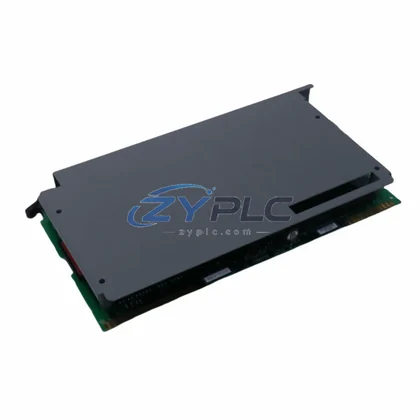
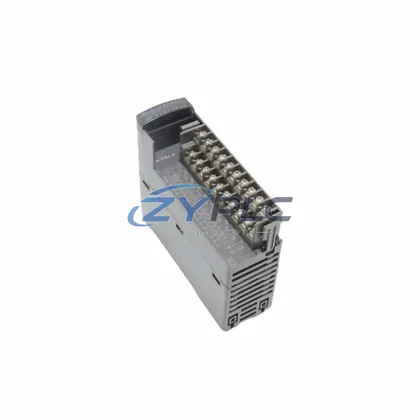
The Yokogawa AAI543-H03/S1 is a high-precision analog output module engineered for seamless integration within the CENTUM VP Distributed Control System (DCS) architecture. Designed to serve as a critical node in the industrial data chain, this module converts digital control signals from the DCS controller into accurate 4–20mA analog outputs, driving field devices such as control valves, variable frequency drives, and positioners with exceptional fidelity. In smart factory environments where data integrity and signal continuity are non-negotiable, the AAI543-H03/S1 delivers the reliability that process engineers and automation architects demand.
At its core, the AAI543-H03/S1 functions as the bridge between the digital intelligence of the CENTUM VP control domain and the physical world of field instrumentation. Whether the application involves flow control in a chemical processing plant, pressure regulation in an oil and gas facility, or temperature management in a pharmaceutical production line, this module ensures that every control command is faithfully translated into a precise analog signal — with minimal latency and maximum repeatability.
Compatibility & Integration Notes
| Parameter |
Specification |
| SKU |
AAI543-H03/S1 |
| Brand |
YOKOGAWA |
| Series |
CENTUM VP DCS |
| Module Type |
Analog Output Module |
| Output Protocol |
4–20mA Analog Signal |
| Communication Interface |
CENTUM VP V-net/IP Backplane Bus |
| Output Channels |
16 Channels (isolated) |
| Signal Transmission |
Current Loop, 4–20mA DC |
| Network Compatibility |
CENTUM VP, CENTUM CS 3000 (compatible) |
| System Application |
DCS, SCADA, PLC Gateway, HMI Integration |
| Origin |
Japan |
| Warranty |
Warranty and support terms confirmed before quote |
| Availability |
Confirmed via RFQ before quotation |
Connected Automation Data Flow
In a fully integrated CENTUM VP control architecture, the AAI543-H03/S1 sits at the heart of the field-to-control-room data pipeline. The data flow begins at the sensor layer, where instruments such as Yokogawa EJA-series pressure transmitters and YTA-series temperature transmitters feed real-time process values back to the DCS via analog input modules like the AAI141 or AAI543 input counterparts. These values are processed by the CENTUM VP FCU (Field Control Unit), which executes PID control algorithms and generates output commands.
The AAI543-H03/S1 receives these digital commands over the high-speed V-net/IP backplane bus and converts them into precise 4–20mA signals that drive downstream actuators — including Yokogawa YVP-series valve positioners, variable frequency drives (VFDs), and motorized control valves. This closed-loop signal chain ensures that process variables remain within defined setpoints, enabling stable, continuous production.
At the supervisory level, the CENTUM VP HIS (Human Interface Station) provides operators with real-time visualization of all analog output values, alarm states, and trend data. Integration with Exaquantum PIMS (Plant Information Management System) allows historical data from the AAI543-H03/S1 output channels to be archived and analyzed for process optimization. For facilities running hybrid architectures, the Yokogawa ProSafe-RS Safety Instrumented System can interface with the CENTUM VP domain, ensuring that safety-critical output signals are independently validated.
Remote diagnostic capability is provided through the CENTUM VP Plant Resource Manager (PRM), which monitors the health status of each I/O module — including the AAI543-H03/S1 — and generates predictive maintenance alerts before failures occur. For multi-site operations, Yokogawa’s OmniWrex SCADA gateway or third-party OPC-UA servers can aggregate data from multiple CENTUM VP domains, enabling enterprise-level visibility across geographically distributed plants. Edge computing nodes, such as the Yokogawa OpreX Edge Manager, can further process output telemetry locally before forwarding aggregated data to cloud-based MES or ERP platforms.
Solving Data Isolation in Industrial Sites
One of the most persistent challenges in legacy industrial environments is the fragmentation of control data across incompatible systems. Older DCS platforms, standalone PLCs, and proprietary SCADA systems often operate in silos, making it impossible to achieve a unified view of plant operations. The Yokogawa AAI543-H03/S1, deployed within the CENTUM VP ecosystem, directly addresses this challenge by providing a standardized, high-integrity analog output interface that can be mapped to virtually any field device — regardless of the device’s native communication protocol.
For facilities transitioning from older Yokogawa CENTUM CS 3000 systems, the AAI543-H03/S1 offers backward-compatible signal characteristics, simplifying migration without requiring full field rewiring. Its 16-channel isolated output design reduces the number of modules required per control cabinet, lowering installation costs and improving cabinet density. Each channel is individually configurable, allowing engineers to assign different output ranges, fail-safe states, and alarm thresholds — eliminating the one-size-fits-all limitations of older analog output cards.
In multi-vendor environments where Siemens S7-series PLCs, Rockwell ControlLogix systems, or Mitsubishi MELSEC controllers coexist with Yokogawa DCS infrastructure, protocol gateways such as the Moxa MGate MB3480 or HMS Anybus Communicator can bridge Modbus RTU/TCP signals from third-party PLCs into the CENTUM VP network, allowing the AAI543-H03/S1 to serve as the final output stage for cross-platform control commands. This architecture eliminates data islands, enables real-time production transparency, and supports the incremental expansion of smart factory capabilities without requiring a full system overhaul.
Every AAI543-H03/S1 unit supplied by ZYPLC undergoes pre-shipment functional testing, including channel-by-channel output verification across the full 4–20mA range, isolation resistance testing, and communication bus integrity checks. Units are shipped with full documentation and are Warranty terms are confirmed during quotation.
Industrial Connectivity FAQ
Q1: What is the communication latency of the AAI543-H03/S1 within the CENTUM VP system?
The AAI543-H03/S1 communicates over the CENTUM VP V-net/IP backplane bus, which operates at high speed with deterministic scan cycles typically in the range of 100ms to 1 second depending on FCU configuration. This ensures that control output updates are delivered to field devices with minimal and predictable latency, suitable for continuous process control applications.
Q2: Is the AAI543-H03/S1 compatible with third-party SCADA and HMI systems?
Yes. While the module is natively designed for the CENTUM VP DCS, its 4–20mA analog outputs are universally compatible with any SCADA, HMI, or control system capable of reading standard current loop signals. For digital integration, OPC-DA/UA servers running on the CENTUM VP HIS can expose output channel data to third-party systems including Wonderware InTouch, Ignition SCADA, and Siemens WinCC.
Q3: How does the module handle network instability or communication faults?
The AAI543-H03/S1 supports configurable fail-safe output states for each channel. In the event of a communication fault or DCS controller failure, each output channel can be set to hold its last value, drive to a predefined safe setpoint (e.g., 4mA or 20mA), or de-energize — depending on the process safety requirements configured in the CENTUM VP engineering environment. This ensures that field devices respond predictably during abnormal network conditions.
Q4: What does the warranty and support terms confirmed before quote cover, and how is pre-shipment testing conducted?
All AAI543-H03/S1 modules supplied by ZYPLC are Warranty terms are confirmed during quotation. Pre-shipment testing includes full 16-channel analog output verification (4–20mA range), backplane bus communication check, isolation resistance measurement, and visual inspection per IEC 61010 safety standards. Test reports are available upon request.
|