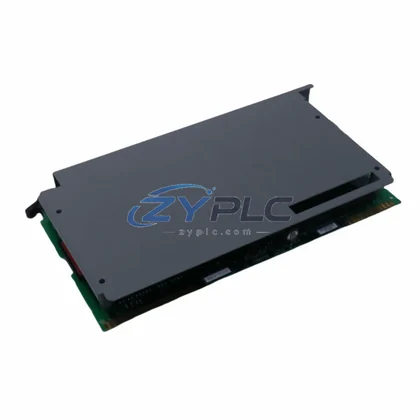
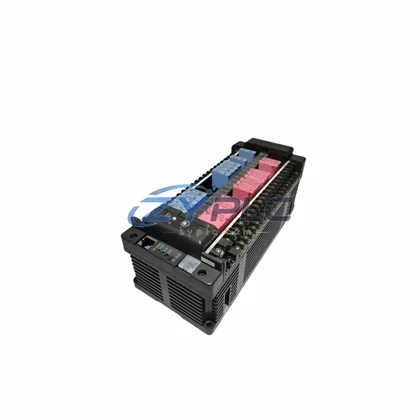
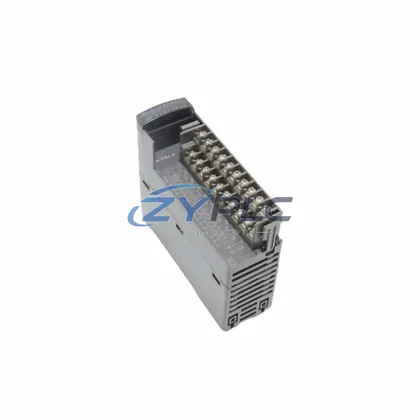
The Yokogawa AAM11-S2 is a high-precision analog input module engineered for the Yokogawa Centum distributed control system (DCS) platform. Designed to meet the demanding requirements of modern industrial automation, the AAM11-S2 delivers accurate, low-latency signal acquisition from field instruments — enabling plant operators to monitor operating load in real time, reduce unnecessary actuator cycling, and maintain tighter process control loops. In energy-intensive industries such as petrochemicals, power generation, pulp and paper, and pharmaceutical manufacturing, the ability to capture clean analog signals with minimal drift directly translates into measurable reductions in fuel consumption, compressed air usage, and electrical demand.
Unlike generic I/O modules, the AAM11-S2 is purpose-built for the Centum VP and Centum CS 3000 control architectures, ensuring seamless integration with Yokogawa’s field control stations (FCS) and engineering workstations. Its multi-channel analog input capability allows a single module to consolidate signals from temperature transmitters, pressure sensors, flow meters, and level gauges — reducing the total number of I/O cards required per cabinet and lowering both capital expenditure and ongoing power draw from the control room infrastructure.
Product Specification Table
| Parameter |
Specification / Value |
| SKU |
AAM11-S2 |
| Brand |
Yokogawa |
| Series / Platform |
Centum DCS (Centum VP / Centum CS 3000) |
| Module Type |
Analog Input Module |
| Signal Input Type |
4–20 mA / 1–5 V DC (configurable per channel) |
| Number of Channels |
16 channels (multi-channel analog input) |
| Power Consumption |
Low-power design; optimized for 24 VDC bus operation |
| Operating Efficiency |
High-resolution A/D conversion; <0.1% full-scale error |
| Compatible Systems |
Yokogawa Centum VP, Centum CS 3000, FCS (Field Control Station) |
| Communication Protocol |
Vnet/IP (Yokogawa proprietary high-speed control network) |
| Application Environment |
Process industries: oil & gas, power, chemicals, pharmaceuticals |
| Value |
Reduces redundant control actions; supports predictive maintenance loops |
| Origin |
Japan |
| Warranty |
warranty terms confirmed during quotation |
| Stock Status |
RFQ Available — Tested & shipment arranged after confirmation |
System Compatibility and Application
The AAM11-S2 sits at the heart of an industrial control architecture. In a typical Centum DCS installation, the module works in concert with the Yokogawa FCS (Field Control Station) — such as the AFV10D or PFCS processor cards — to execute real-time PID control loops that govern valve positions, pump speeds, and burner firing rates. When analog input data from field transmitters is captured with high fidelity by the AAM11-S2, the FCS can make faster, more accurate corrections, preventing the unplanned downtime associated with over-control and hunting oscillations.
On the drive side, the AAM11-S2 analog outputs feed reference signals to variable frequency drives (VFDs) such as the Yaskawa GA700 or compatible third-party inverters integrated via the Centum I/O bus. By providing a stable, noise-free 4–20 mA command signal, the module ensures that motor speed is adjusted precisely to match actual process demand — eliminating the energy penalty of running pumps and fans at fixed speed when partial load is sufficient. This alone can help restore stable operation when a compatible replacement is required.
For power quality monitoring and energy metering, the AAM11-S2 integrates naturally with Yokogawa WT series power analyzers and third-party energy meters that output standard analog signals. These instruments feed real-time kW, kVAR, and power factor data back into the Centum DCS via the AAM11-S2 channels, enabling the control system to implement demand-side management strategies — shedding non-critical loads during peak tariff periods and logging consumption data for ISO 50001 maintenance planning reporting.
Within the Centum cabinet, the AAM11-S2 is typically installed alongside Yokogawa AAM21 analog output modules and ADM12 digital I/O modules, forming a complete I/O subsystem that handles both measurement and actuation. The Yokogawa AIP588 or equivalent power supply modules provide regulated 24 VDC to the I/O bus, and their built-in current limiting protects the AAM11-S2 from field wiring faults that could otherwise cause module resets and process upsets. Communication between the I/O modules and the FCS processor travels over the high-speed Vnet/IP control network, which supports deterministic scan times as low as 10 ms — fast enough to capture transient energy events and respond before they cascade into equipment damage.
For human-machine interface (HMI) visualization, operators interact with AAM11-S2 data through Yokogawa FAST/TOOLS SCADA or the Centum VP HIS (Human Interface Station), where real-time trend displays and energy dashboards present consumption KPIs alongside process variables. This closed-loop visibility — from field sensor through AAM11-S2 to HMI — is what enables operators to identify inefficient operating regimes and take corrective action before unplanned downtime accumulates.
Maintenance and Replacement Notes
In a continuous chemical plant running 8,000 hours per year, even a 5% improvement in control loop performance — enabled by accurate analog input data from the AAM11-S2 — can translate into significant reductions in steam consumption, cooling water flow, and compressed air demand. The module’s high-resolution A/D conversion minimizes quantization error, which means the FCS receives a true representation of the process variable rather than a stepped approximation. Tighter control bands reduce the frequency of safety valve lifts, minimize product quality giveaway, and allow heat exchangers to operate closer to their thermodynamic optimum.
From a maintenance perspective, the AAM11-S2 supports predictive maintenance workflows by providing continuous, high-quality signal data that can be trended over time. Gradual drift in a transmitter’s 4–20 mA output — often the first sign of sensor fouling or calibration shift — is detectable through statistical process control algorithms running in the Centum FCS. Early detection allows maintenance teams to schedule instrument servicing during planned shutdowns rather than responding to emergency failures, reducing unplanned downtime and the associated energy spikes from emergency restarts of large rotating equipment.
Production line throughput also benefits directly. When analog input data is reliable and latency is low, the FCS can execute faster setpoint changes during product grade transitions, reducing the duration of off-spec production and the energy consumed in reprocessing or waste treatment. In batch manufacturing environments, accurate analog inputs from the AAM11-S2 shorten batch cycle times by enabling more aggressive ramp rates that remain within safe operating limits — improving overall equipment effectiveness (OEE) without increasing energy intensity per unit of output.
Every AAM11-S2 unit supplied by ZYPLC undergoes full functional testing prior to shipment, including channel-by-channel signal verification across the 4–20 mA input range. This ensures that the module performs to specification from day one of installation, avoiding the hidden energy costs of commissioning delays caused by faulty I/O hardware. All units are covered by a warranty terms confirmed during quotation, and ZYPLC maintains ready stock to support urgent replacement requirements with fast dispatch.
Product Sourcing FAQ
Q1: How does the Yokogawa AAM11-S2 contribute to operational stability in a DCS-controlled plant?
The AAM11-S2 provides high-accuracy analog signal acquisition that enables the Centum FCS to execute tighter PID control loops. Tighter control reduces over-actuation of valves, pumps, and burners — directly cutting unplanned downtime. When combined with VFD speed references and power metering inputs, the module supports a complete maintenance planning feedback loop within the Centum DCS architecture.
Q2: Is the AAM11-S2 compatible with both Centum VP and Centum CS 3000 systems?
Yes. The AAM11-S2 is designed for the Yokogawa Centum platform and is compatible with Centum VP and Centum CS 3000 field control stations. It communicates over the Vnet/IP control network and integrates with standard Centum I/O bus configurations. Always verify the specific FCS processor model and I/O bus revision with your system documentation before installation.
Q3: What is the recommended replacement or upgrade path if the AAM11-S2 is end-of-life in my system?
For systems being migrated to newer Centum VP R6 or Centum STARDOM architectures, Yokogawa offers compatible analog input modules with enhanced diagnostics and HART pass-through capability. ZYPLC can advise on compatible replacement modules based on your existing FCS configuration. Contact our technical team with your system revision details for a specific recommendation.
Q4: What testing is performed on AAM11-S2 units before shipment, and what does the warranty terms confirmed during quotation cover?
Every AAM11-S2 unit is tested for full channel functionality across the 4–20 mA input range prior to dispatch. The warranty terms confirmed during quotation covers manufacturing defects and functional failures under normal operating conditions. Units showing damage from incorrect installation voltage, field wiring short circuits, or environmental exposure beyond rated limits are assessed on a case-by-case basis. ZYPLC provides fast replacement support from RFQ-confirmed sourcing to minimize plant downtime.